Table of Contents
Plan eBike charging management

This article describes installation planning. For on-site implementation and equipment configuration on the Climkit platform, refer to the links at the end of the article.
1. eBike charging management
Climkit offers a turnkey solution for charging light electric vehicles (electric bikes, scooters, light electric vehicles such as postal delivery trikes, etc.).
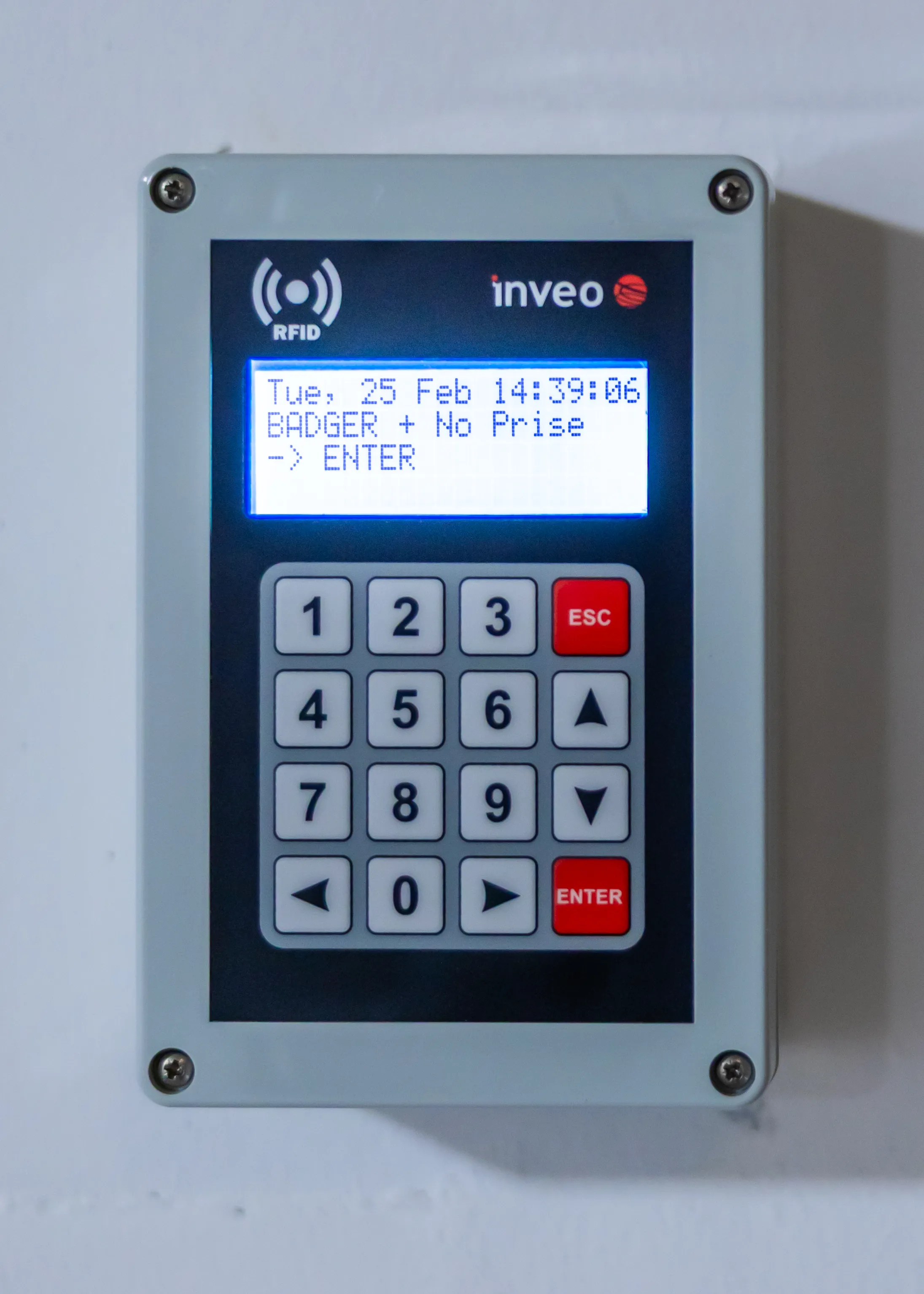
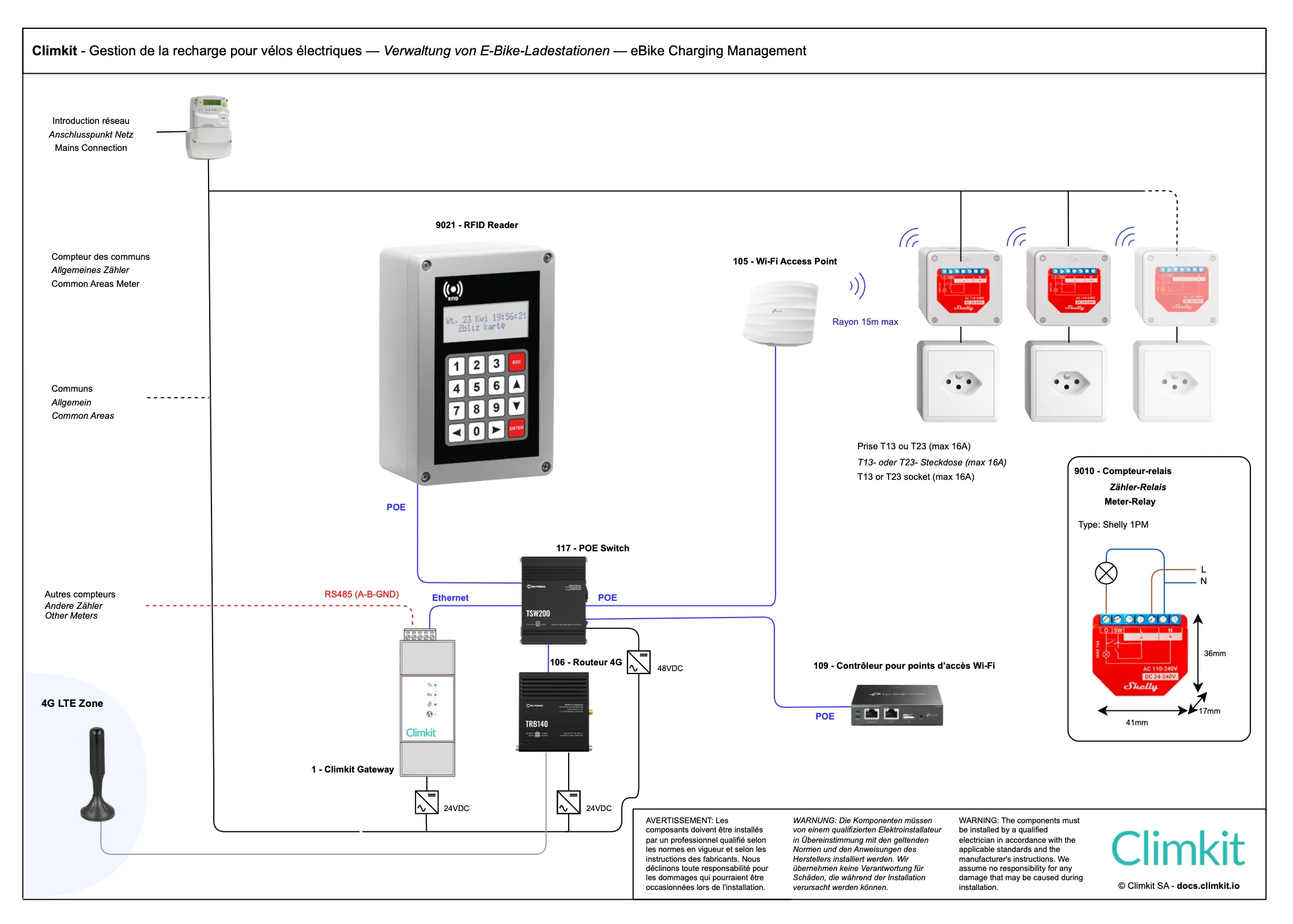
The system combines an RFID reader with keypad and one or more relay meters. Each relay meter measures the energy consumed and controls the power supply to a dedicated power outlet.
Operation:
- The user identifies themselves with their RFID badge and enters the number of the desired outlet on the keypad.
- If the badge is valid, the corresponding relay activates, powering the outlet. A transaction is created and the meter takes an initial meter reading.
- To finish, the user badges again and enters the outlet number. The meter takes a second reading and the energy consumed is recorded on their account.
- Via the online platform, Climkit directly bills consumption to users with a per-kWh rate that takes into account both electricity costs and equipment maintenance and depreciation fees.
Wiring diagram
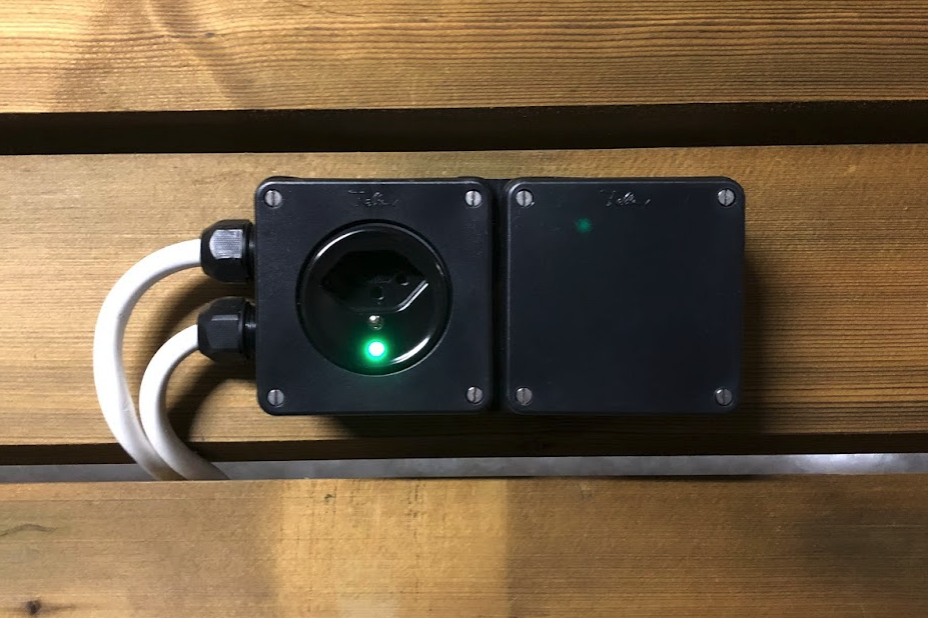
Surface-mounted socket installation
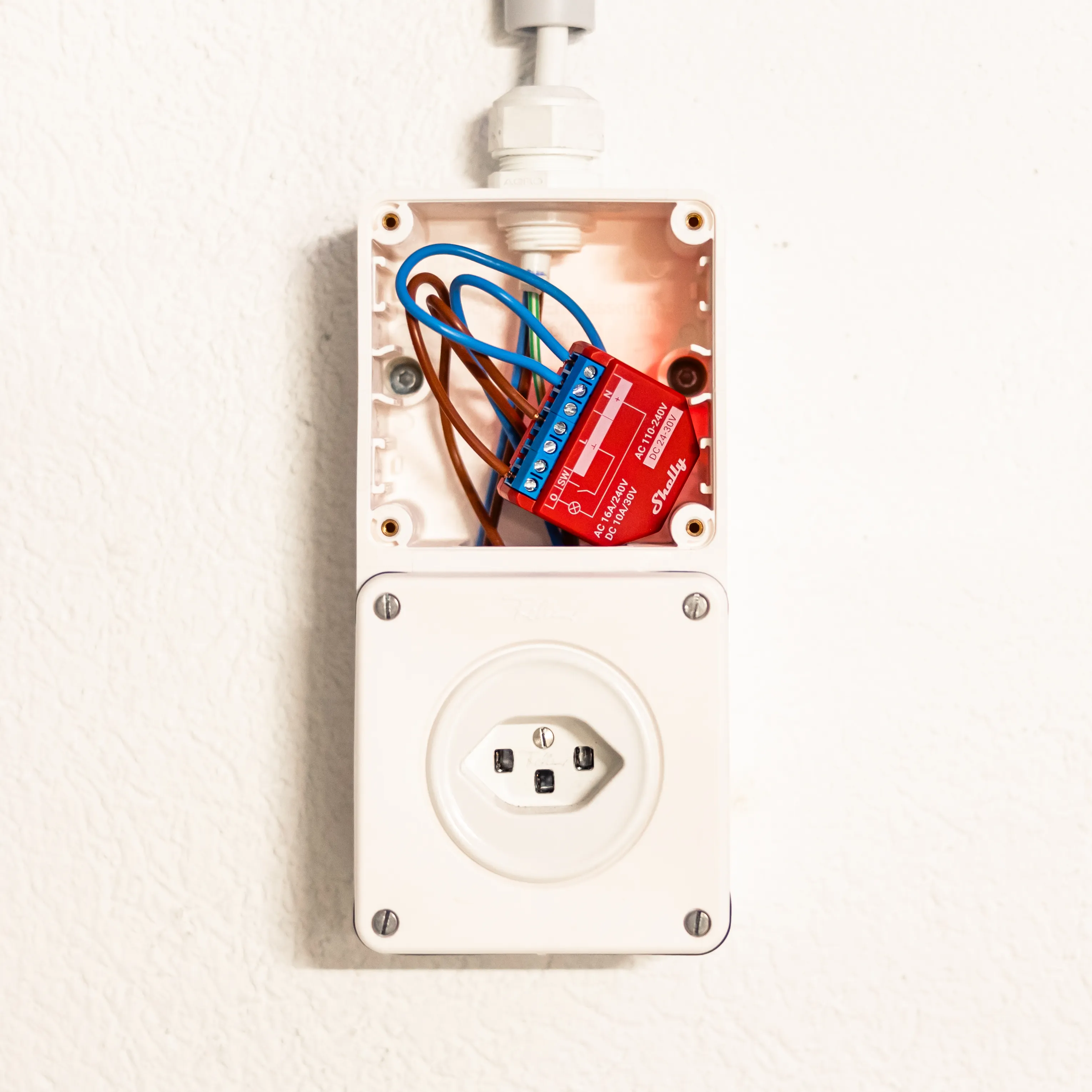
Surface-mounted socket installation
Using a socket with an LED indicates when the relay is engaged.
Climkit offer
The standard Climkit offer includes the elements necessary for the system to operate: hardware equipment, software features, as well as services related to commissioning.
All hardware is supplied preconfigured to simplify installation and ensure proper communication between meters.
- Equipment:
- LAN router or 4G router
- Climkit Gateway
- PoE Switch
- Wi-Fi access point
- Wi-Fi access point controller
- RFID reader with keypad
- Single-phase Wi-Fi relay meter
- Software features:
- Management of RFID readers and relay meters for eBikes
- Commissioning services:
- Technical coordination and meter reading verification
- Administrative setup
All products are ordered directly from Climkit.
In most cases, the installation can be carried out by the installer without on-site intervention by a Climkit technician.
Phone support is available if needed during commissioning.
Equipment details
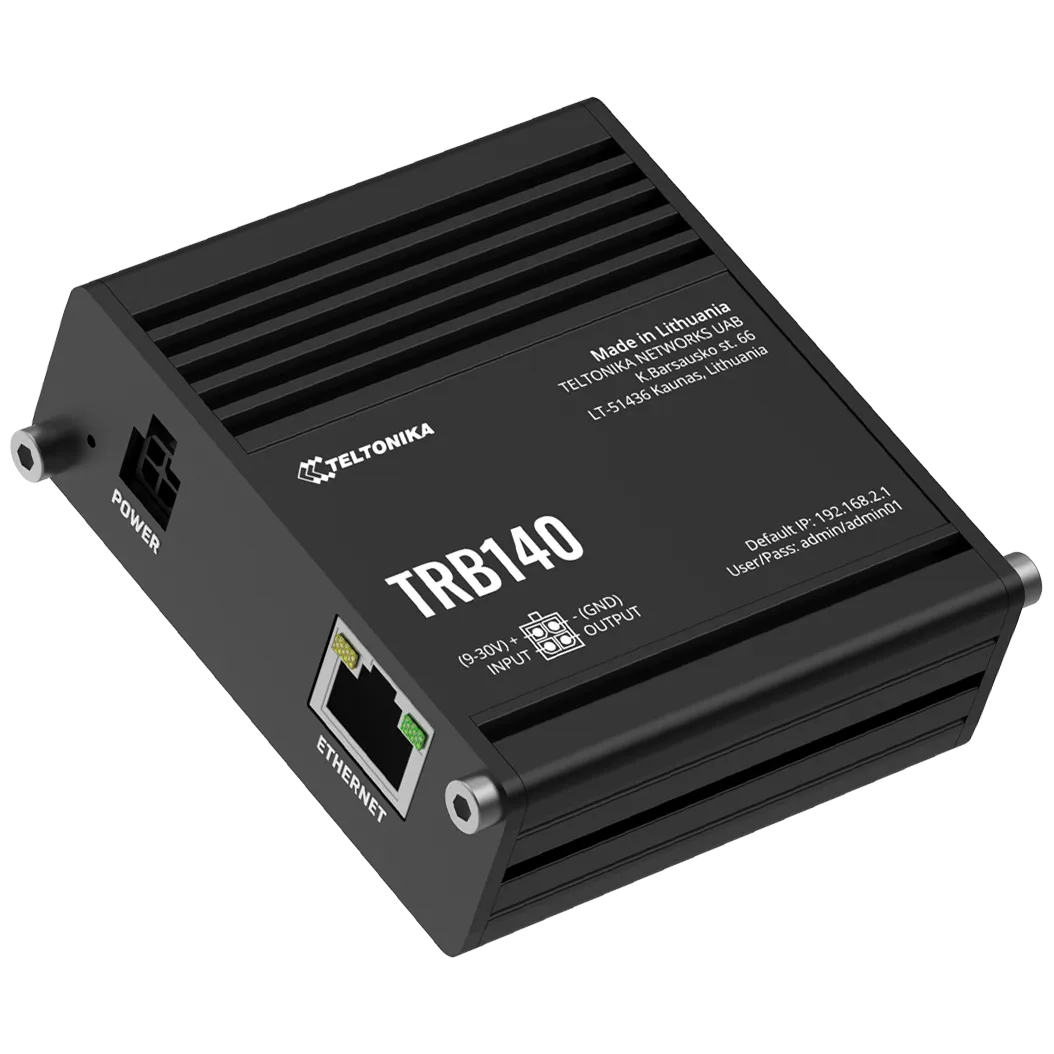
4G Router
An internet connection is essential for the system to function. If no connection is available, Climkit can provide it via a 4G router equipped with an active multi-operator SIM card.
Using Climkit's TRB140 4G router offers several advantages:
- Simplified installation: the router is easily installed inside the electrical panel, directly on the DIN rail
- Complete delivery: supplied with its DIN rail mount and 24V DC power supply
- Ready to use: delivered preconfigured with an activated SIM card
- Cost-effective 4G subscription: low-cost internet connection
Climkit Gateway
Serving as the gateway between the solution and the web platform, the Gateway uses its RS485 port to connect directly to relay meters and RFID readers.
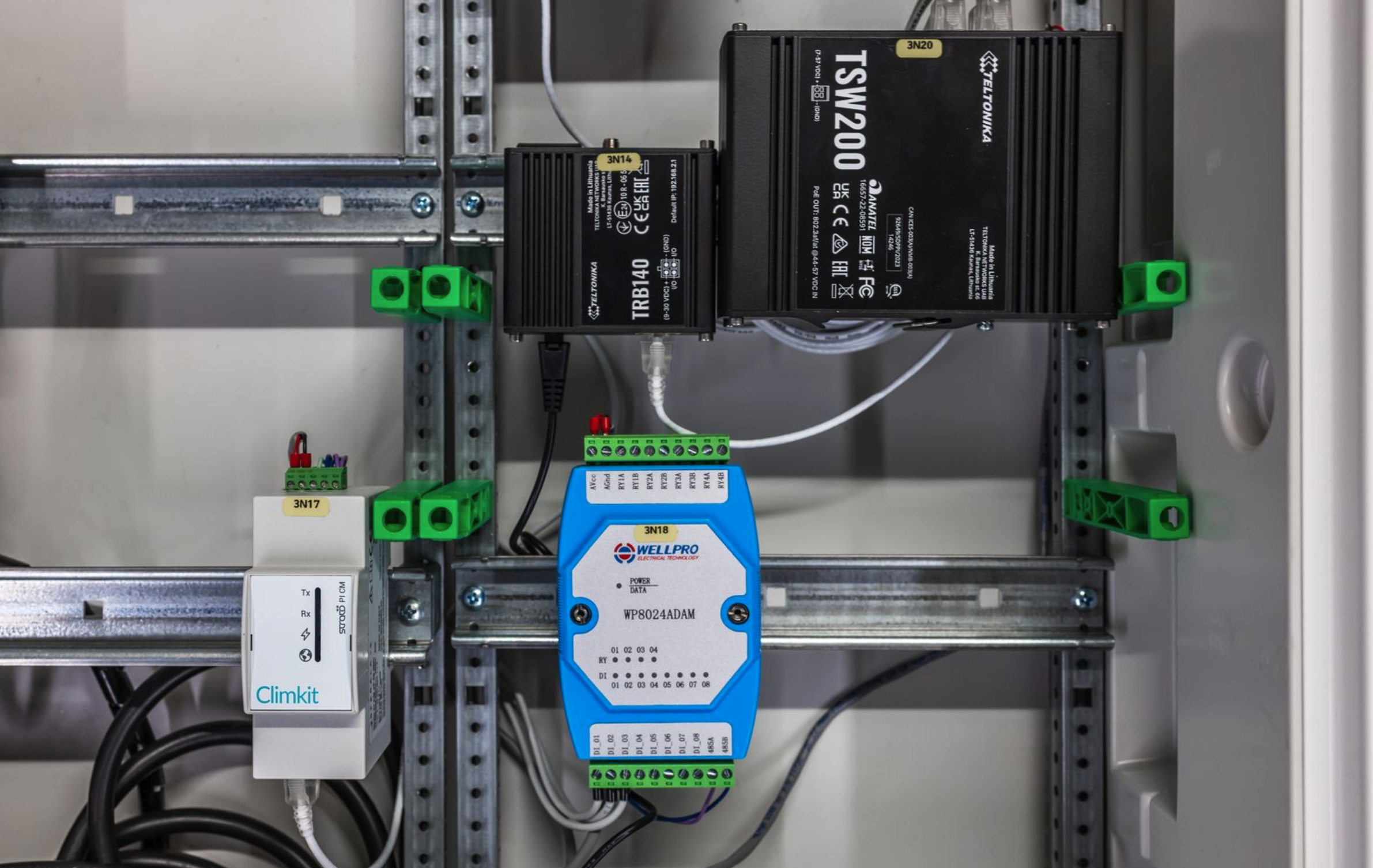
PoE Switch
When multiple devices need to be connected via Ethernet, a switch is required.
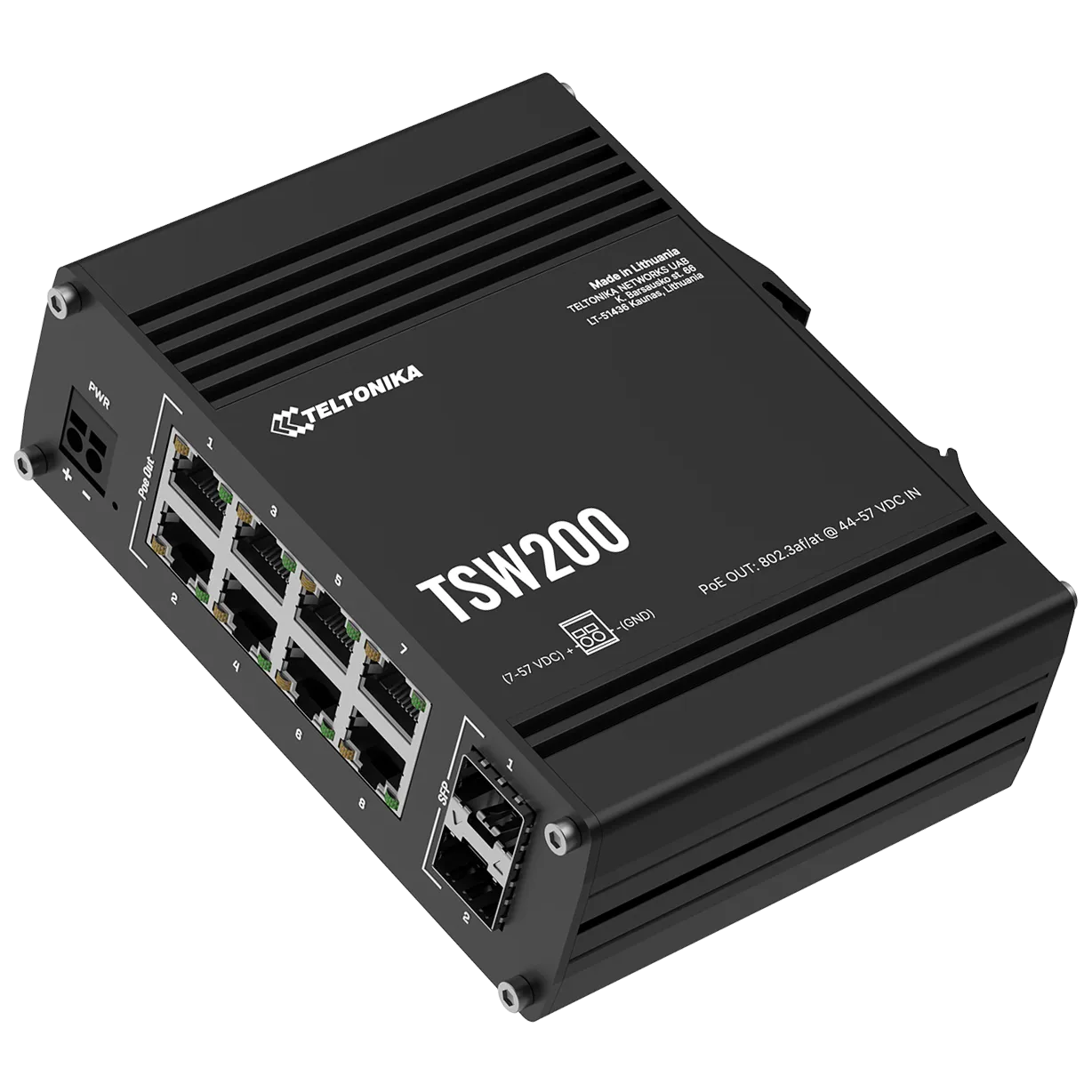
Model provided: Teltonika TSW200 (or equivalent) - 8 PoE Ethernet ports + 2 SFP fiber optic ports.
The PoE ports directly supply power to the Wi-Fi access points and RFID readers.
The SFP ports allow multiple buildings on a site (see Microgrid diagram) to be interconnected via fiber optic through a single internet router.
The switch is supplied with a DIN rail mount and its 48V DC 150W DIN power supply.
Wi-Fi access points
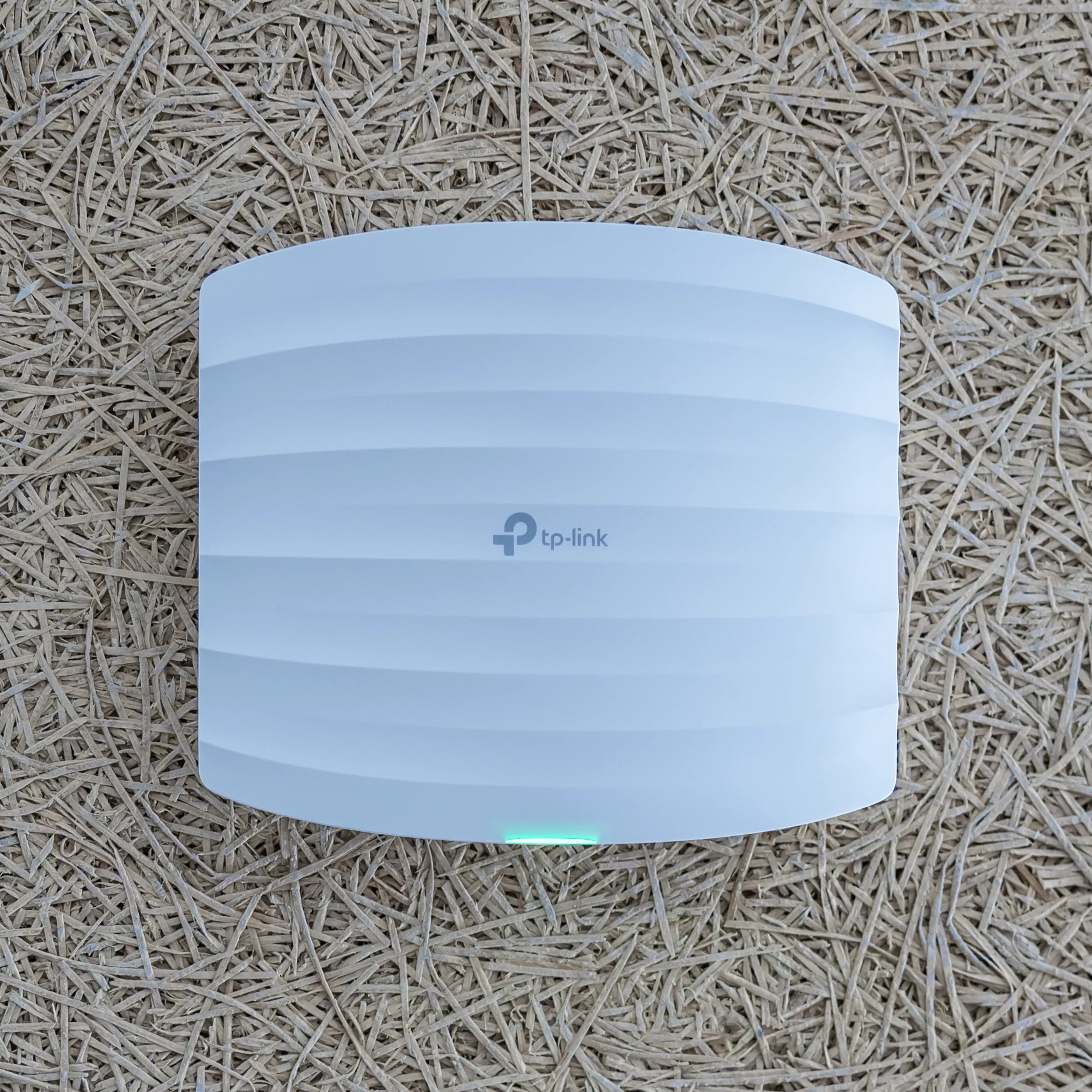
The Wi-Fi access points create a wireless network covering the entire parking area, allowing charging stations to connect without additional wiring.
The recommended coverage radius per access point is approximately 15 m, or roughly two rows of 10 parking spaces facing each other. In practice, obstacles (walls, materials, vehicles) significantly reduce the range. To ensure a stable and redundant connection, a minimum of 2 access points is systematically provided. As a guideline, an 80 to 100-space parking lot requires 4 to 6 access points, depending on the layout and obstacles present.
Wi-Fi access point controller
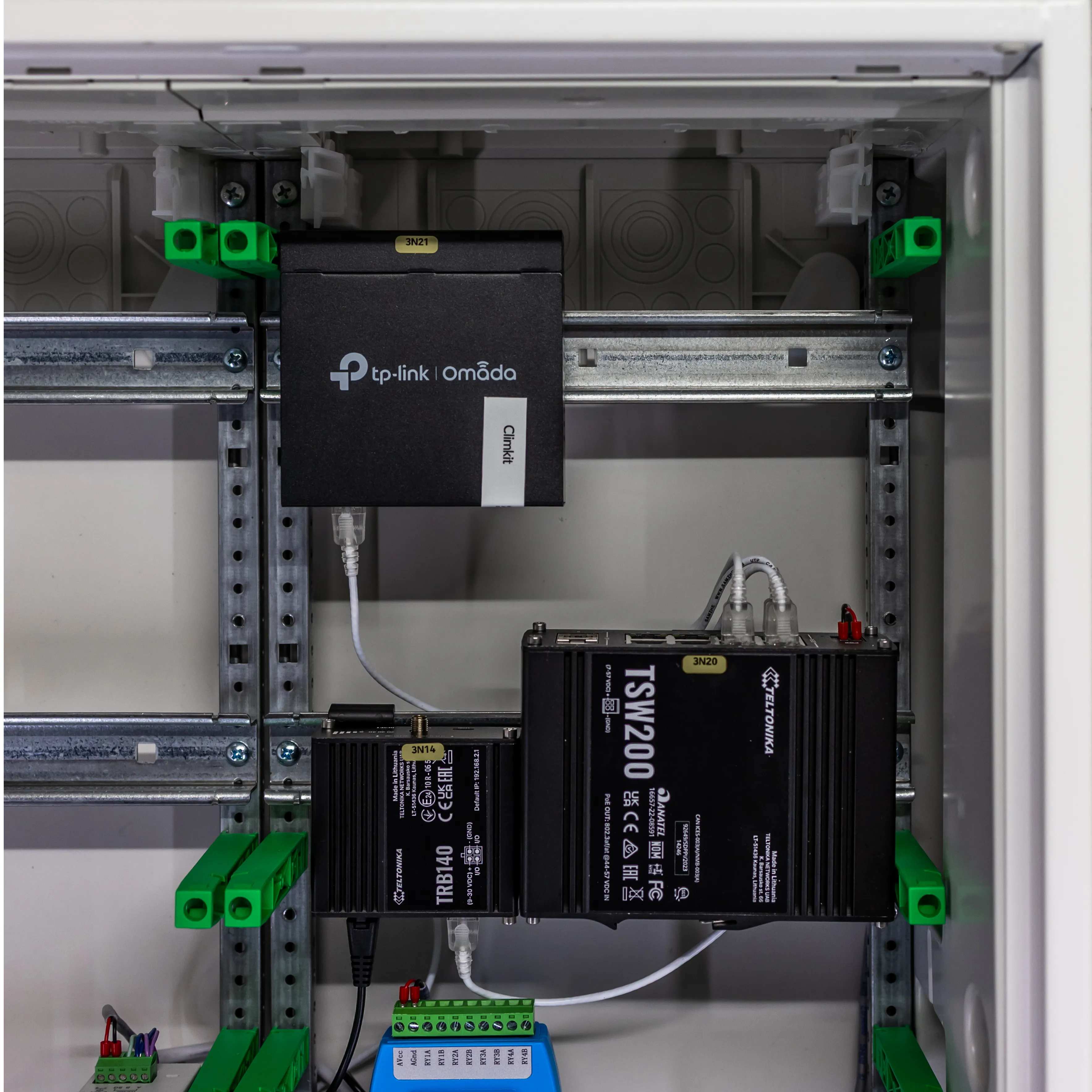
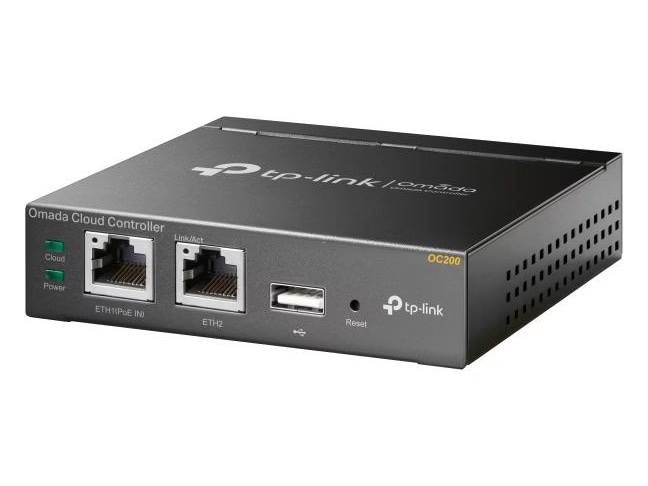
The Omada OC200 controller optimizes the Wi-Fi network and manages device connections across the various access points.
It easily installs on the DIN rail in the electrical panel and is powered exclusively via PoE from the PoE Ethernet switch.
It also generates alerts in the event of an access point failure or areas with insufficient Wi-Fi signal coverage.
RFID reader with keypad
The RFID reader with keypad allows selecting and activating distinct loads, such as sockets for eBike charging.
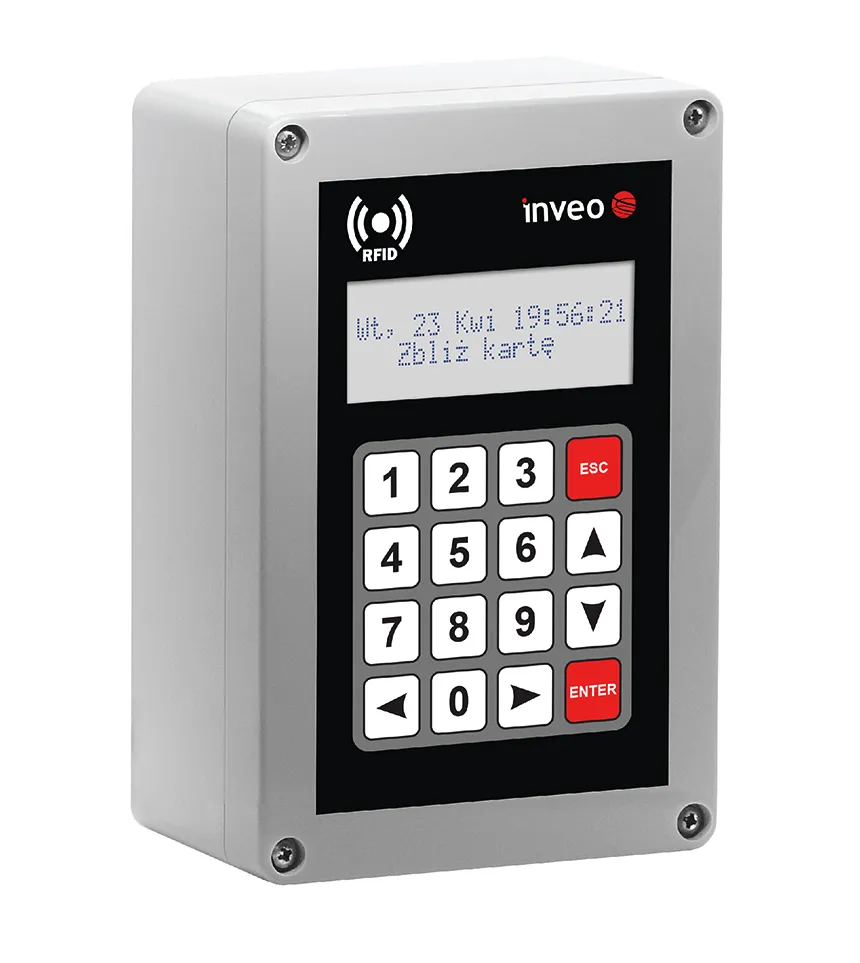
The RFID reader connects to the same IT network as the Gateway via Ethernet and is powered via PoE (through the same Ethernet cable).
Single-phase Wi-Fi relay meter
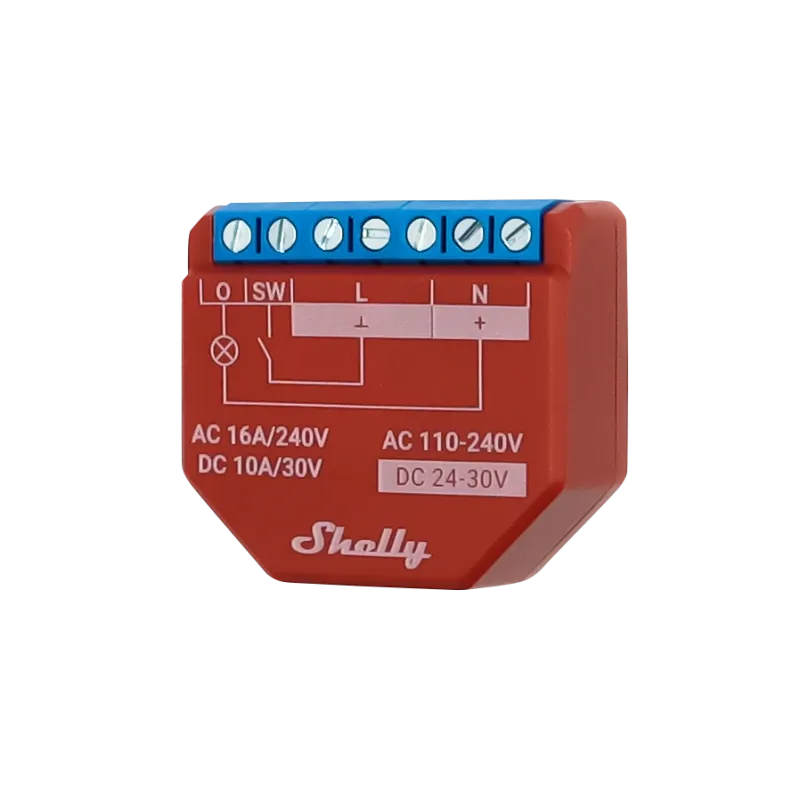
The Shelly 1PM is a single-phase relay meter (max 16A).
It is generally used to control the switching on and off of a T13 or T23 socket, into which it easily fits.
It connects via WLAN (Wi-Fi).