Installer
Planning
Installer getting started guide (read first)
Global planning of a Climkit site
Climkit site implementation process
Plan the connection of the Climkit Gateway and network connectivity
Plan electricity management (RCP, RCPv and LEC)
Plan energy optimization and storage
Plan the management of electric vehicle charging stations
Plan the management of heating, water and ancillary costs
Plan collective laundry management
Plan eBike charging management
General terms and conditions of sale
Platform configuration
Request for an Installer account
Creation of a new site
Add the router (4G or LAN)
Adding the Climkit Gateway
Adding electricity meters
Save the photovoltaic installation information
Save battery information
Adding charging stations
Add the OCPP Remote electric vehicle charging station
Add the 4-relay I/O module
Add RFID readers
Adding heat and water meters
Installation and connection
Install the 4G Router
Install the LAN router
Install the Climkit Gateway
Install the RS485-Ethernet converter
Install the M-Bus converter
Install the standard Ethernet switch
Install the PoE Ethernet switch
Install the Wi-Fi access points
Install electricity meters
Install the charging stations
Install heat and water meters
Install the RFID reader
Install the three-phase Relay meter
Install the Shelly relay meter
Install the 4-relay I/O module
Verification and testing
Owner
Administrative setup
Getting started guide - Administrative setup
Form - 1. Contact details
Form - 2. Solutions
Form - 3. Billing rates
Contract and documents to complete
Online account for owners
Information flyers for consumers
Online access, RFID badge and charging stations
FAQ and other information
Resident
Account and app
Electricity invoice
Electric vehicle charging station
Building laundry room
Electric vehicle charging (eBike)
Platform
Platform Access
Terminology
Accounts and contacts
Site
Settings
Creation/editing of a note or an issue to be processed
Close an issue to be processed
Site statuses
Add/Modify the building(s)
Steps for commissioning a site
Delete/deactivate a site
Add/Modify equipment
Edit the basic information of a site
Equipment
Add/modify a gateway
Add/modify a router
Add/modify an electricity meter
Bulk insert meters
Bulk assign meters to a gateway
Add/modify a distribution zone
Add/modify a charging station
Add/modify a thermal or water meter
Add/edit a Distribution system operator (DSO) meter (FTP transfer)
Connecting remotely to a Climkit gateway
Administration
Stakeholders
Management terms
View site management conditions
Activation/deactivation of a solution
Configuration of the operating method
Visualize the financial conditions
Creation/edition/addition of a financial condition
Deleting a financial condition
Accounts
Create a consumer account
Create a contact
View and download the invoices of an account
Send Platform Access to a contact
Add/modify the billing address
Link an existing account to a site
Change the correspondence method
Rates and billing points
Creation/editing of a billing point
Record a move (transfer)
Assignment of an account to a billing point
Add/modify the default charge advance payment for a billing point
View the rates of the consumption site
Editing a consumption tariff
Creation/edition of a consumption billing rate
Creation/editing of a consumption tariff component
View fixed rates and subscriptions
Customize invoice line item labels/titles
View the Financial conditions billed to the Billing points
RFID badges
Accounting
Tools
Meter inspection
Visualization
Expense statements
Introduction to the Expense statement generation tool
Create/edit an accounting period for expense statements
Modify the expense statement settings
Add/modify a general expense supplier invoice for an expense statement
Edit the collected advance payments of an expense statement
Particularity of room heating and hot water production fees
Verify and download the meter readings for the expense statements period
Perform the cost allocation and generate the expense statements
Export individual consumption for the expense statement period
API
Table of Contents
- Categories
- Installer
- Planning
- Plan collective laundry management
Plan collective laundry management

This article describes the installation planning. For on-site implementation and equipment configuration on the Climkit platform, refer to the links at the end of the article.
1. Collective laundry management
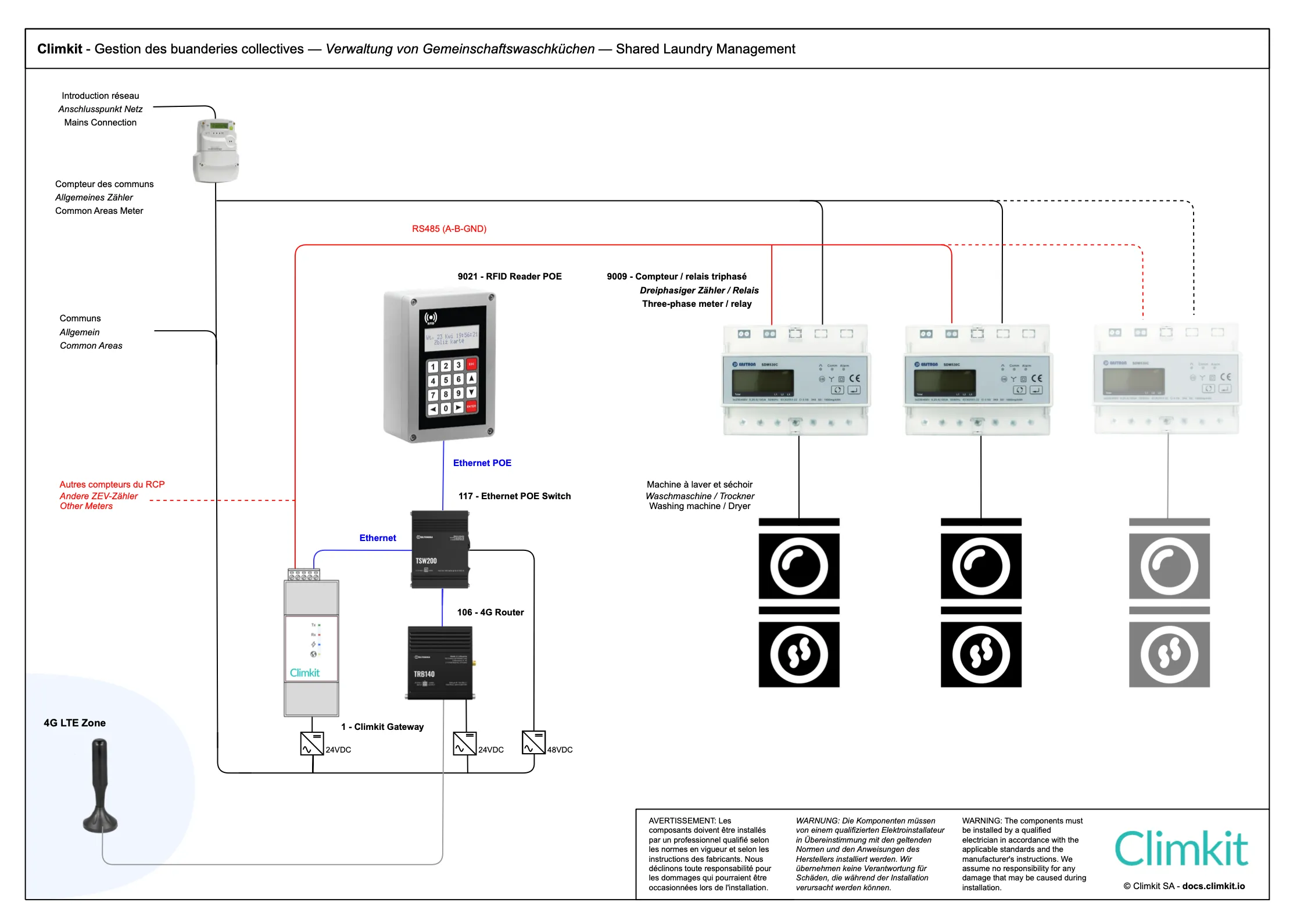
Climkit offers a turnkey solution combining an RFID reader and relay meters managed by the Climkit Gateway to control and measure the use of washing machines, tumble dryers, and drying cabinets.
Operation:
- The user identifies themselves with their badge and enters the number of the desired machine on the keypad.
- If the badge is valid, the corresponding relay activates, powering the machine. A transaction is created and the meter takes a first reading.
- To finish, the user badges again and enters the machine number. The meter takes a second reading and the energy consumed is recorded on their account.
- Via the online platform, Climkit directly bills consumption to users with a rate per kWh that takes into account both electricity costs and maintenance and depreciation expenses for the machines.
Wiring diagrams
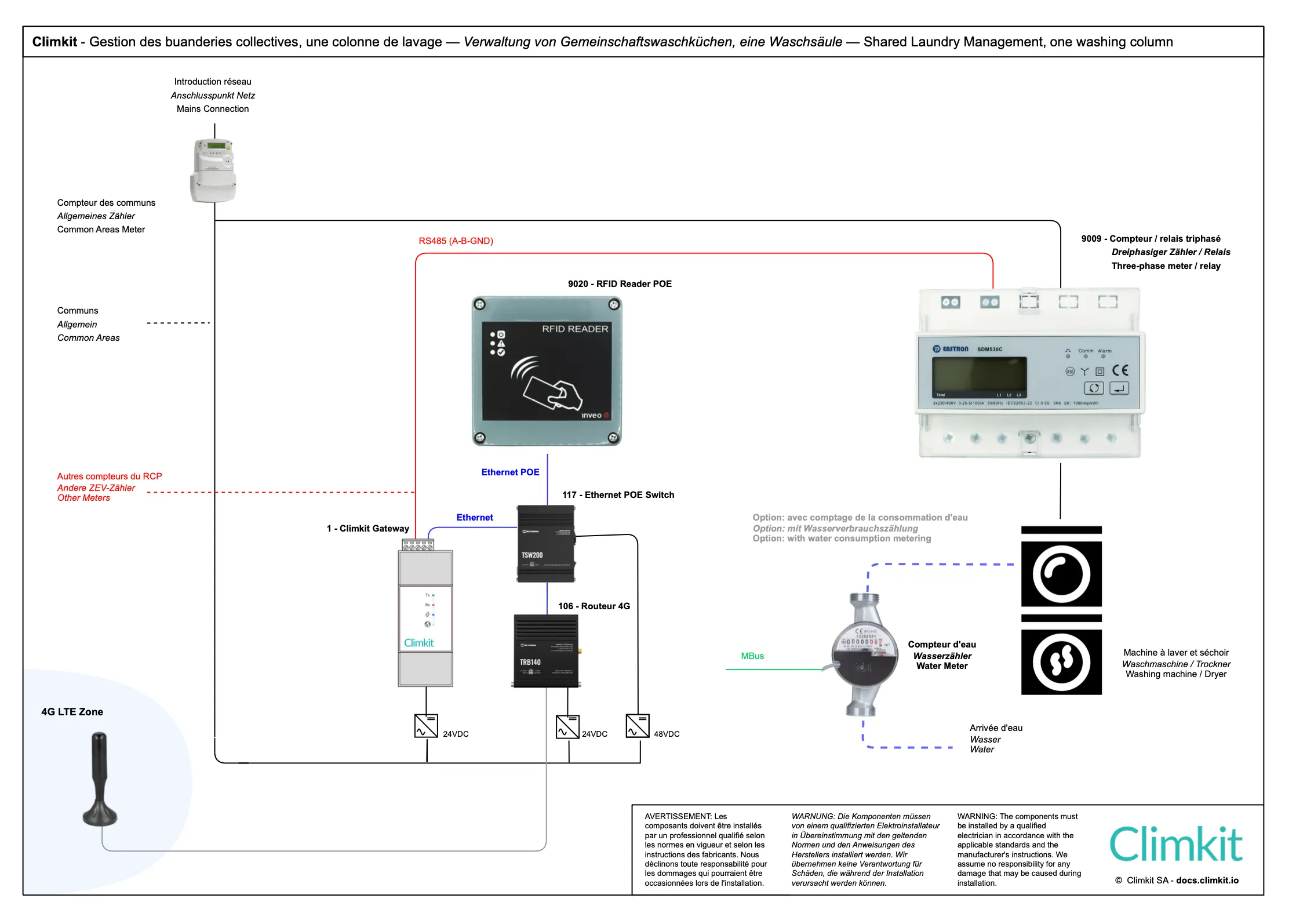
Option with a single laundry column
When there is only one machine or a single laundry column (washing machine + tumble dryer), a simple badge reader can be installed.
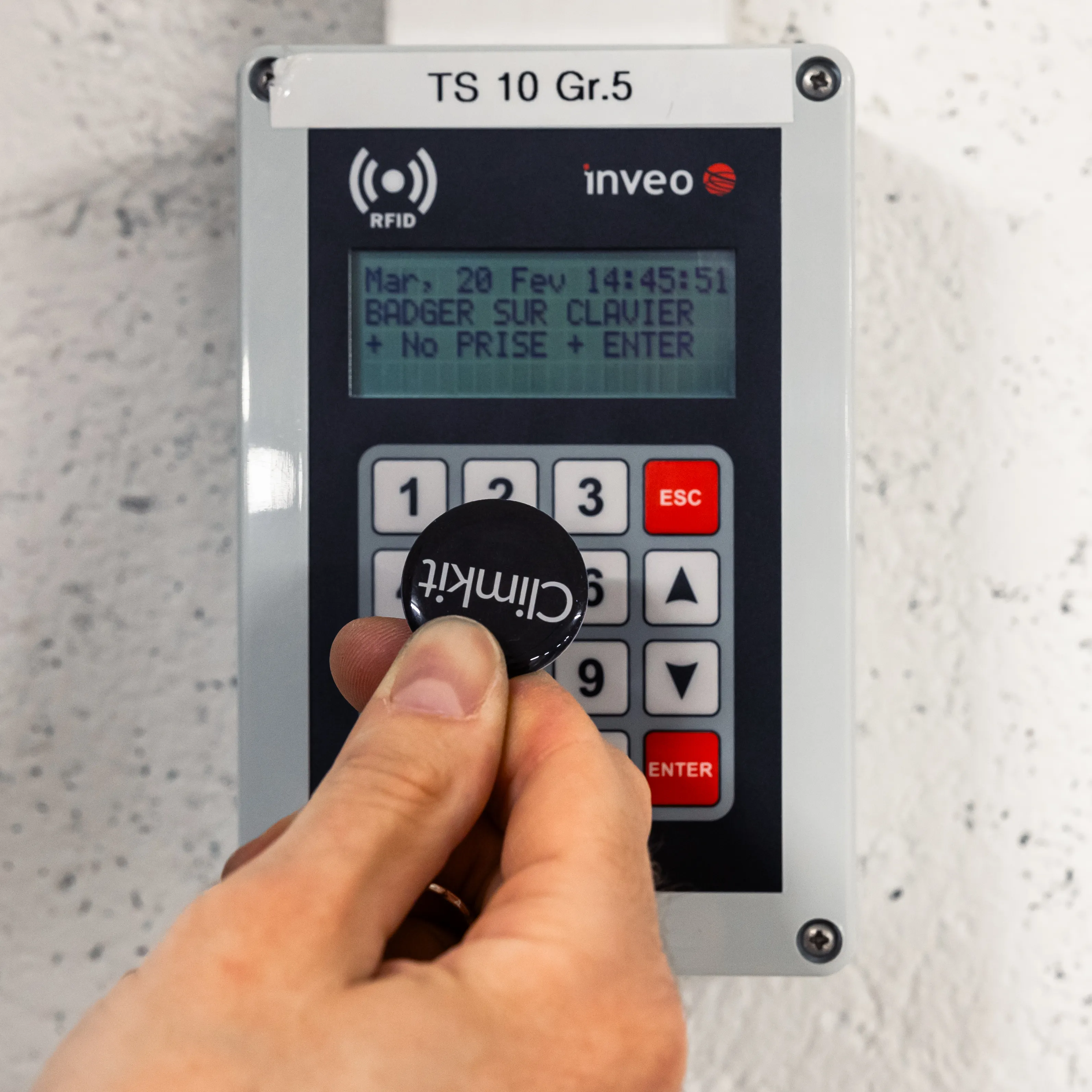
RFID badge reader
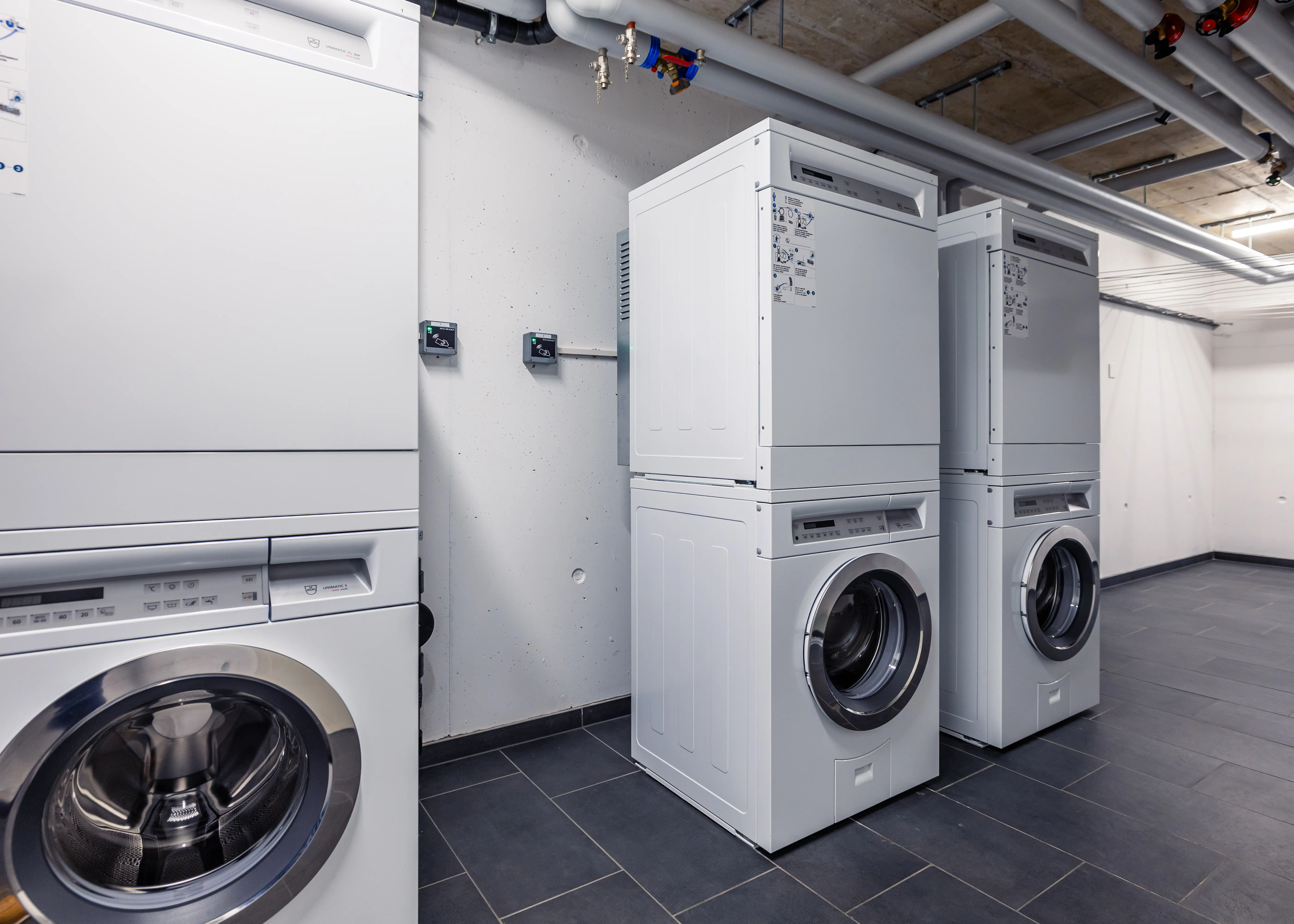
RFID readers are useful for identifying laundry room consumers in order to ensure fair billing. Each consumer holds a personal and non-transferable RFID badge.
The badge contains a unique token that is read by the RFID reader or the station. If the token is registered in the platform and is in the Accepted status, the transaction (washing or charging) is authorized.
Relay meter
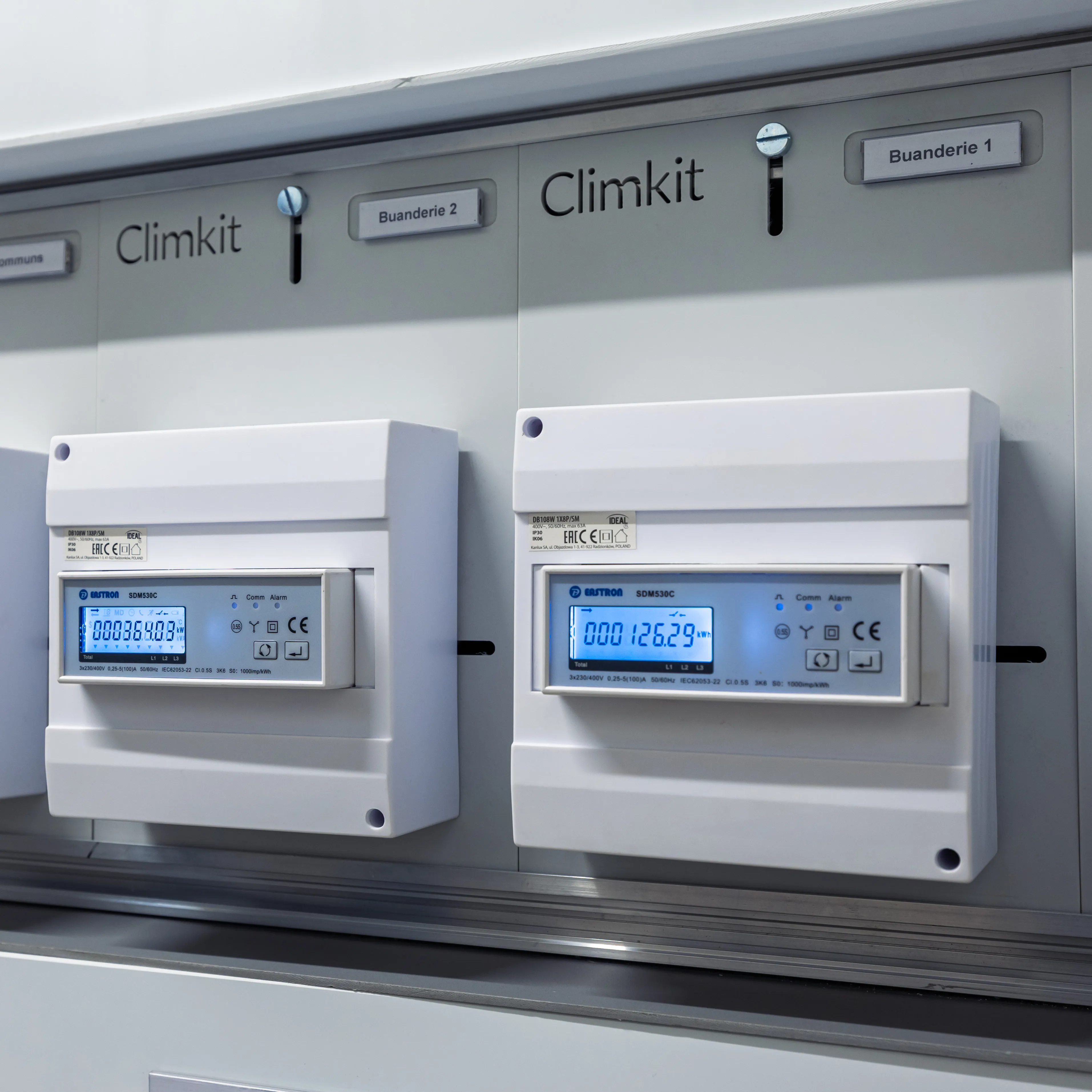
Relay meters are devices that act as both an energy meter and a switch to turn a load on or off.
Cold water meter
It is also possible to read the cold water meter supplying the washing machine in order to bill the corresponding water consumption.
Climkit Offer
The standard Climkit offer includes the elements necessary for the operation of the system: hardware equipment, software features, as well as services related to commissioning.
All hardware is supplied preconfigured to simplify installation and ensure proper meter communication.
- Equipment:
- LAN router or 4G router
- Climkit Gateway
- PoE switch
- RFID reader with or without keypad
- Three-phase relay meter
- Software features:
- Management of RFID readers and relay meters for laundries
- Commissioning service:
- Technical coordination and meter reading verification
- Administrative setup
All products are ordered directly from Climkit.
In most cases, the installation can be carried out by the installer without the on-site intervention of a Climkit technician.
Telephone assistance is available if necessary during commissioning.
Equipment details
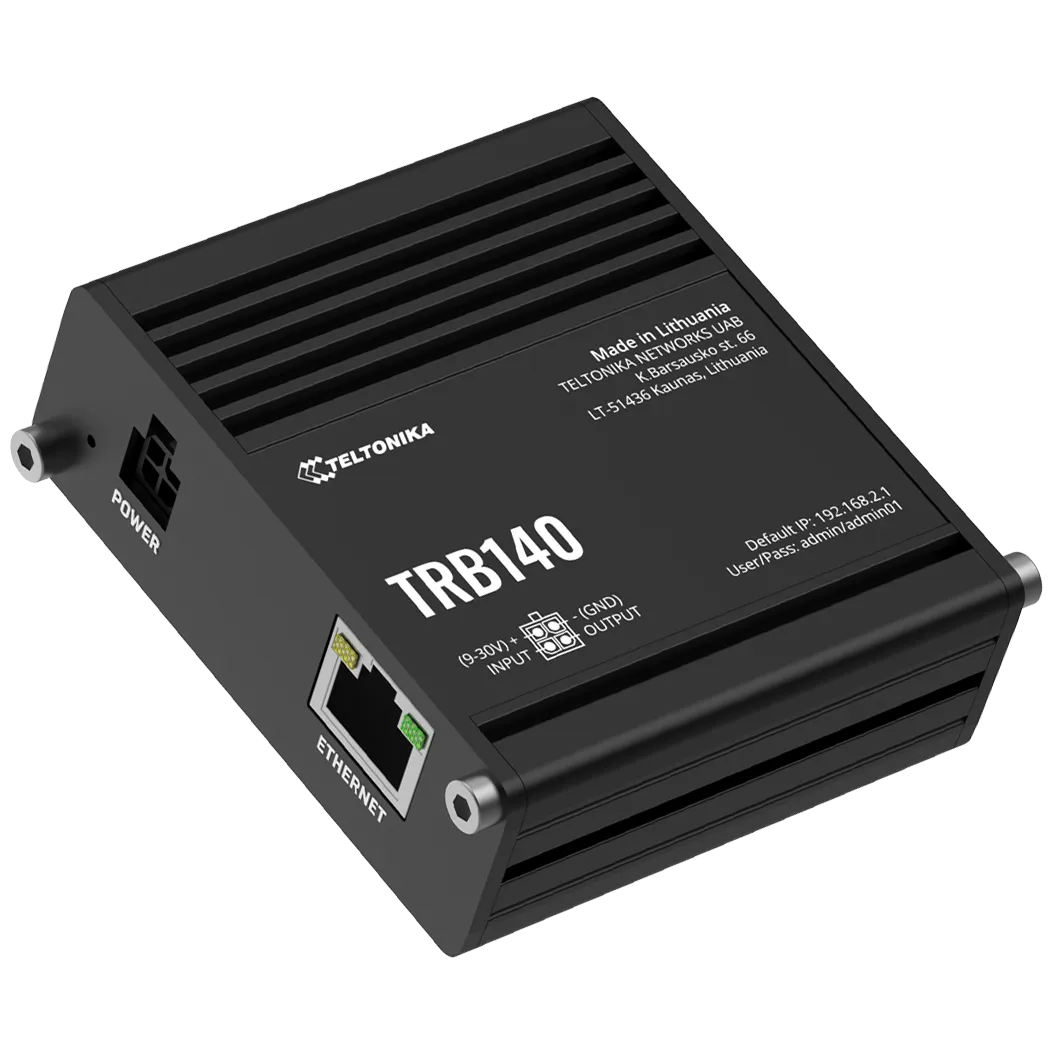
4G Router
An internet connection is essential for the system to function. If no connection is available, Climkit can provide it via a 4G router equipped with an active multi-operator SIM card.
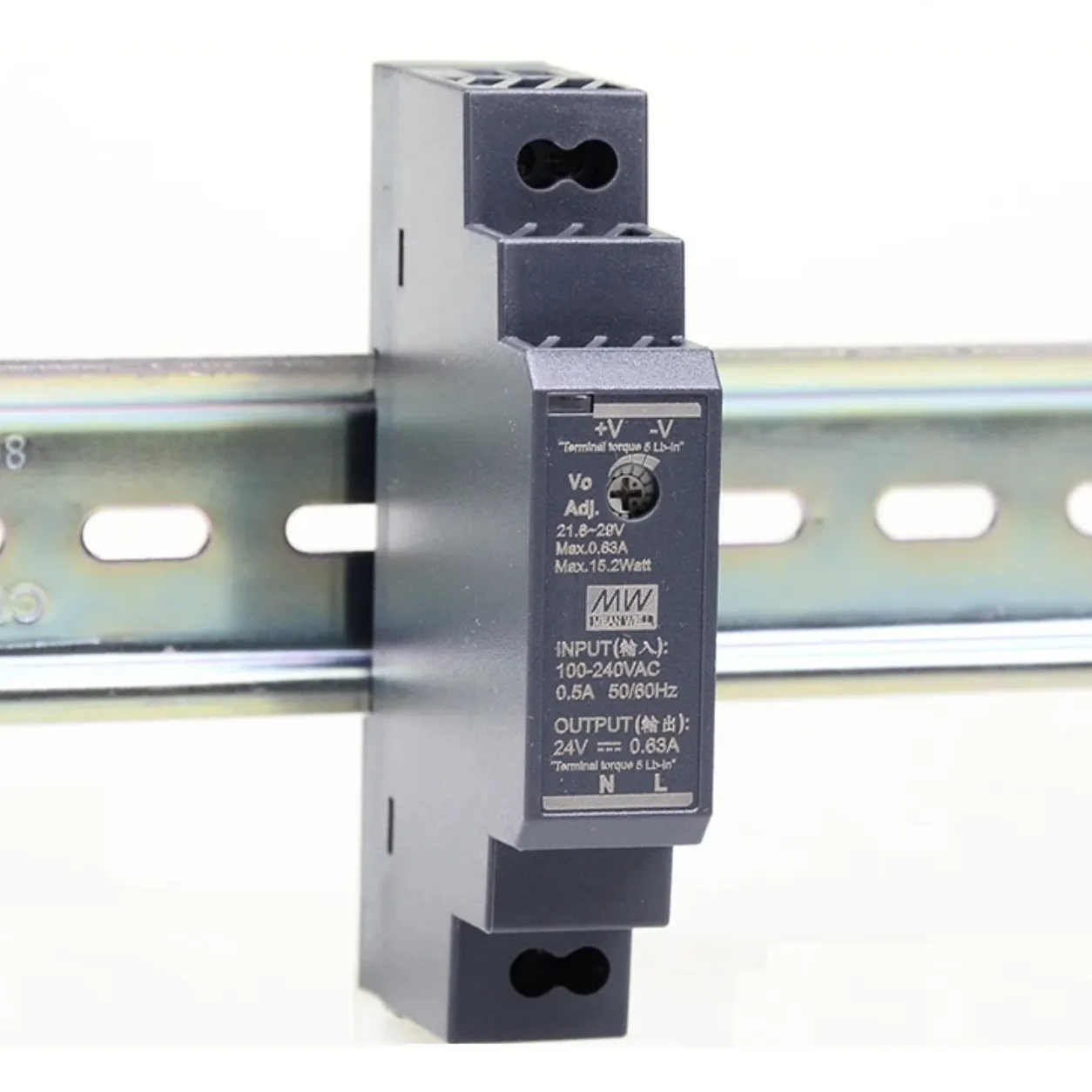
Using Climkit's TRB140 4G router offers several advantages:
- Simplified installation: the router installs easily inside the electrical panel, directly on the DIN rail
- Complete delivery: supplied with its DIN rail mount and its 24V DC power supply
- Ready to use: delivered preconfigured with an activated SIM card
- Cost-effective 4G subscription: low-cost internet connection
Climkit Gateway
Acting as the bridge between the solution and the web platform, the Gateway uses its RS485 port to connect directly to relay meters and RFID readers.
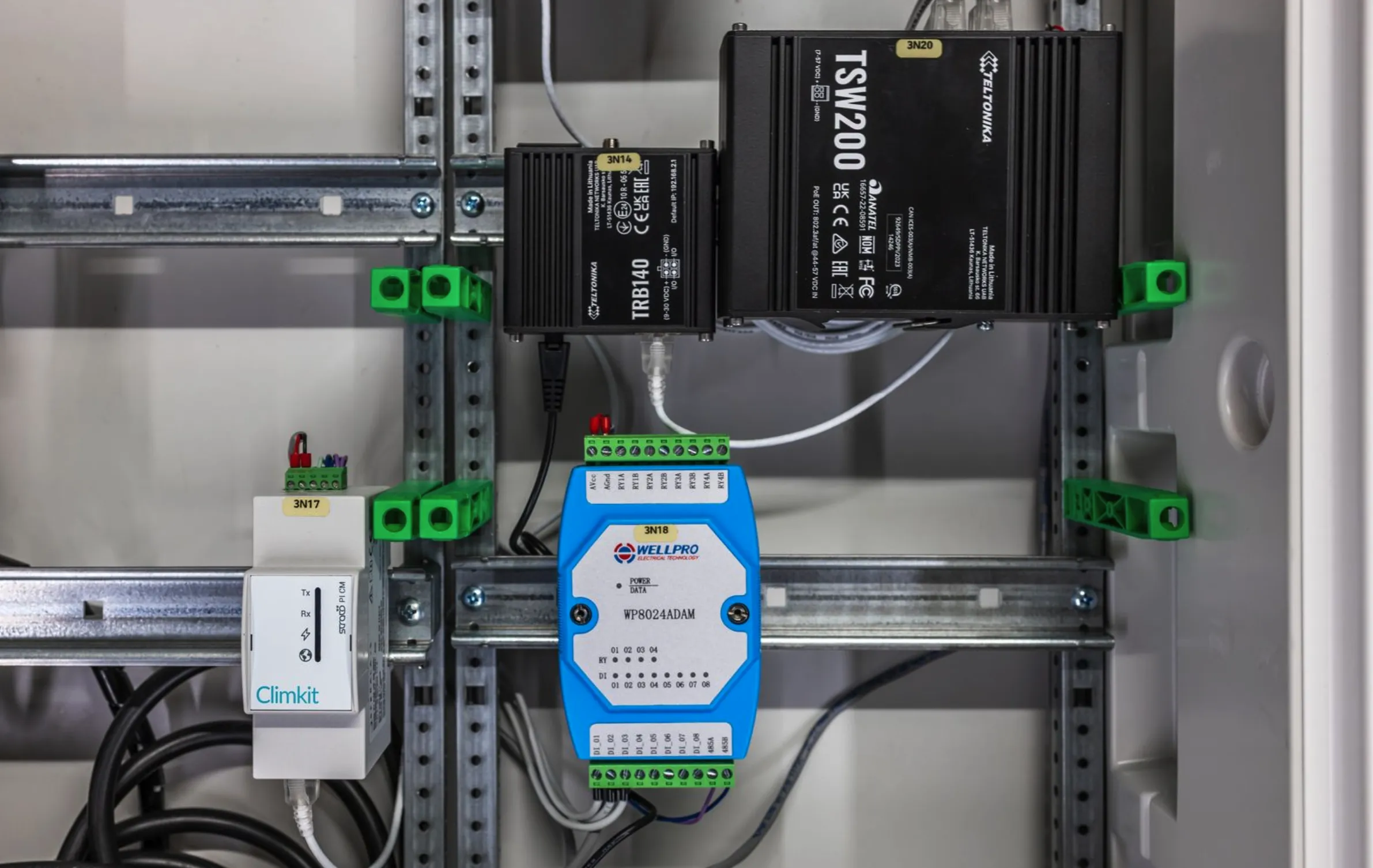
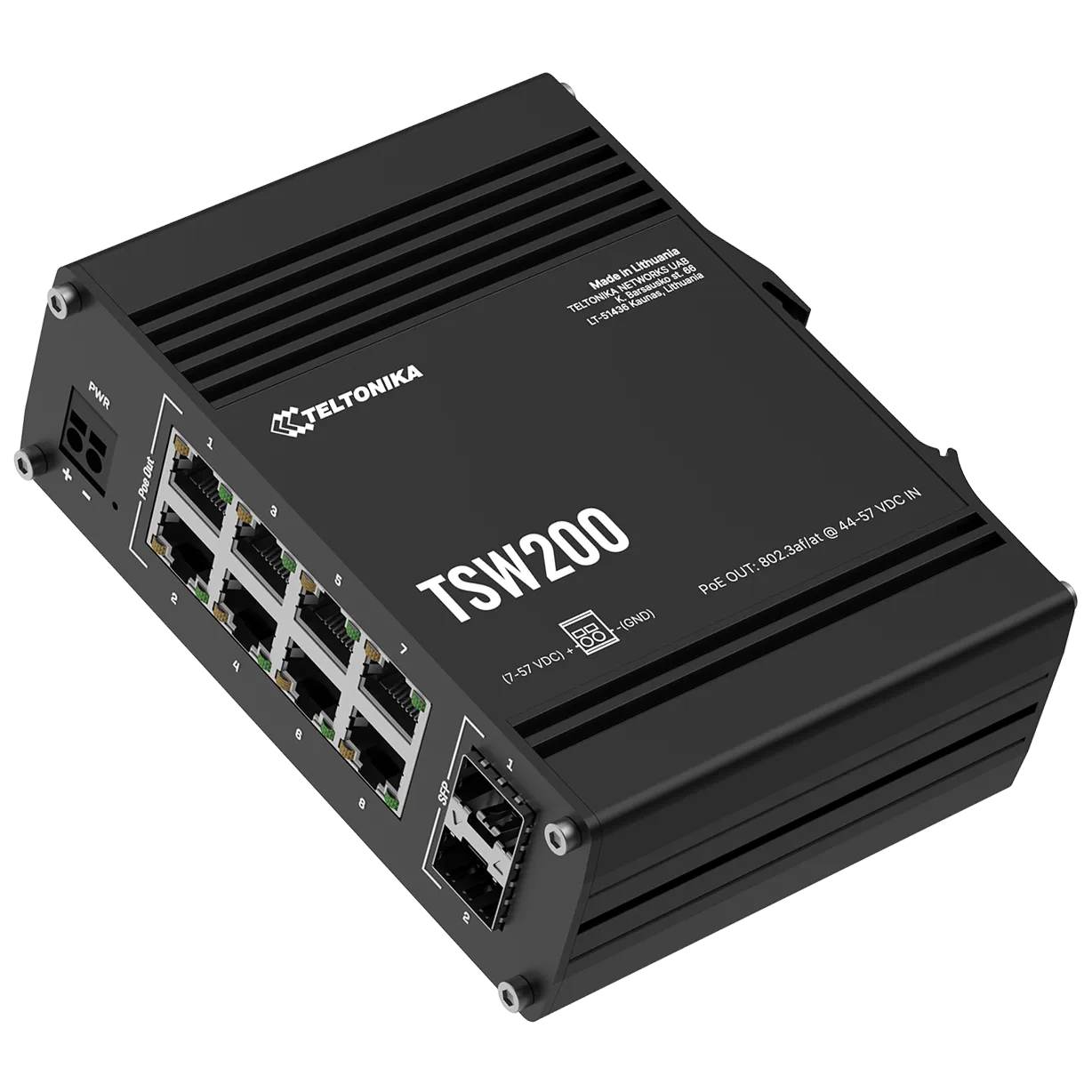
PoE Switch
When multiple devices need to be connected via Ethernet, a switch is required.
Model provided: Teltonika TSW200 (or equivalent) - 8 PoE Ethernet ports.
The PoE ports directly supply power to Wi-Fi access points and RFID readers.
The switch comes with a DIN rail mount and its 48V DC 150W DIN power supply.
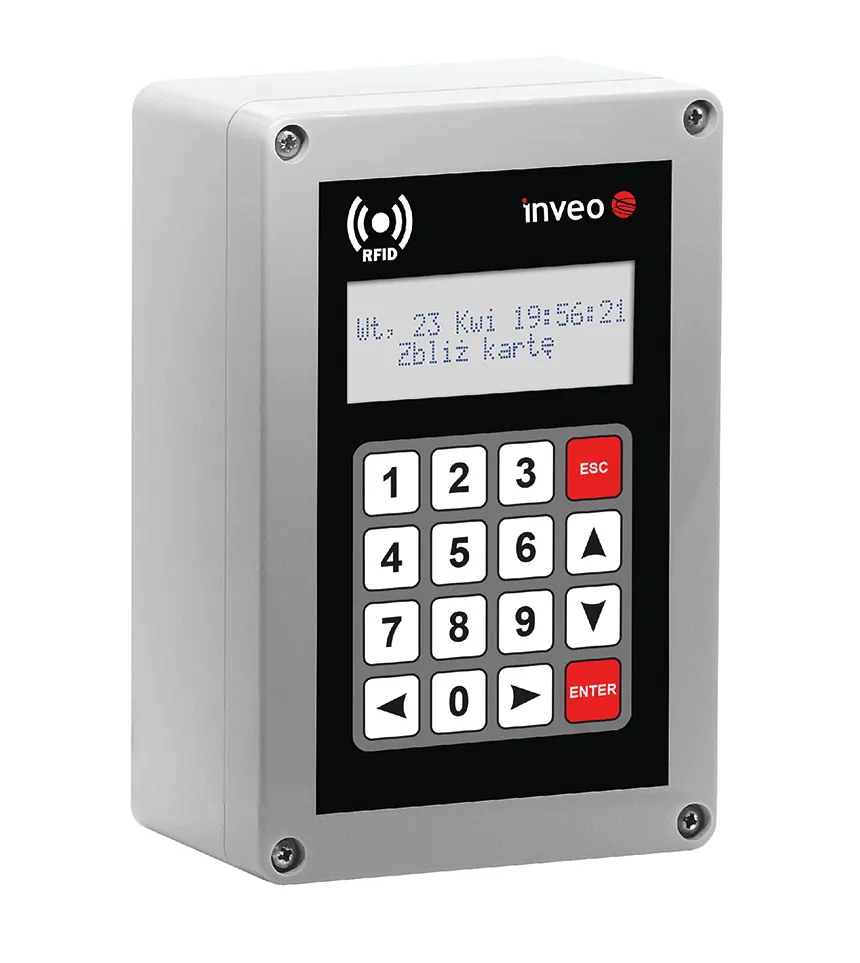
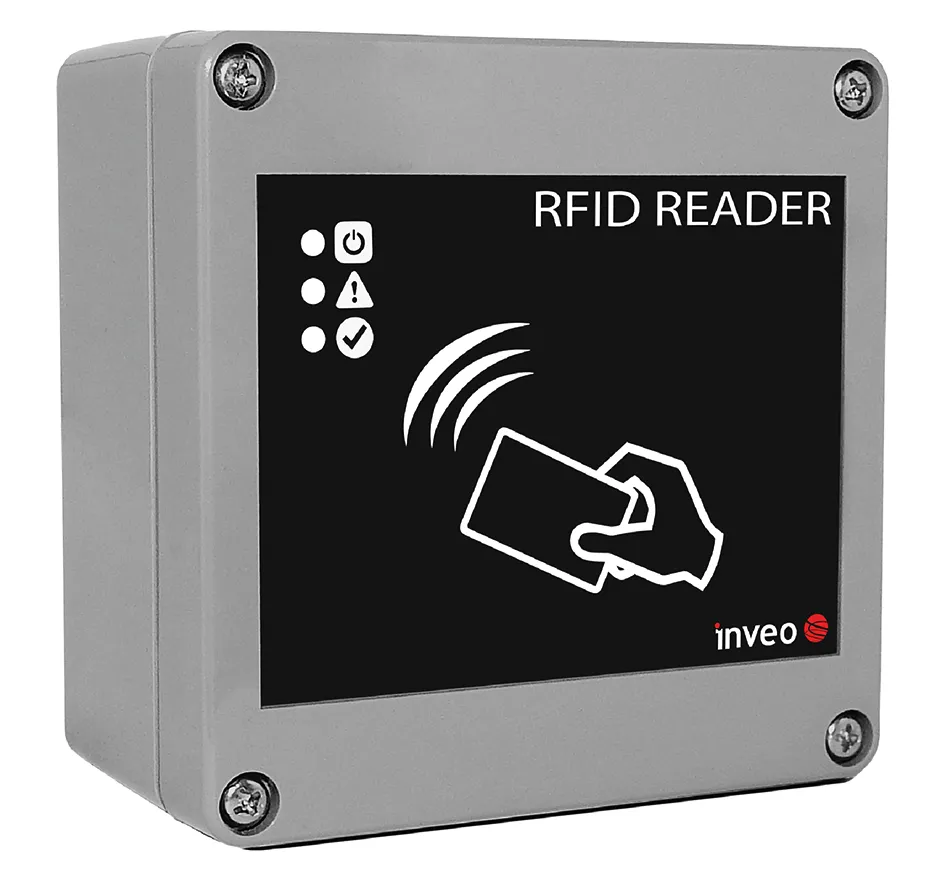
RFID badge reader
The RFID reader connects to the same computer network as the Gateway via Ethernet and is powered via PoE (through the same Ethernet cable).
The model with a keypad is used by default for collective laundry management:
The simple reader without a numeric keypad is used to switch on a single load, for example a laundry column in a laundry room (washing machine and tumble dryer).
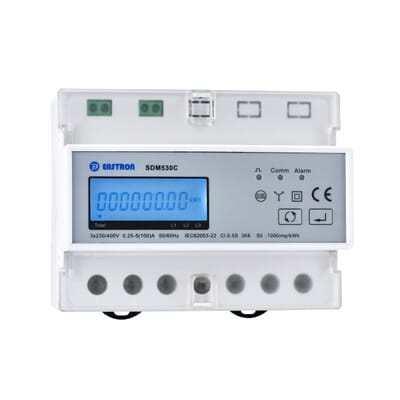
Direct relay meter >80A
The model used for collective laundry management is the Eastron SDM530C.
It is a three-phase relay meter (max 100A) connected via Modbus RS485 to the Gateway.