Virtual assistant
Installer
Planning
Installer getting started guide (read first)
Overall site planning
Climkit Site Implementation Process
Climkit Gateway and communication
Planning electricity and RCP management
Planning electric vehicle charging station management
Planning heating, water and ancillary cost management
Planning collective laundry room management
Planning charging management for electric bikes
General terms and conditions of sale
Platform configuration
Request for an installer account
Creating a new site
Adding a router (4G or LAN)
Adding the Climkit Gateway
Adding electricity meters
Registering the photovoltaic installation information
Save battery information
Adding charging stations
Adding an OCPP Remote Charging Station
Adding a 4-relay I/O module
Adding RFID readers
Adding Heat and Water Meters
Installation and connection
Install a 4G Router
Install a LAN router
Install the Climkit Gateway
Install the RS485-Ethernet converter
Install the M-Bus converter
Install a PoE switch
Installing Wi-Fi access points
Installing electricity meters
Installing charging stations
Install the heat and water meters
Install an RFID badge reader
Install a three-phase relay meter
Install a Shelly relay meter
Install the 4-relay I/O module
Verification and tests
Owner
Administrative setup
Getting Started Guide - administrative setup
Form - 1. Contact information
Form - 2. Solutions
Form - 3. Rates
Contract and documents to complete
Account online for owners
Consumer information flyers
Online access, RFID badge, and charging stations
FAQ and other information
Resident
Account and App
Electricity bill
Electric vehicle charging station
Collective laundry room
eBike Charging
Platform
Platform access
Terminologie
Site
Parameters
Creation/editing of a note or to-do item
Close an issue to be processed
Site status
Add/Modify building(s)
The steps for setting up a site
Delete/deactivate a site
Add/Edit Equipment(s)
Modify site basic information
Equipment
Add/modify a gateway
Add/modify a router
Add/modify an electricity meter
Bulk meter insertion
Mass assignment of meters to a Gateway
Add/modify a distribution zone
Add/edit a charging station
Add/edit a thermal or water meter
Add/edit a DSO meter (FTP transfer)
Remote connection to a Climkit gateway
Administration
Stakeholders
Management conditions
Viewing site management conditions
Activating/deactivating a solution
Operating method configuration
Viewing financial conditions
Creation/editing/adding a financial condition
Deleting a financial condition
Accounts
Create a consumer account
Create a contact
View and download account invoices
Send access to the platform to a contact
Add/modify the billing address
Link an existing account to a site
Changing the correspondence method
Rates and billing points
Creation/editing of a billing point
Registering a move (change of address)
Assigning an account to a billing point
Add/modify default charge advance payment for a billing point
View site consumption rates
Tariff definition based on consumption
Creation/editing of a consumption rate
Creation/editing of a tariff component
See fixed rates and subscriptions
Customizing Invoice Position Labels
View the Financial conditions billed at the billing points
RFID badge
Accounting
Tools
Meter control
Visualization
Expense statements
Introduction to the Expense Statement Tool
Create/edit an accounting period
Modify expense statement parameters
Add/edit a general expenses invoice for an expense statement
Edit advance payments collected on an expense statement
Specifics of heating and hot water production costs
Check and download meter readings for the billing period
Distribute costs and generate expense statements
Exporting individual consumption data for the billing statement period
API
Table of Contents
- Categories
- Installer
- Installation and connection
- Installing electricity meters
Installing electricity meters

This article describes the on-site installation of electricity meters. For the equipment to function, configuration on the Climkit platform is also required. Links are available at the end of the document.
This step occurs after installing a router and a Climkit Gateway (or an RS485-Ethernet converter in the case of a Cloud Gateway)
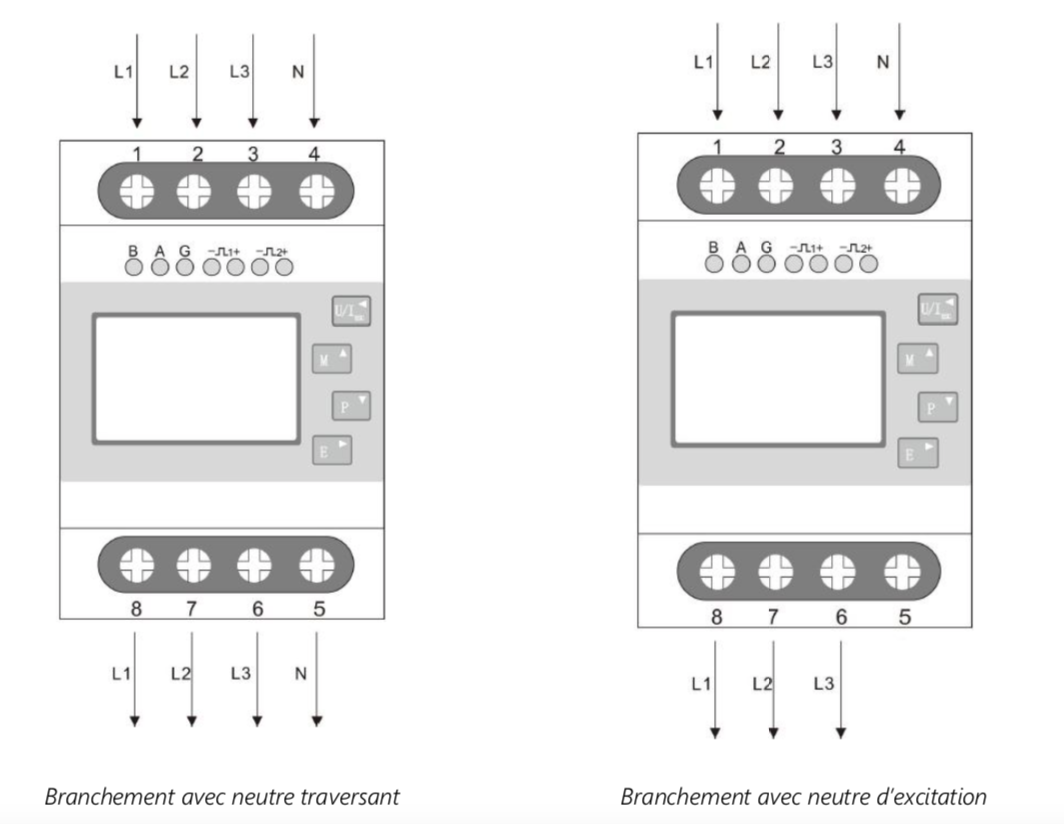
1. Direct meter installation
This installation allows for the measurement of currents with an intensity of < 80A
- Connect the phases from the network side via the top (L1, L2, and L3).
- Connect the consumer (or the photovoltaic inverter) via the bottom (L1, L2, and L3).
- Connect the neutral at the top and/or bottom of the meter (N).
2. Indirect meter and Current Transformer (CT) installation
This installation allows for the measurement of currents with an intensity of > 80A.
2.1 Install the meter
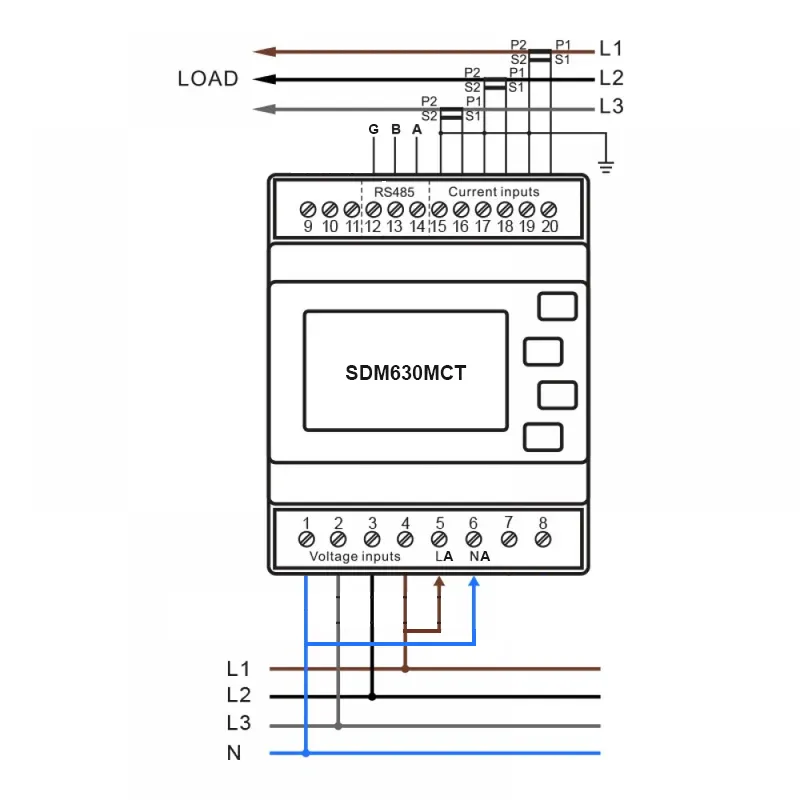
- Connect each phase and the neutral to the voltage terminals at the bottom of the meter according to the diagram below.
- Create a link (short circuit) between L1 and LA, and between N and NA.
- Connect each CT to the terminals at the top of the meter, respecting phases L1, L2, and L3.
2.2 Configure the CT ratio:
The CT ratio (CT rate) is equal to the primary current of the CT divided by its secondary current. The primary current is indicated on the CT. The secondary current is 5A.
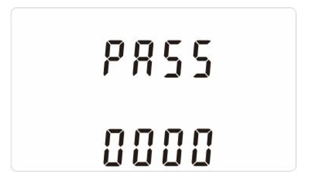
Press the "E" button for 3 seconds and enter the default password (1000) using the "P" and "M" buttons. Confirm by pressing "E" for a long time.
Navigate to "CT rate".
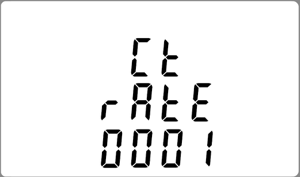
Press the "E" button for 3 seconds and enter the CT rate corresponding to the primary current of the installed CT according to the table below. Confirm by pressing "E" for a long time.
Primary Current | CT Rate (ratio) |
100 A | 20 |
200 A | 40 |
400 A | 80 |
600 A | 120 |
800 A | 160 |
1000 A | 200 |
1500 A | 300 |
2000 A | 400 |
2.3 Voltage (U) Measurement:
Connect the neutral to N and each phase to L1, L2, and L3.
Also connect LA to L1, and NA to N, to power the meter.
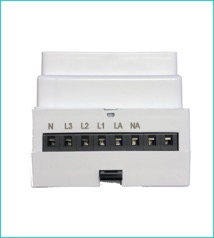
2.4 Current (I) Measurement
Open and securely close each CT around each phase cable whose current you wish to measure.
Connect the S1 (white) and S2 (black) wires of the CT to the top of the meter for each phase.
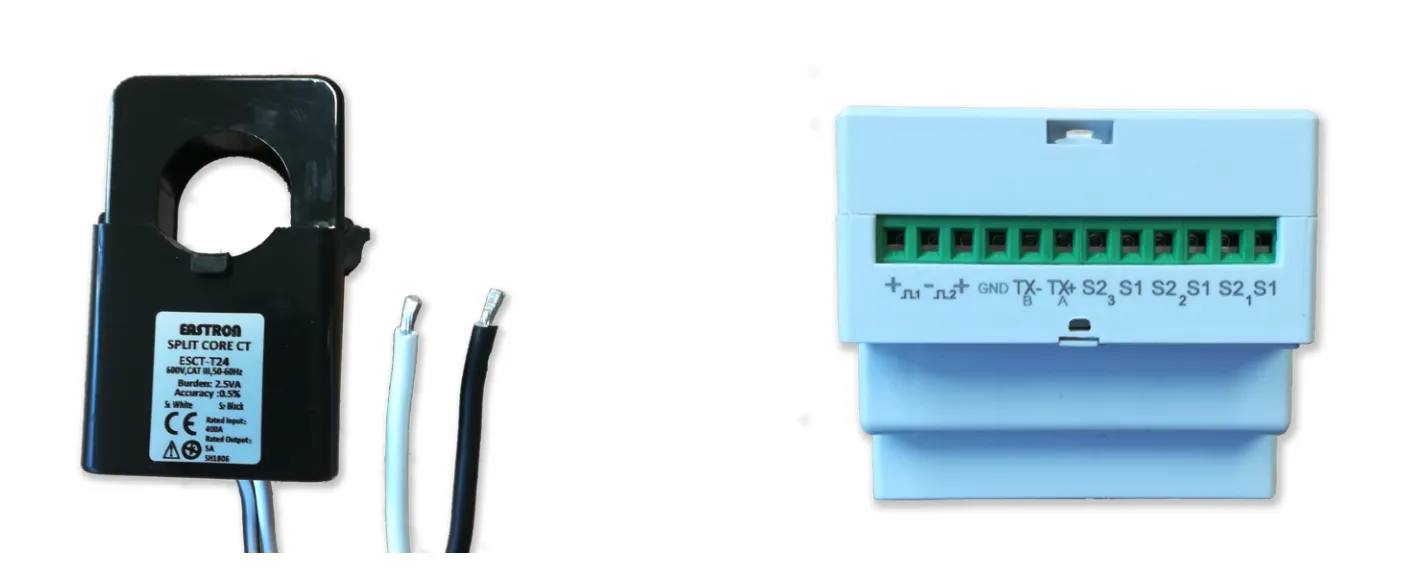
2.5 Voltage and Current Connection Verification
Press the "M" button until the Power Factor (PF) for each phase L1, L2, and L3 is displayed.
The displayed values should be close to 0.9.
If this is not the case, the voltage measurement and the current measurement are not on the same phase. Move the S1 and S2 pairs to another phase until a correct value is obtained.
2.6 CT Direction Verification
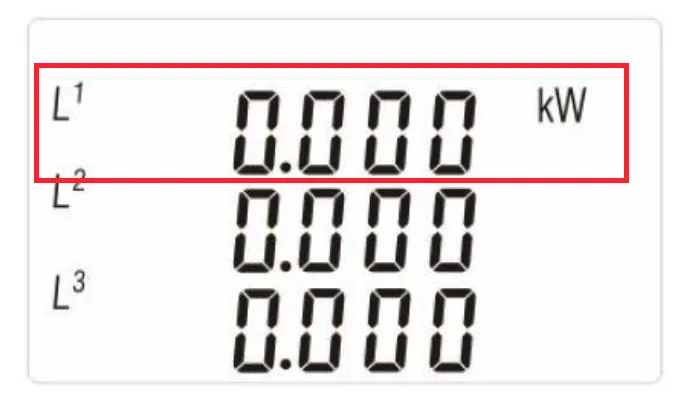
Press the "P" button until the instantaneous active power (kW) for each phase L1, L2, and L3 is displayed.
The values must be positive (consumption meter) or negative (production meter) indicated by the "-" sign.
Always check the input meter with the site's inverters enabled to obtain positive values. Do not rely on the arrow indicated on the CT.
If the displayed value is not in the correct direction, reverse the S1 and S2 wires for that phase.
3. RS485 Bus Connection
The meters (Slaves) are connected via an RS485 bus network to the Gateway (Master) according to the diagram below.
Use terminals A, B, and G on the meter.
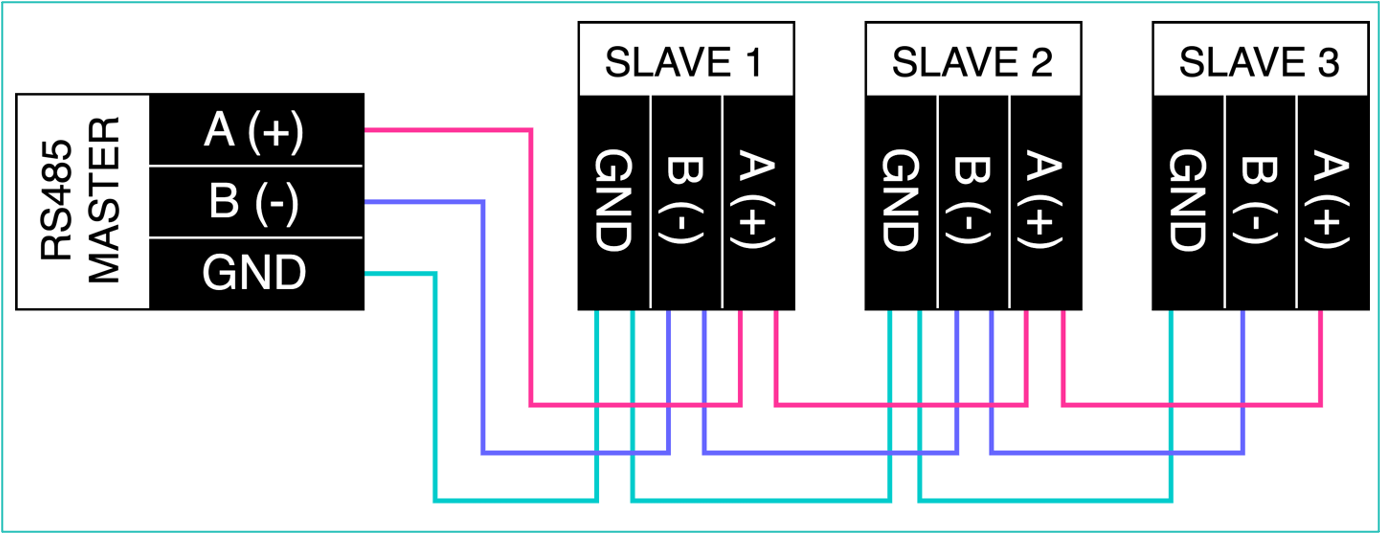
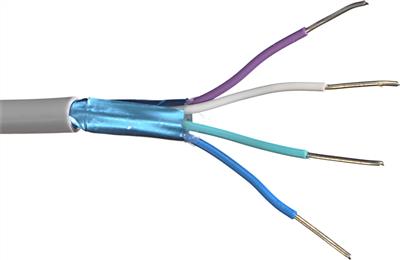
The bus connection requires neat and rigorous work. For new panels, it is recommended to do this in a workshop and use a shielded U72 cable 4 x 0.8mm2.
4. Modbus Addressing of Meters
The meter addressing is done directly on the meter.

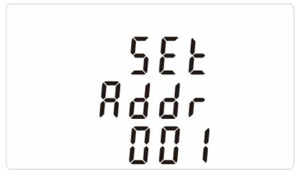
Under "SET Addr", enter the meter address defined on the online portal (see above).
To change the address, press the "E" button for 3 seconds, then select the unit to modify using the "E" button, and then change the unit using the "P" or "M" buttons.
Once the address is correctly edited, confirm by pressing the "E" button for 3 seconds.
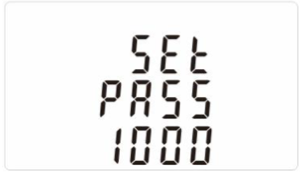
Change the password for each meter under "SET PASS" with the password indicated under EQUIPMENT > Communication > Gateway: