Table of Contents
Global planning of a Climkit site

The Climkit energy management system covers various needs related to managing energy flows on a site. Depending on the building's configuration and intended use, a project may involve a single energy flow or combine several.
This article presents all the solutions offered by Climkit as well as the main associated technical installation options. It serves as a project planning support to quickly identify relevant elements and structure the installation consistently.
Solutions can be deployed independently or combined according to the site's needs. This flexibility allows the installation to be adapted without unnecessary complexity.
Climkit solutions
A Climkit solution corresponds to the implementation of all elements necessary for managing a given energy flow on a site.
It combines hardware equipment, software features, and commissioning services, supplemented where necessary by operational services.
Each solution allows for measuring and controlling consumption, ensuring fair distribution and individual billing among the various occupants and consumers.
For each solution, a list of preliminary questions serves as a support for technical reflection and helps anticipate points to clarify during project preparation.
In case of doubt about the configuration to adopt or compatibility with an existing site, an early exchange with Climkit allows for the validation of a principle diagram and avoids later adjustments.
Communication with the Climkit Gateway
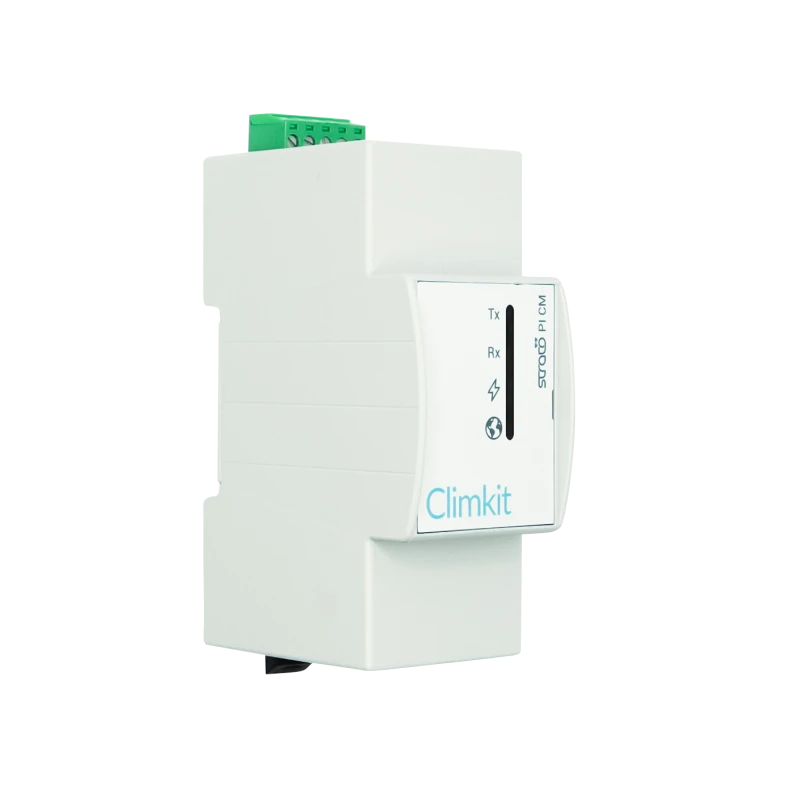
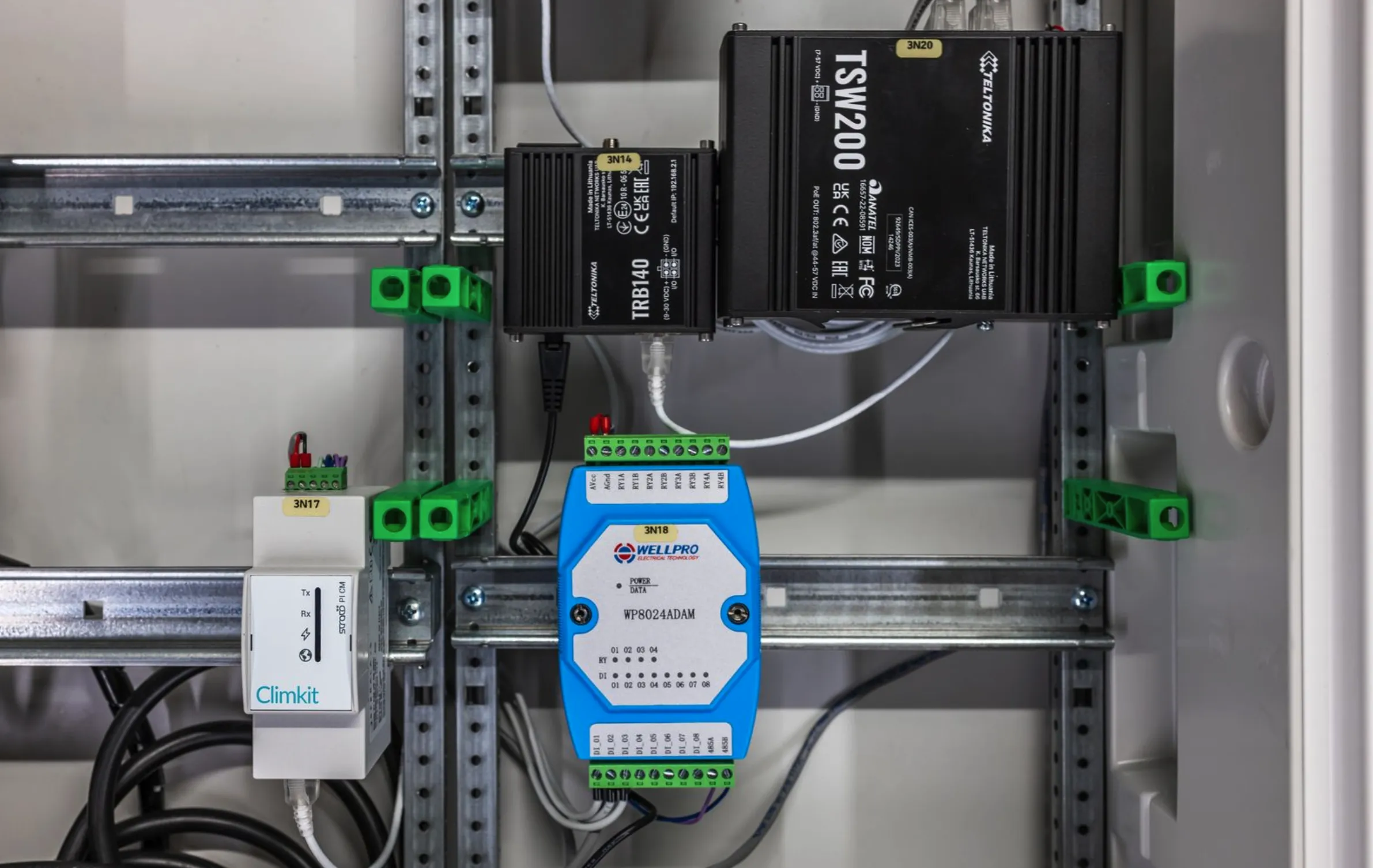
All Climkit solutions require the Gateway to communicate with the various installed equipment, particularly meters and charging stations.
Preliminary questions
- Is a wired Internet connection available on-site or should a Climkit 4G Router be planned?
- Is there a 4G signal in the electrical room or should an extension and/or external antenna be planned?
- Are there several buildings on the site and several electrical rooms? Can they be connected by a bus or Ethernet cable?
Electricity management and RCP
In a building equipped with a Photovoltaic installation and organized as a self-consumption community (RCP), Climkit ensures the complete management of electricity produced and consumed by connecting the various meters to a Climkit gateway to measure, distribute, and visualize energy flows.
This approach allows for optimized collective self-consumption while ensuring fair billing for the energy used. Each resident can follow their consumption in real-time on the platform.
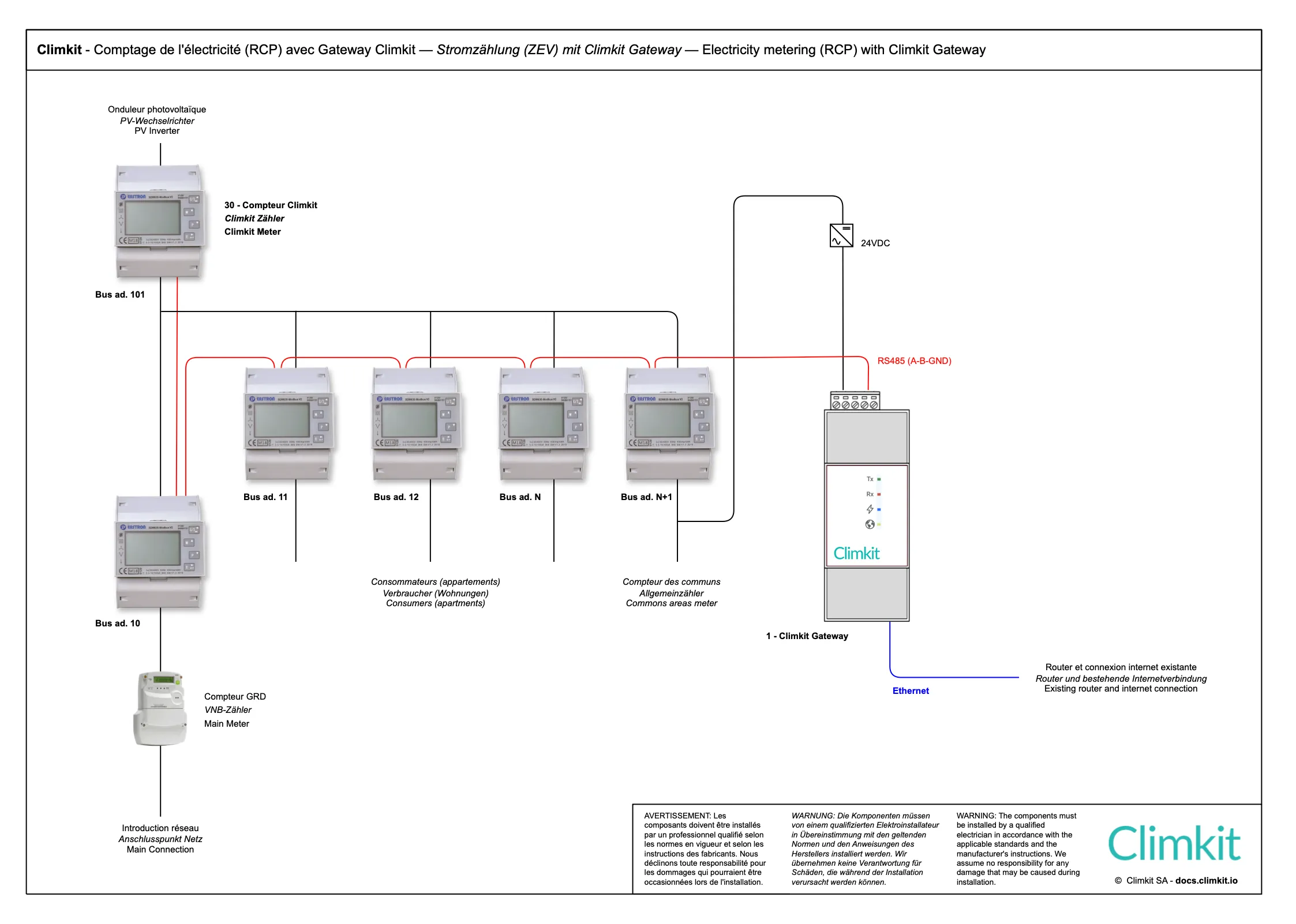
The principle is based on private electricity meters connected to the Gateway via an RS485 communication bus and the open Modbus protocol:
Installation examples
RCP site including private meters for apartments, common areas, photovoltaic production, and the general grid input in series with the DSO input meter.
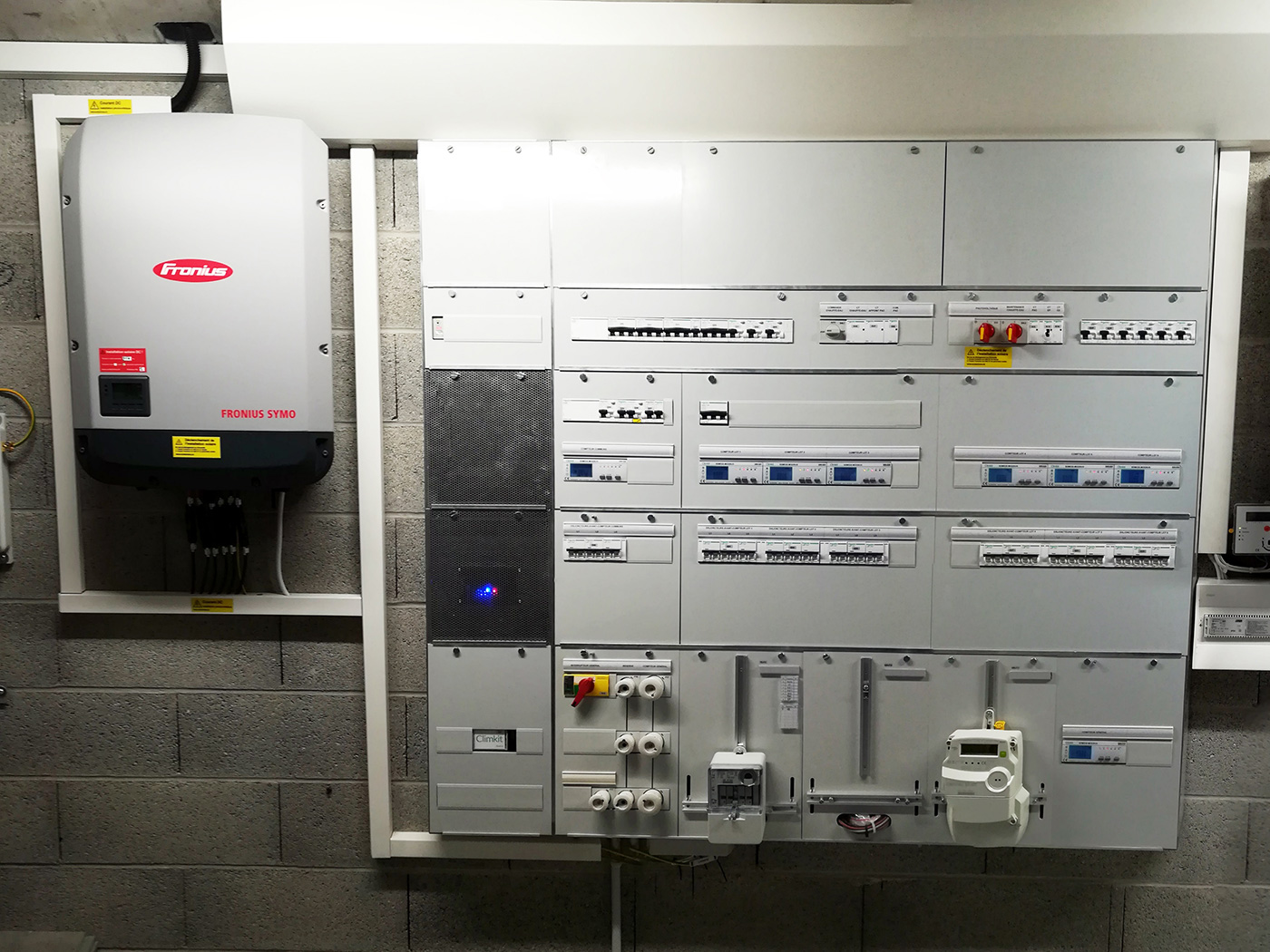
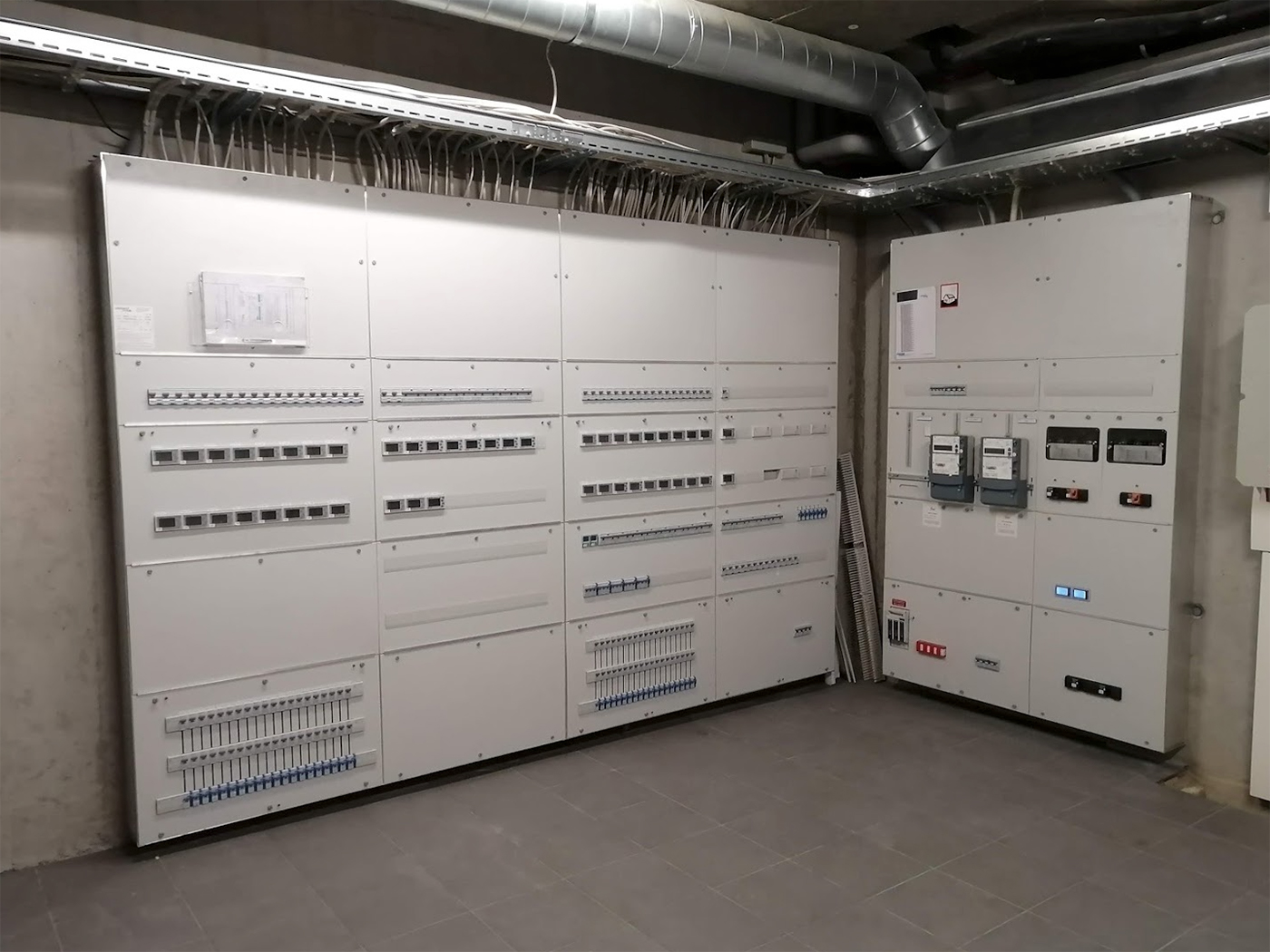
RCP site with a distribution board and its private meters for apartments and commons, and an input board with Climkit private meters and DSO meters for input and photovoltaic production:
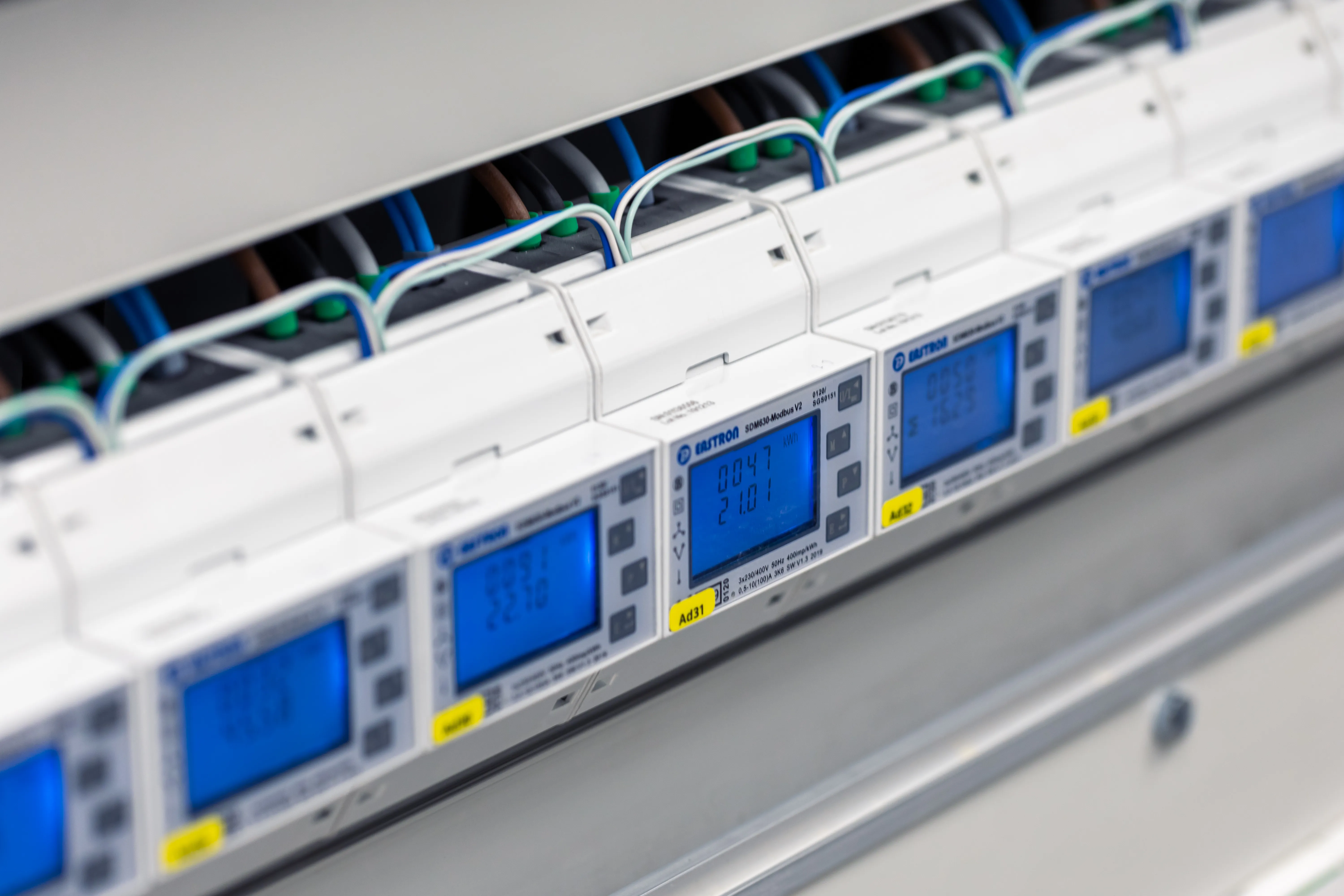
The meters are connected in series to the Climkit Gateway by an RS485 communication bus.
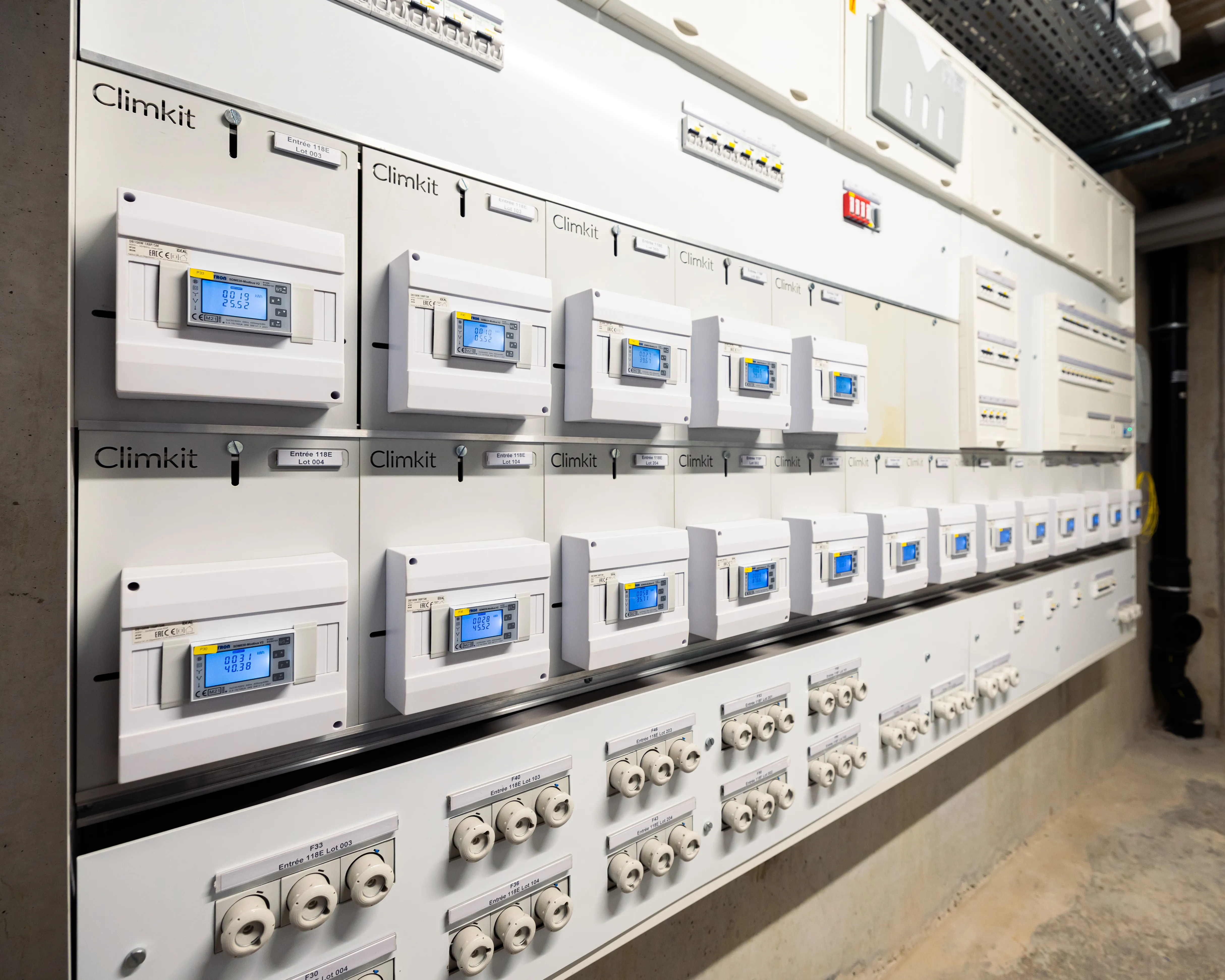
Board with Climkit meters installed on existing DSO meter locations using the Climkit T-Box kit (plate and DIN housing):
Preliminary questions
- Is it planned to manage electricity, for example within an RCP?
- What is the number and type of meters to be planned?
- General grid input
- Photovoltaic installation(s)
- Housing / apartments
- Annex premises, businesses
- Commons
- Other common areas such as the parking
- Electric vehicle charging stations
- Battery
- Other surfaces
- Which meters are direct (<80A)?
- Which meters are indirect with CTs? What amperage for the CTs?
- Are the meters integrated into the electrical board or is it planned to install them on existing DSO meter locations?
Optimization and energy storage (EMS)
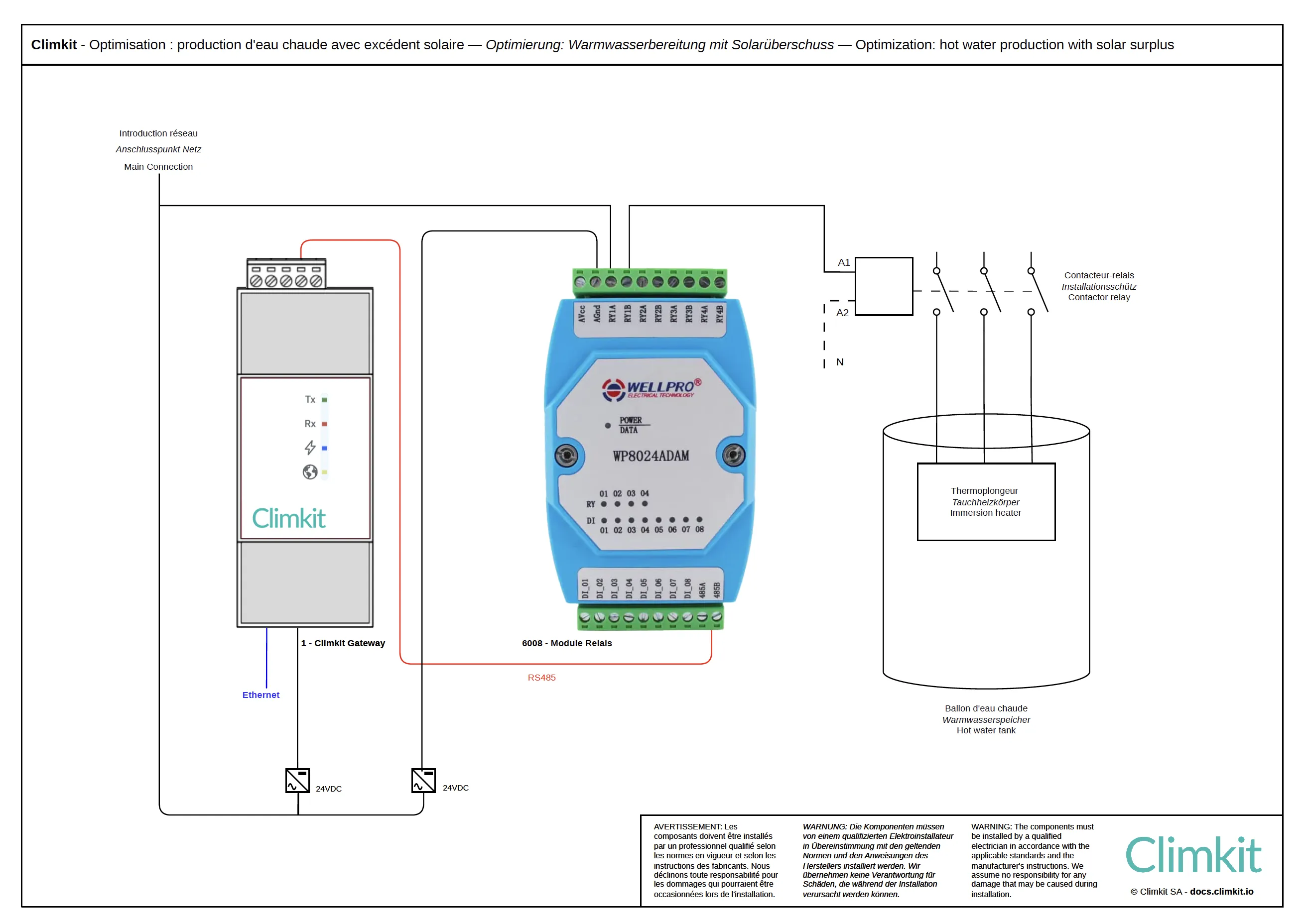
The Climkit Energy Management System (EMS) increases the self-consumption rate of solar electricity produced on-site. It manages a storage battery to store the surplus and release it when production drops, and controls certain appliances (water heater, heat pump, charging stations) based on excess production.
Preliminary questions
Battery
- Is it planned to store energy in a battery?
- If a storage battery is planned: do we only want to read its data, or control the charging/discharging?
- If a battery is planned: is it compatible with reading/control via Modbus TCP (make/model)?
- If a battery is planned: AC coupling (own inverter) or DC coupling (hybrid inverter)?
Control relays
- Can we plan to optimize self-consumption by controlling the heat pump or water heater?
- List of appliances that could be controlled according to solar production: water heater, heat pump, charging stations, others?
- Number of relays to be planned (4 per I/O module)?
- If water heater control is planned, is it already equipped with an immersion heater?
- If heat pump control is planned, does it have an SG-Ready potential-free contact?
Management of electric vehicle charging stations
Climkit allows for the installation and management of charging stations in collective parking lots.
The system regulates the charging power based on grid capacity and available energy, controls access via individual RFID badges, and manages the billing for each consumer's charges.
The stations communicate with the Gateway via Wi-Fi or Ethernet using the OCPP protocol:
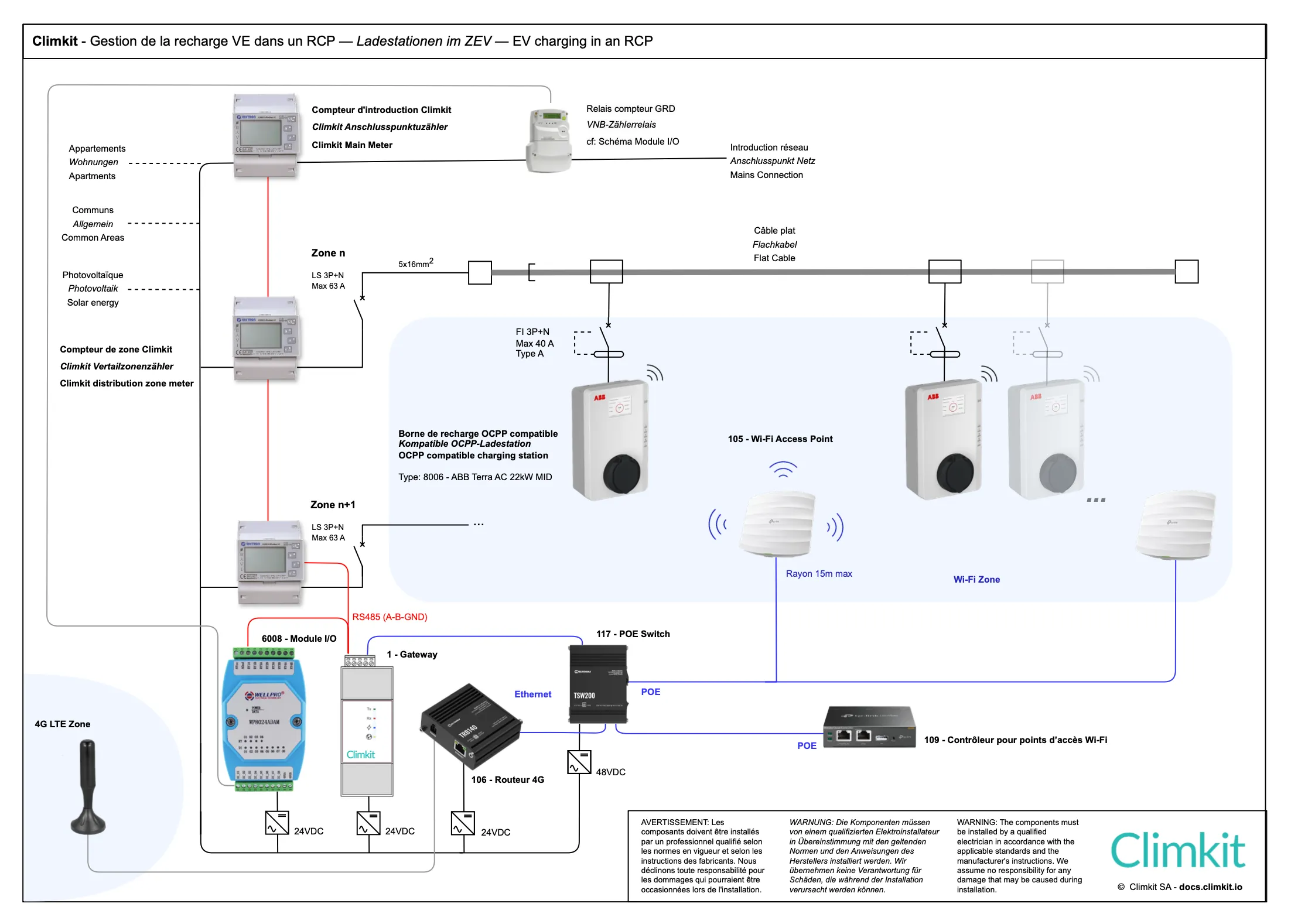
Flat cable and Wi-Fi
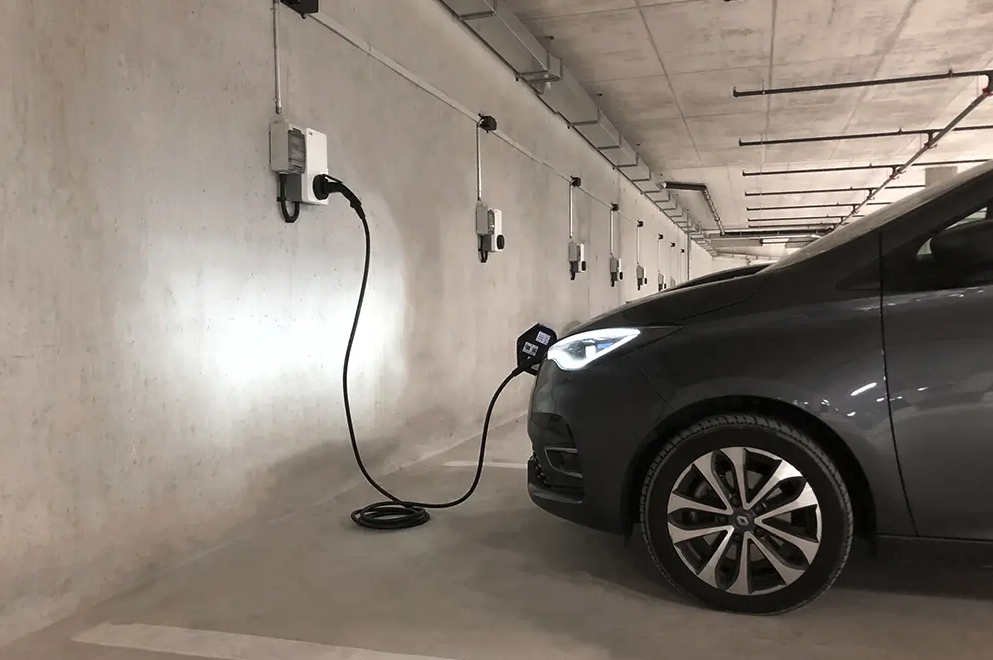
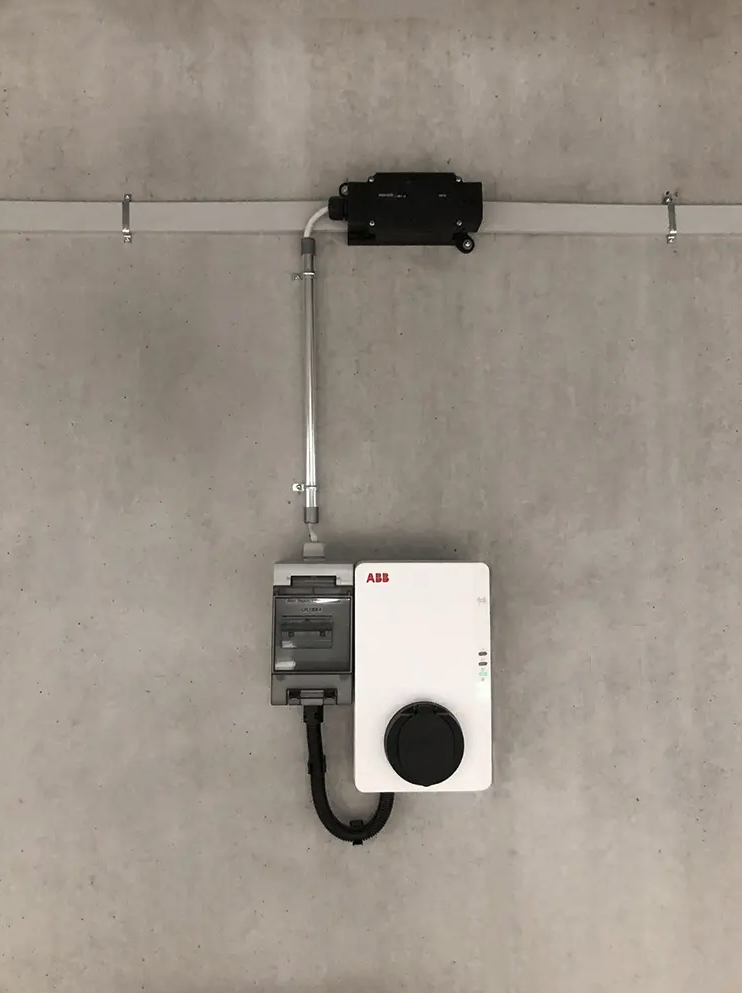
Climkit recommends a basic infrastructure consisting of a flat cable and a Wi-Fi network to facilitate the gradual addition of charging stations without major intervention on the existing wiring.
Preliminary questions
- Is it a scalable installation with flat cable or only a few charging stations?
- How many parking spaces could accommodate a charging station?
- How many flat cable feeds are planned in the electrical board?
- How many charging stations are to be planned immediately?
- Do the stations communicate via Wi-Fi or are they connected to the IP network via wired Ethernet/RJ45?
Thermal energy and water management
Climkit ensures the reading of heating and hot water consumption in accordance with the requirements of the federal regulations for the individual statement of energy and water costs (DIFEE).
Each housing unit or surface is equipped with a thermal meter (heating) and a hot water meter, supplemented by general meters allowing for the allocation of the share for commons and hot water production.
These measurements are used to establish transparent and accurate statements based on actual consumption rather than estimates or surface area.
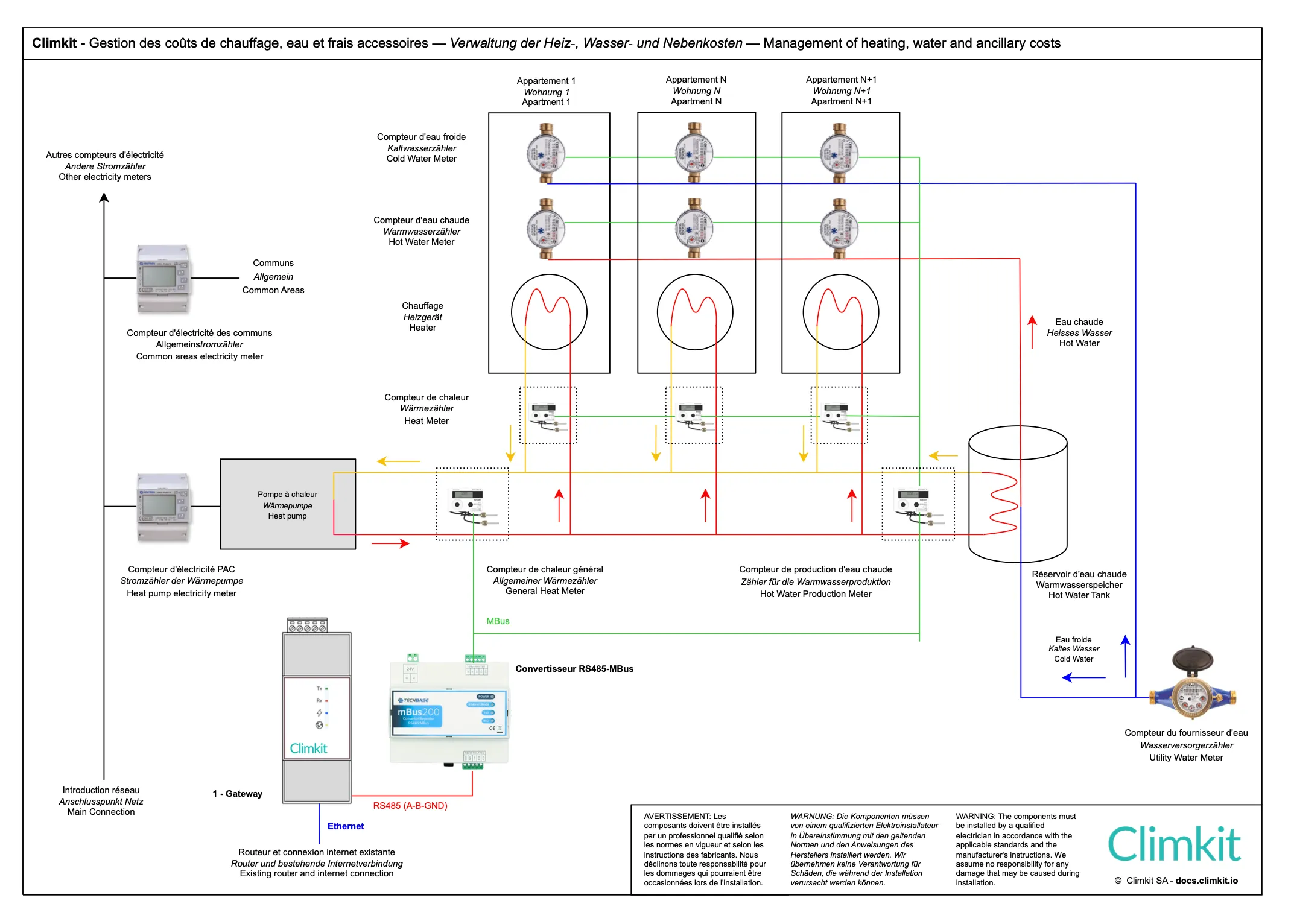
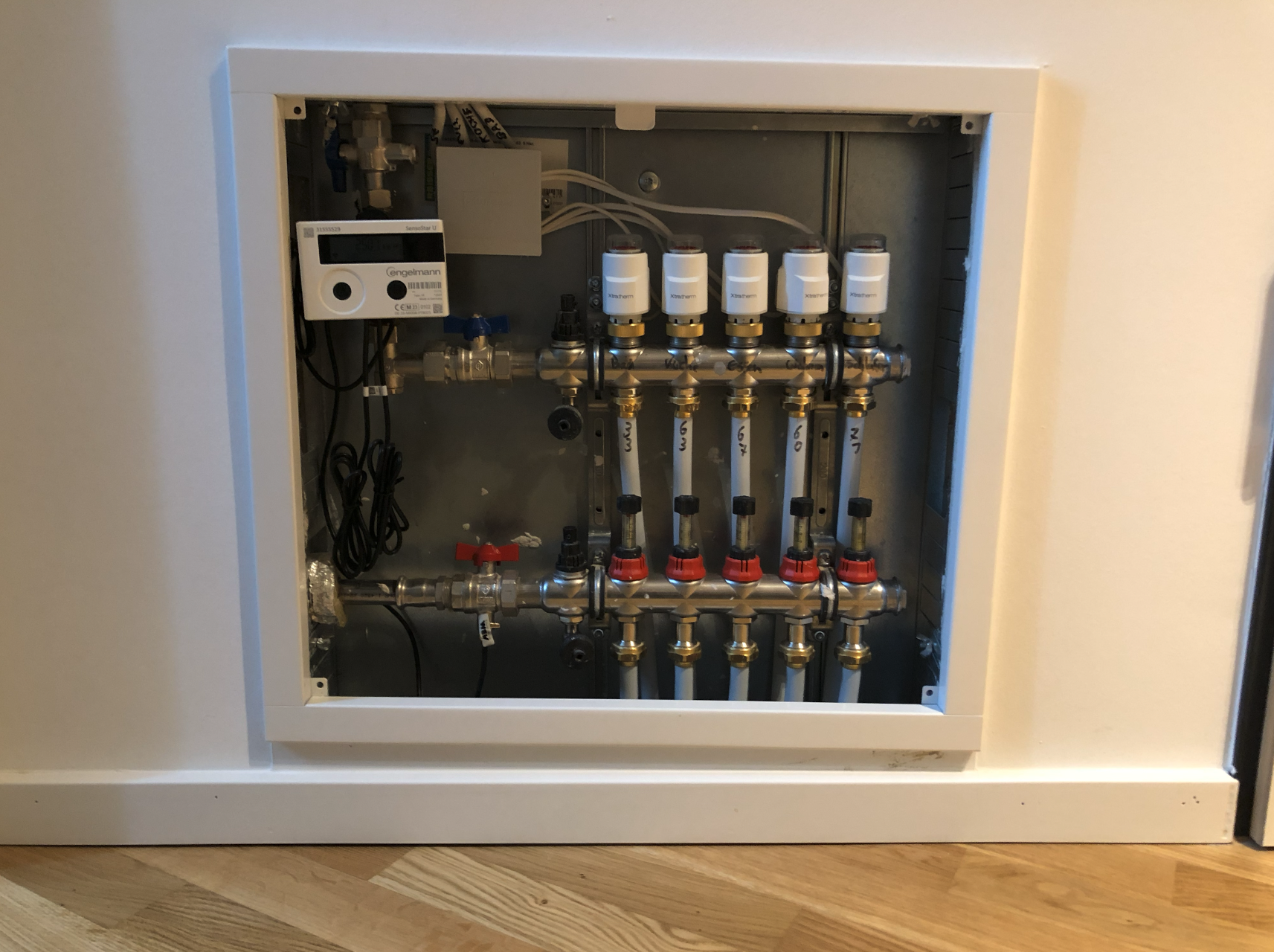
Example of a heat manifold located in an individual apartment and equipped with a thermal meter:
Preliminary questions
- Is it planned to install wired M-Bus type heating and water meters?
- What types and how many meters are planned: hot water, cold water, heat?
- Is the meter bus brought back to a single location near the electrical board?
Collective laundry management
Climkit offers a simple and reliable system for managing collective laundry rooms.
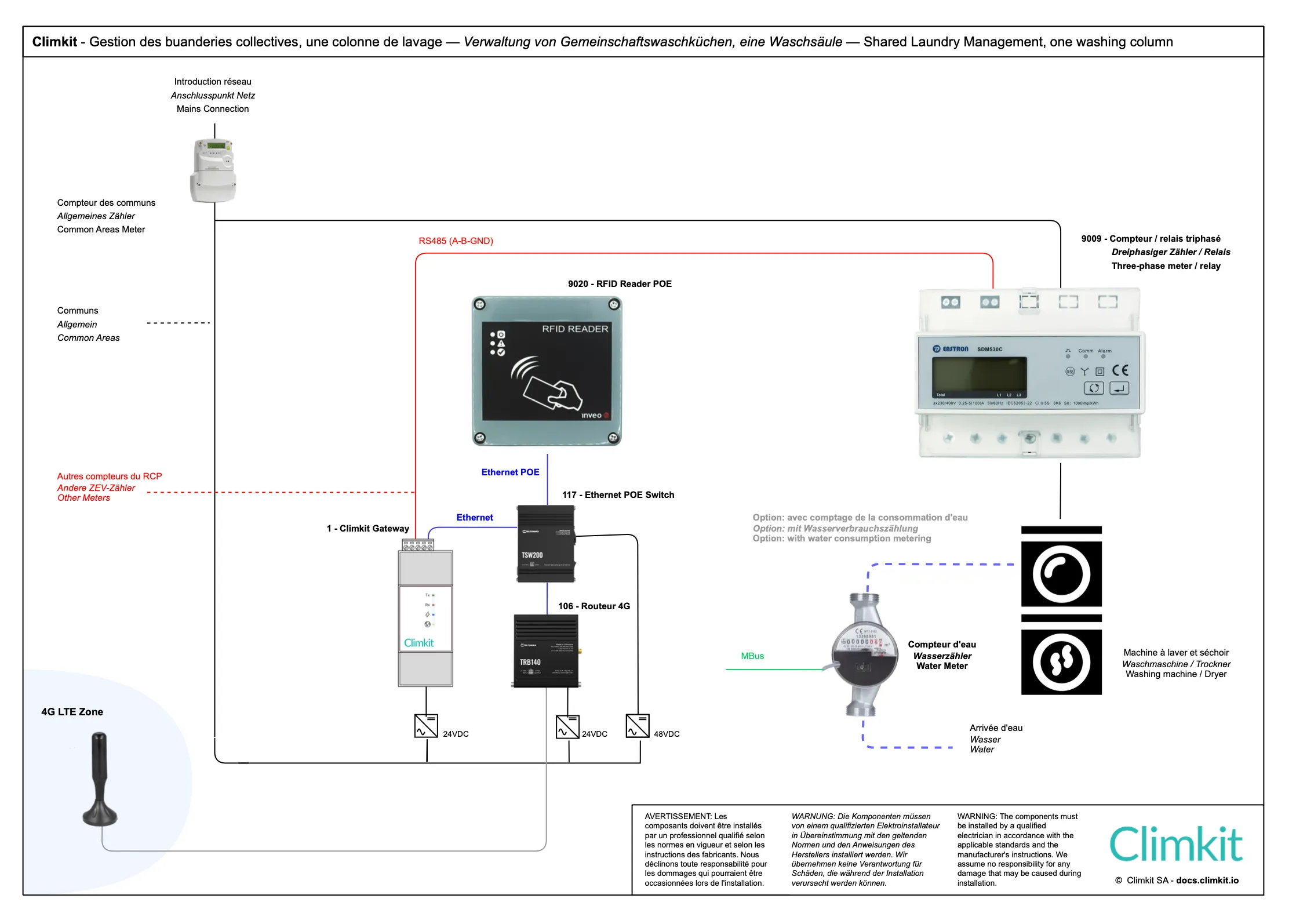
An RFID reader connected to the Gateway identifies users and switches on the power supply for washing machines, dryers, or room air dehumidifiers (secomats).
This system integrates naturally with other Climkit solutions, allowing all consumption to be grouped on the same platform.
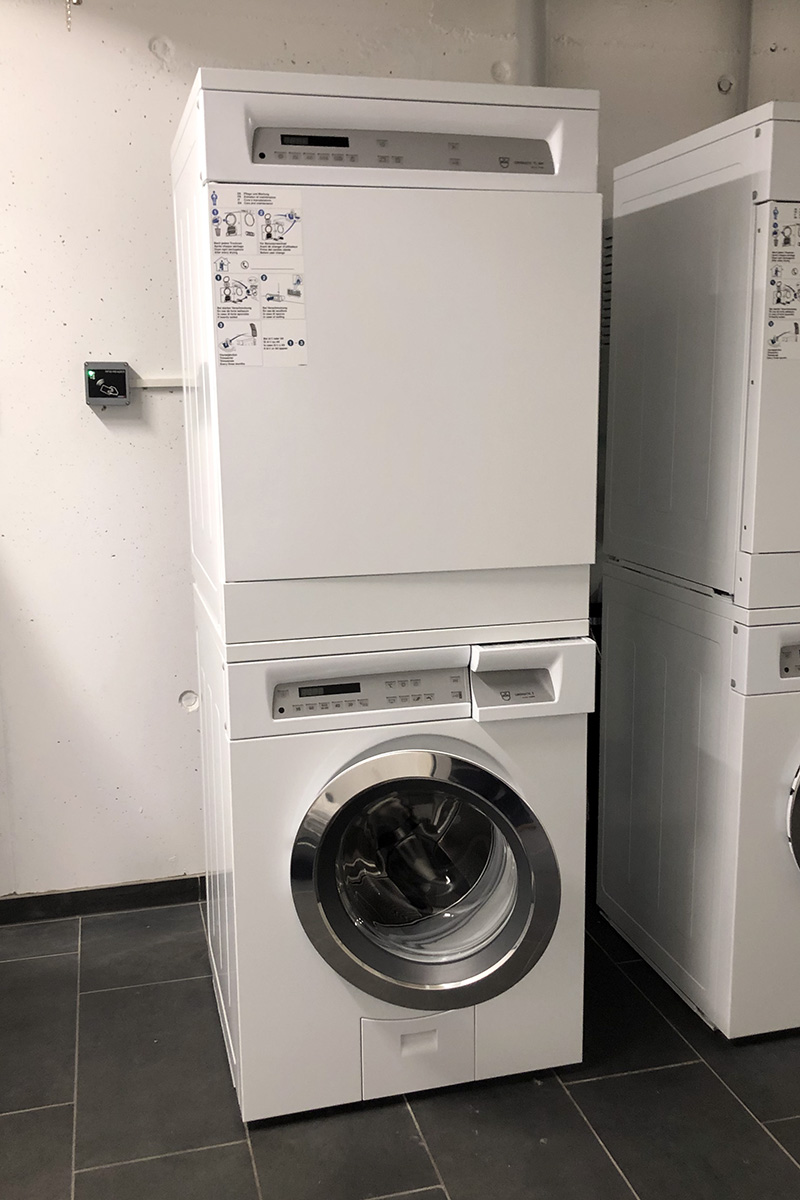
Washing column with RFID reader mounted on the wall to the left
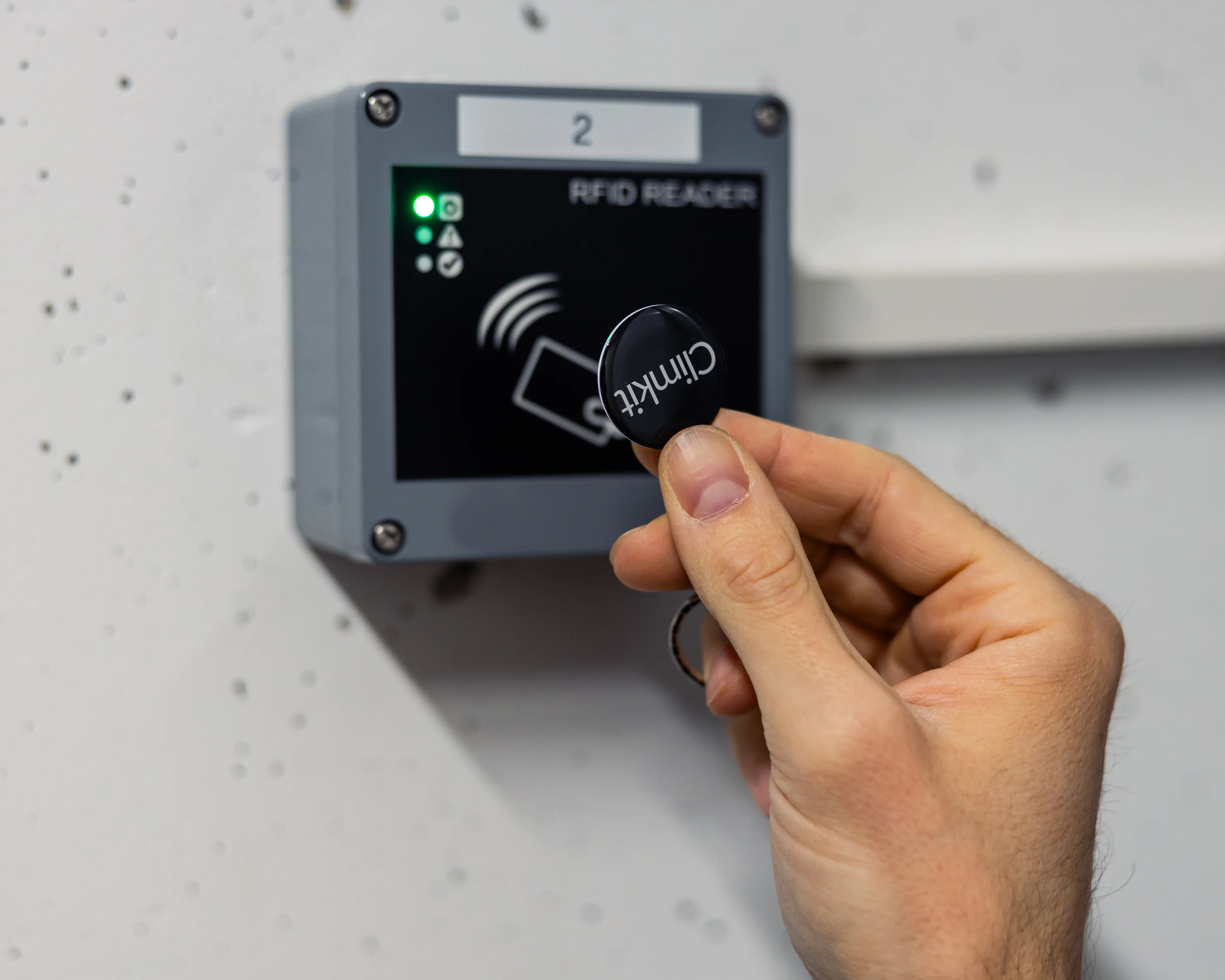
RFID without keypad for a single washing column
Preliminary questions
- What is the number of laundry rooms?
- How many washing machines, dryers, and secomats per laundry room?
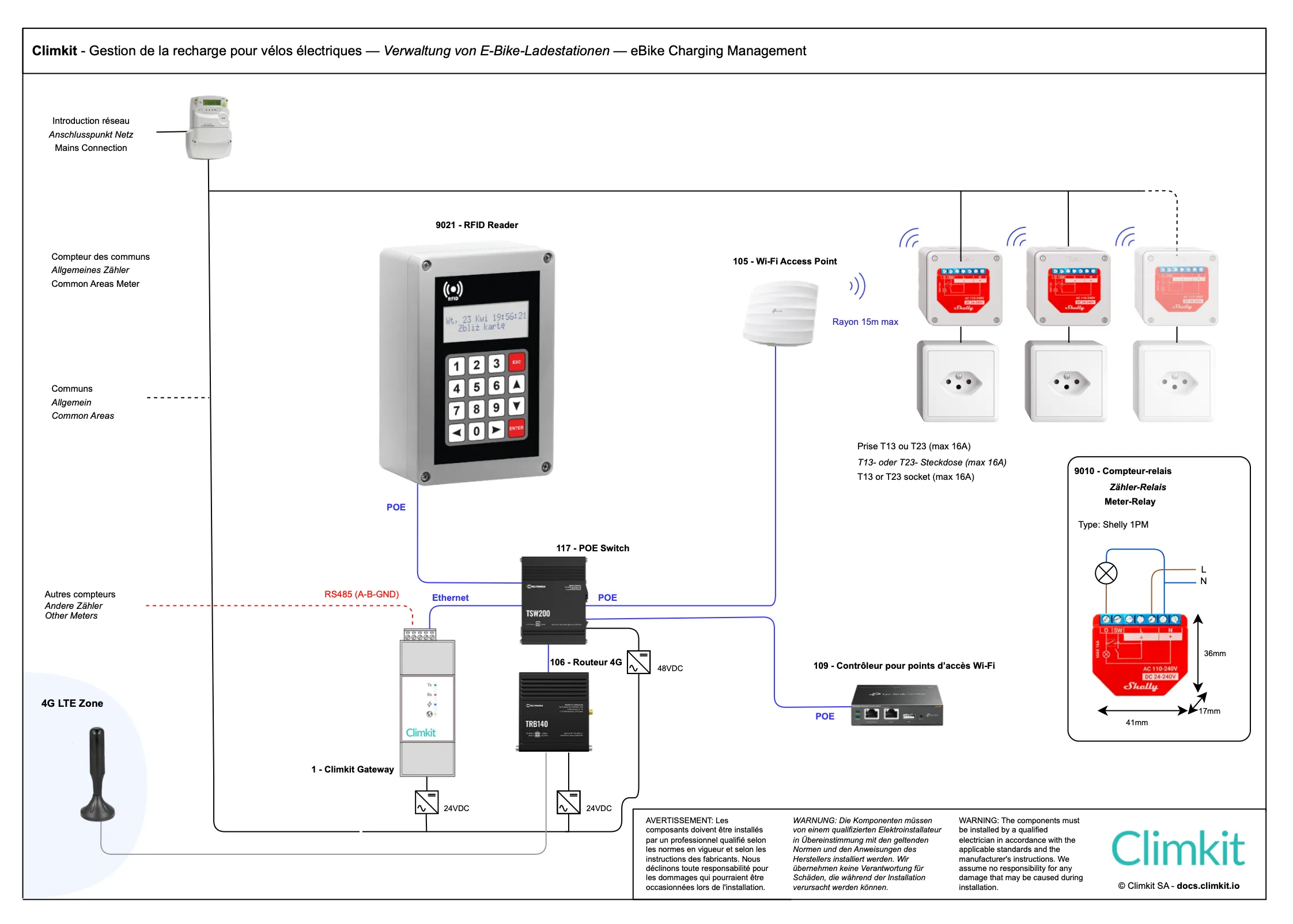
Electric bike charging management
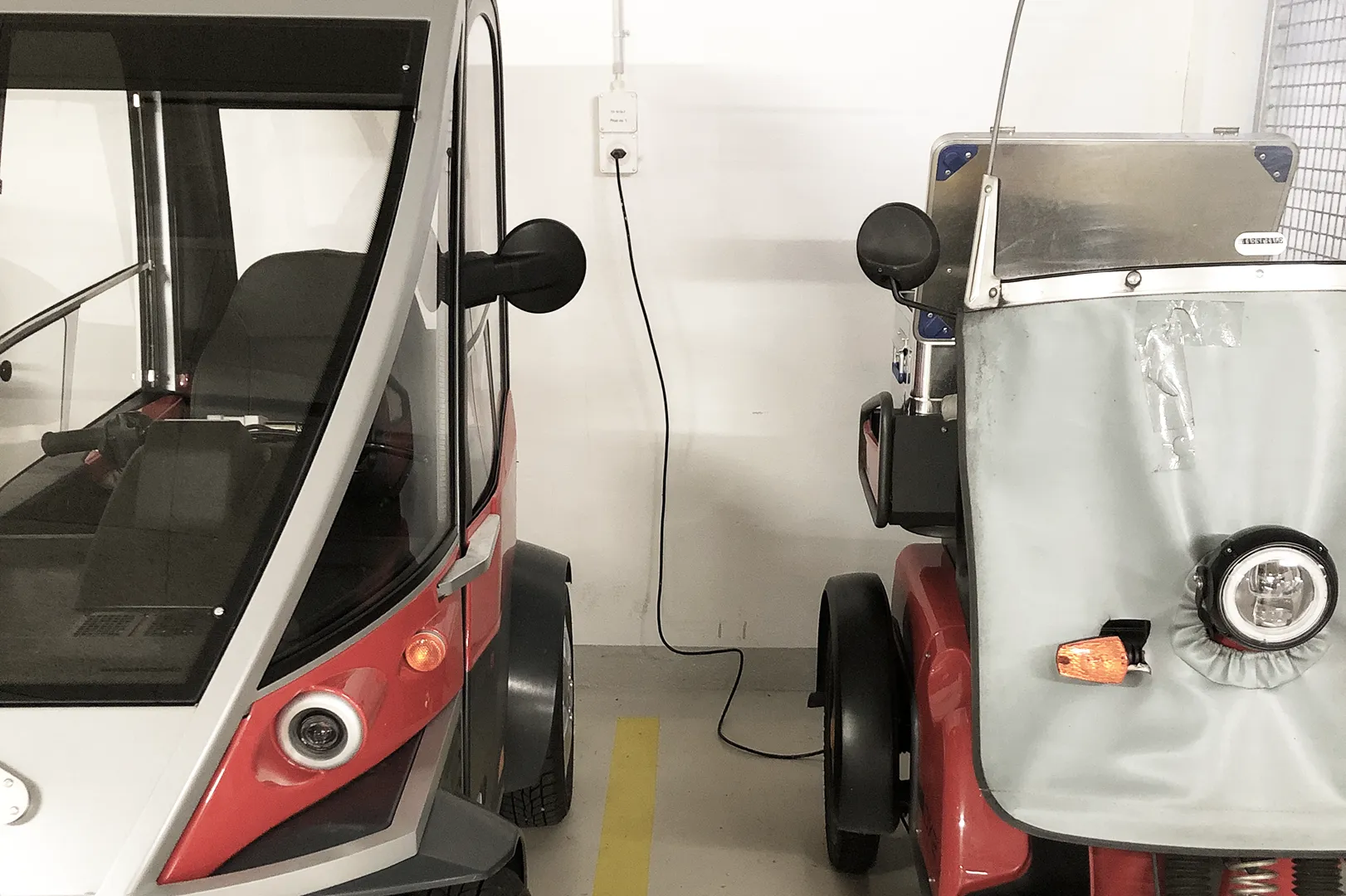
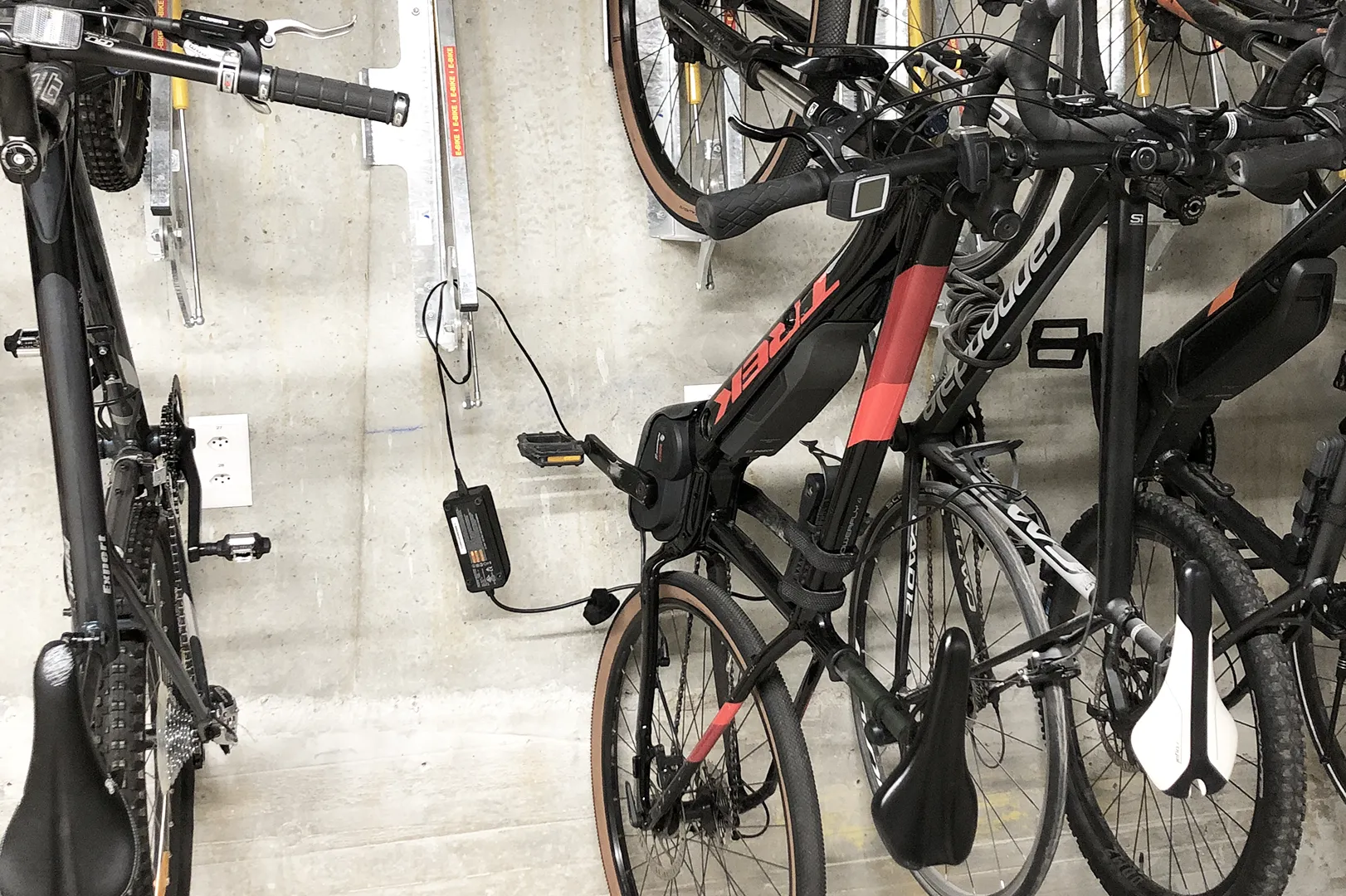
Climkit allows for the installation of connected sockets that offer residents the ability to recharge their eBikes or electric scooters.
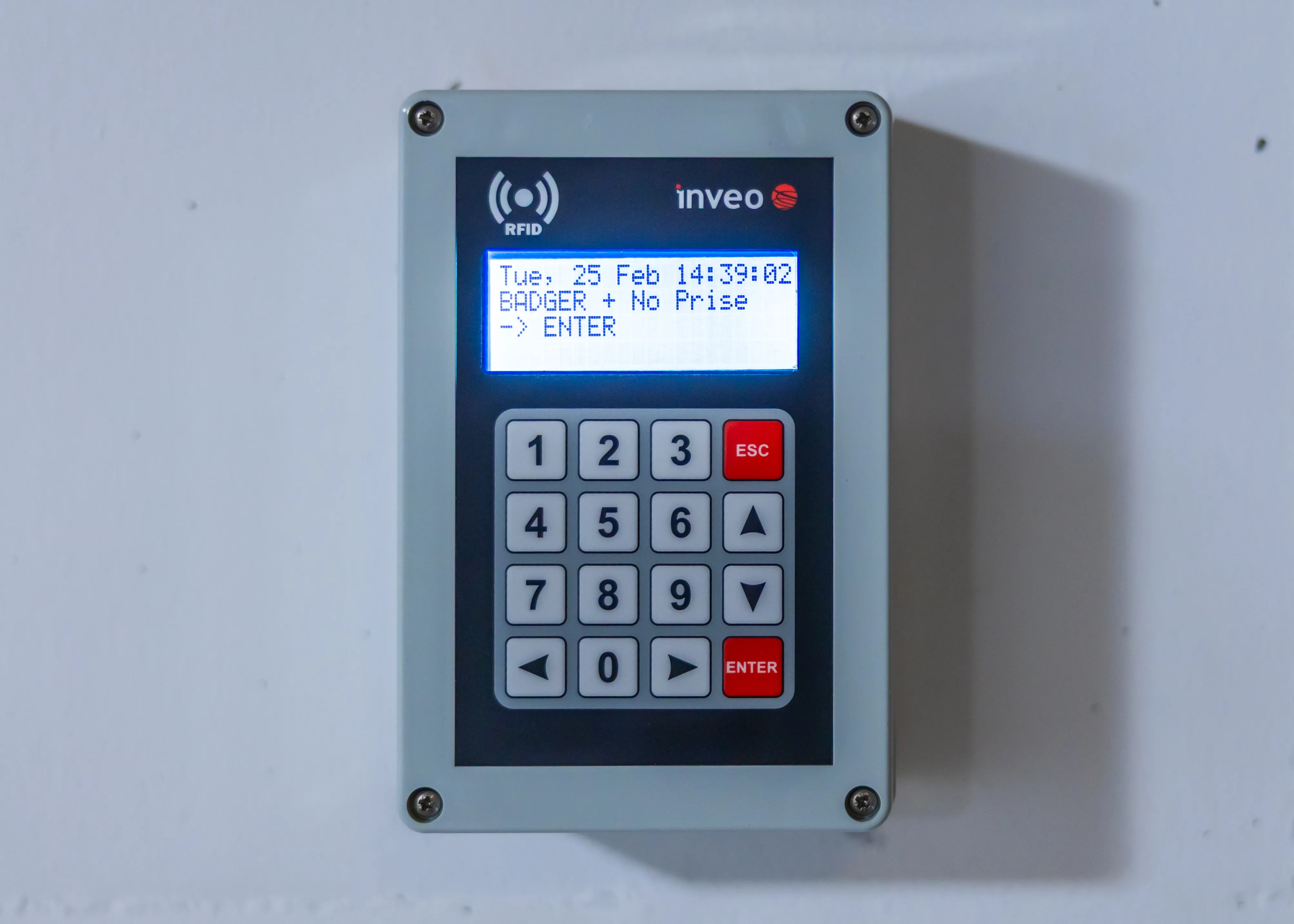
Access is provided via RFID badge and consumption is recorded individually.
Here is a typical connection diagram:
Installations with surface-mounted or integrated sockets:
Preliminary questions
- How many bike rooms are to be equipped?
- Is the bike room indoors or outdoors?
- What is the number of sockets?