Table of Contents
Climkit Gateway and communication

This article describes the installation planning. For on-site implementation and equipment configuration on the Climkit platform, please refer to the links at the end of the article.
1. The Climkit Gateway
The Climkit Gateway is the communication gateway that centralizes and manages all equipment for Climkit solutions. It collects and transmits data from connected devices (meters, charging stations, RFID readers, etc.) to the online Climkit platform.
The Climkit Gateway communicates with equipment via RS485 serial networks and TCP/IP networks, using standard and open (non-proprietary) communication protocols, notably Modbus, M-Bus, and OCPP.
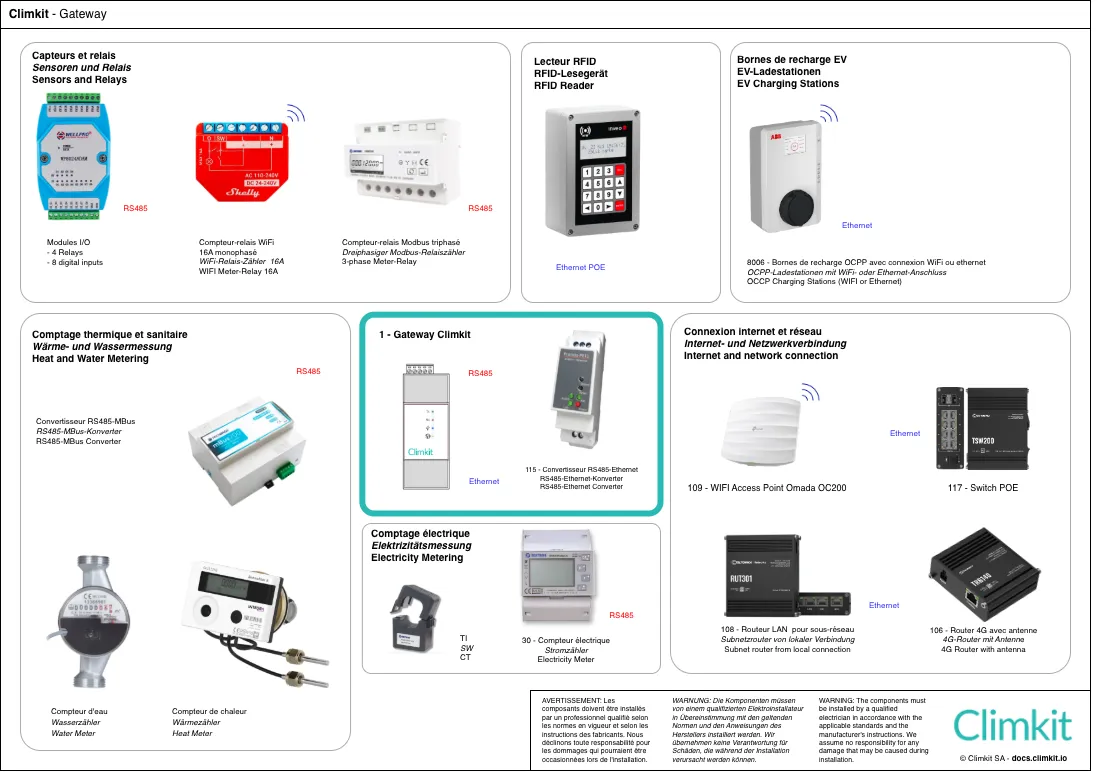
The main equipment connected and managed by the Climkit Gateway includes:
- Electricity meters
- Electric vehicle charging stations
- RFID readers
- Control relays
- Sensors
Installation in the electrical panel
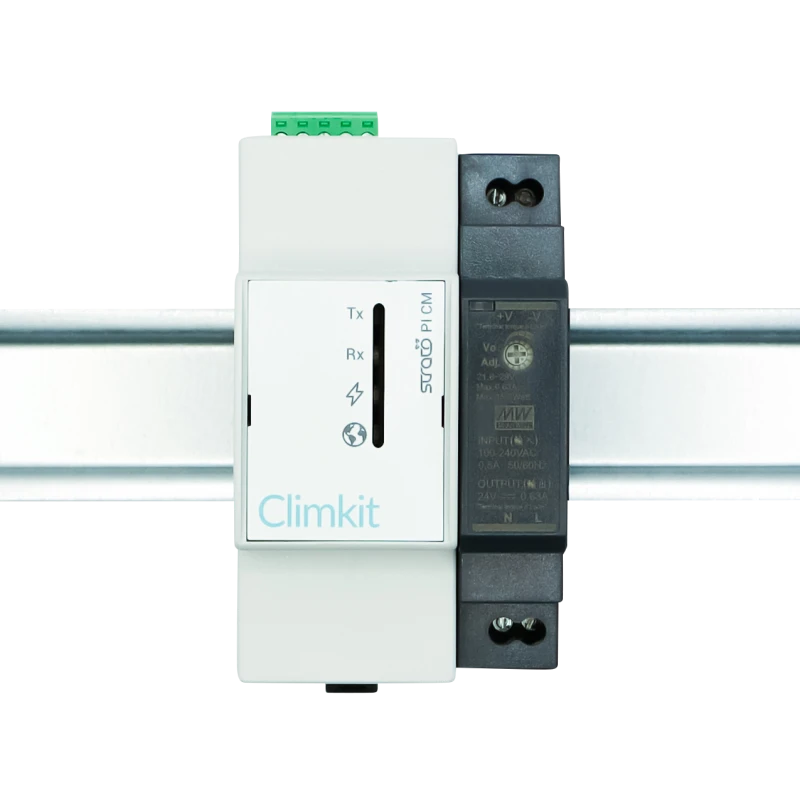
The Gateway is supplied with its 24V DC DIN rail power supply.
It is connected to the network via the RJ45 Ethernet port.
Gateway width: 2 DIN modules.
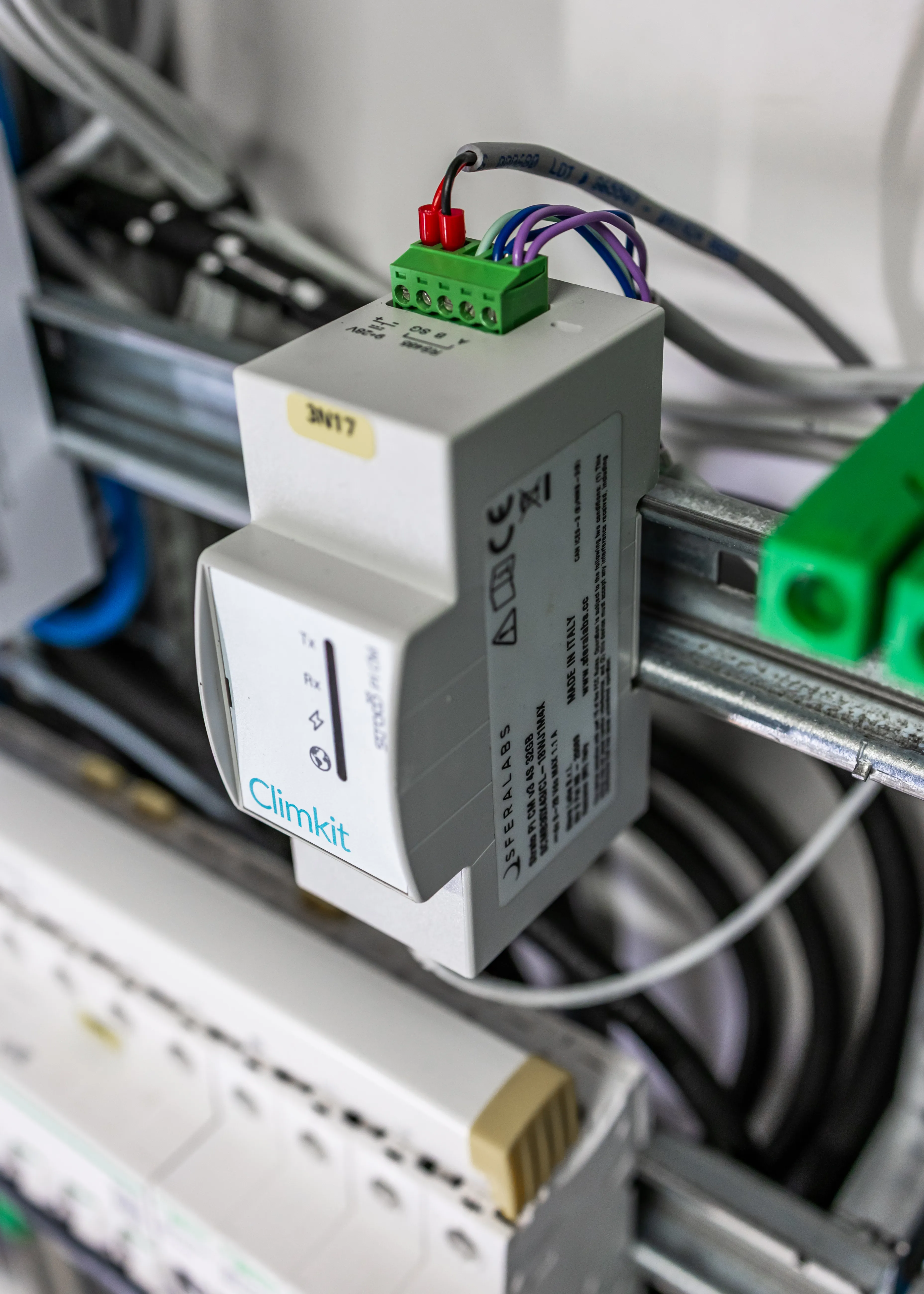
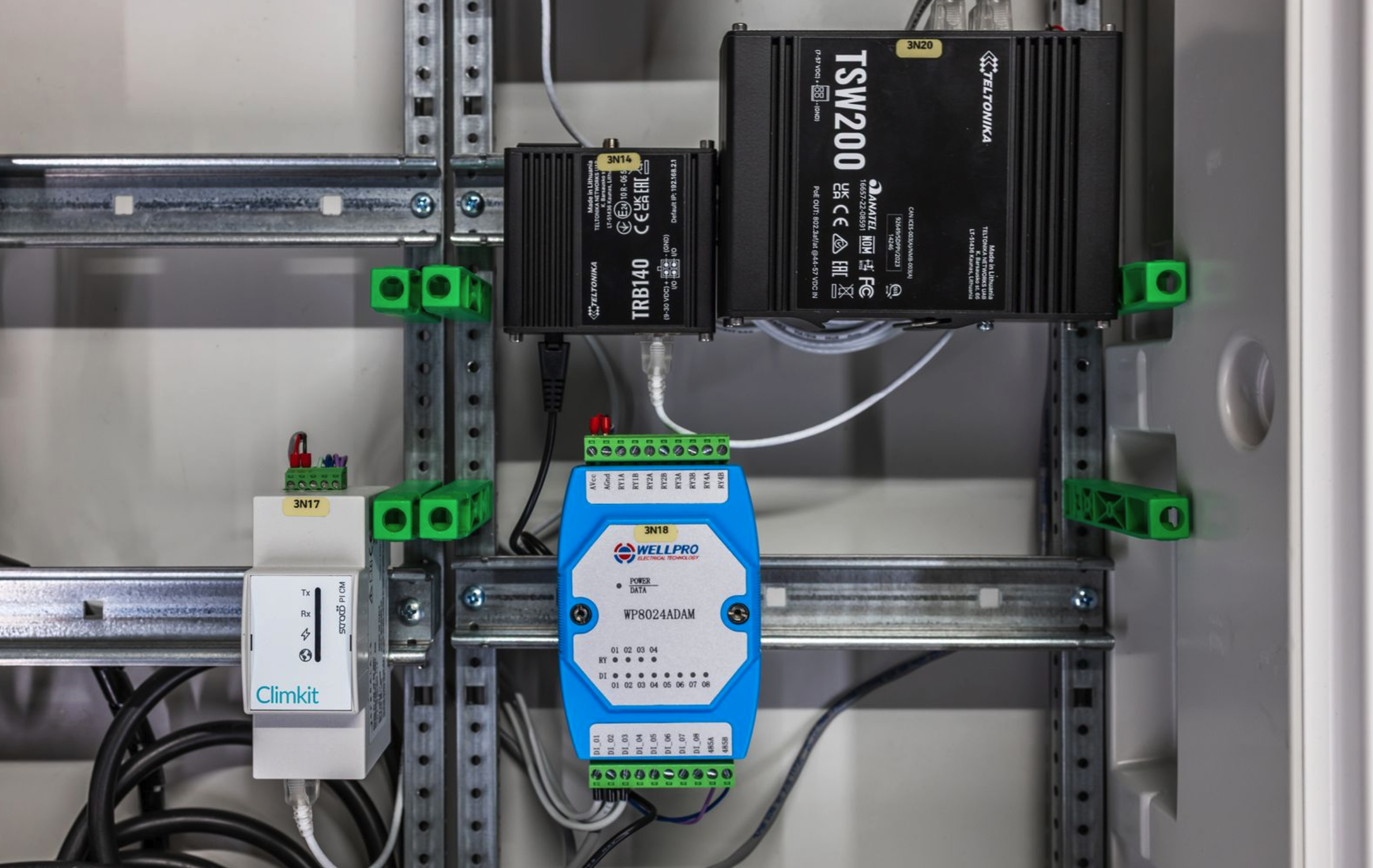
It is strongly recommended to install a dedicated circuit breaker for Climkit communication equipment. This must be clearly labeled. In the example below, the circuit breaker is associated with the Climkit Gateway and the Mbus60 converter.
Connection to meters
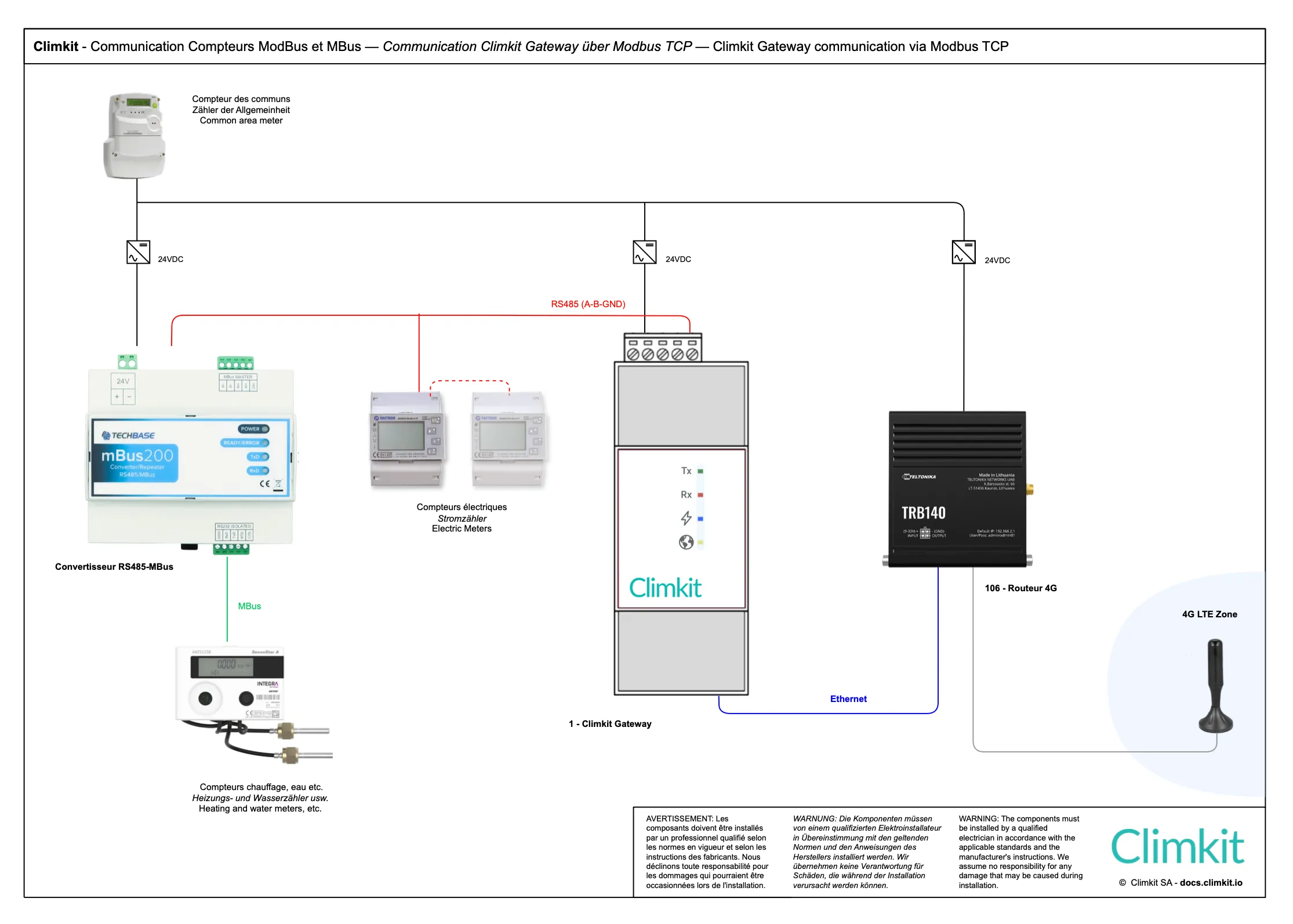
The RS485 port allows for the direct connection of RS485-Modbus electrical meters.
2. Other communication equipment
4G Router
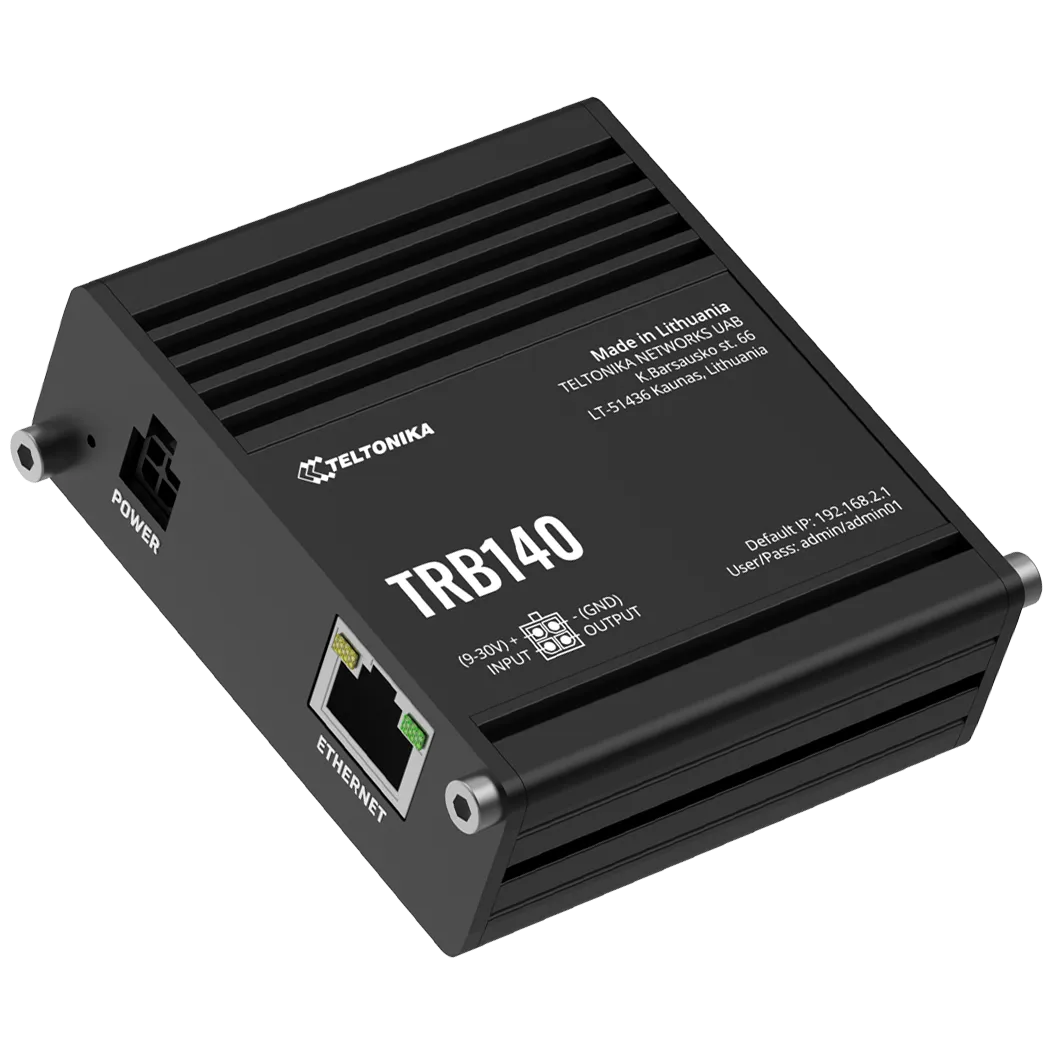
The 4G router is necessary when no internet connection is available in the building. It thus enables communication between the devices and the online Climkit portal through an inexpensive 4G subscription.
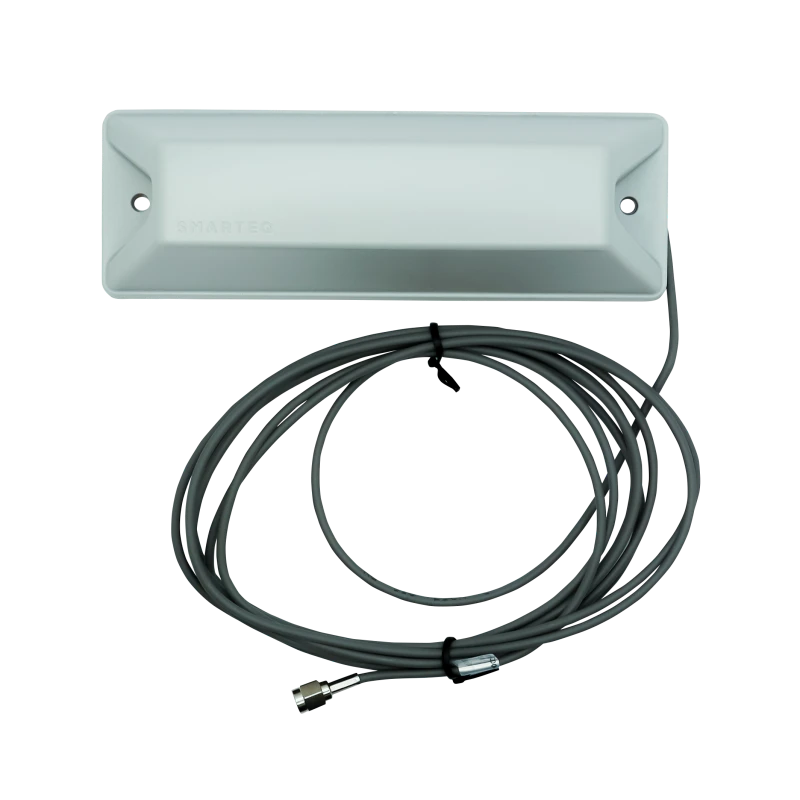
The router is supplied with a DIN rail mount and its 24V DC power supply, a 3m remote antenna, and an activated multi-operator SIM card.
The device used is a Teltonika TRB140 (or equivalent).
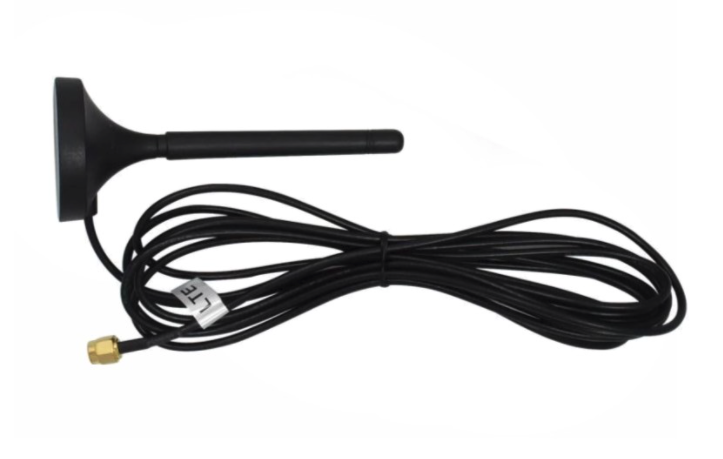
When the 4G signal is too weak or absent, order an antenna extension cable (5m or 10m) or relocate the router to an area with signal. It is not recommended to extend the antenna by more than 20m.
If necessary, an IP65 outdoor antenna is provided for installation on the facade or in a trench.
LAN Router
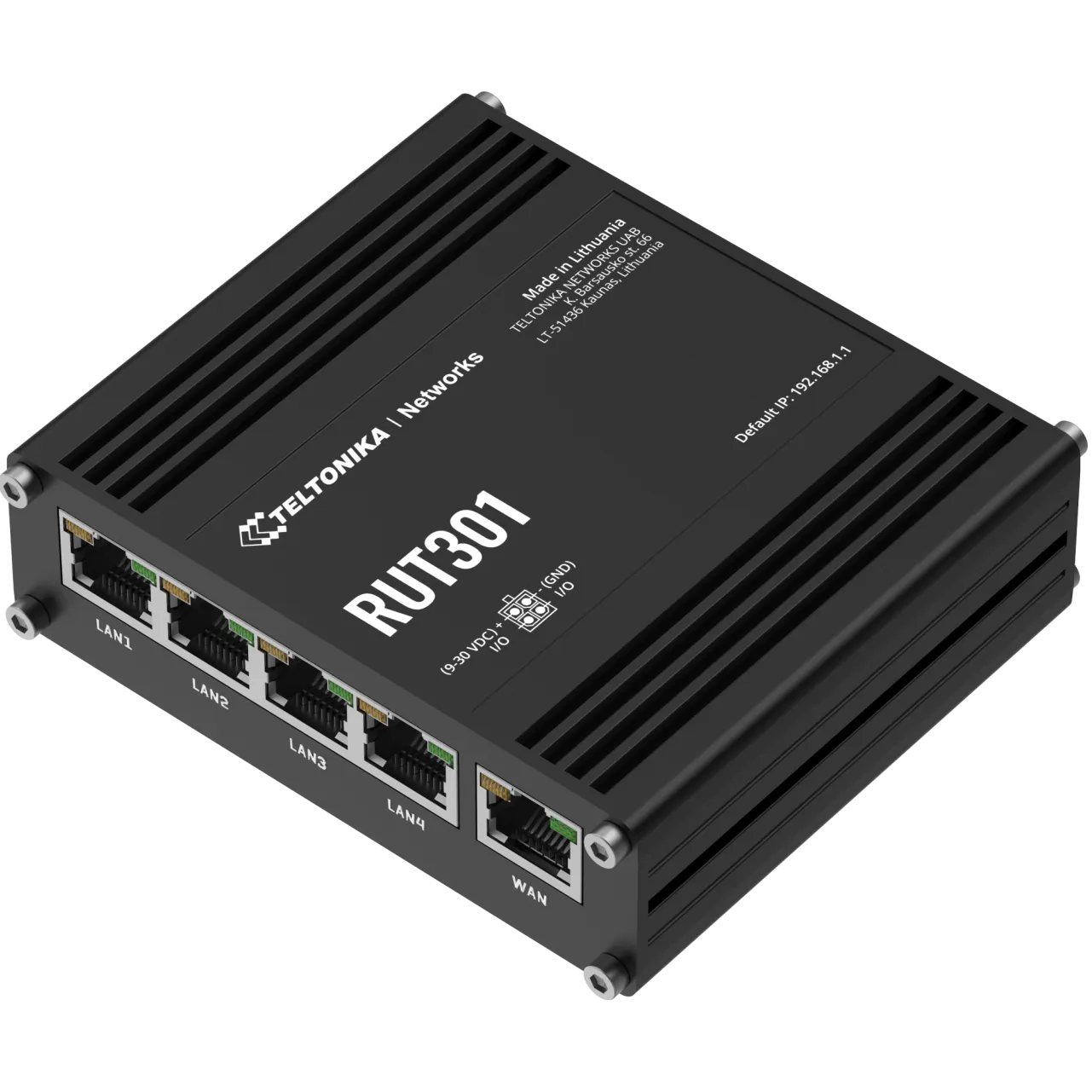
If a local internet connection is available from another router, it is recommended to create a subnet with a standard router to which all devices are connected (Climkit Gateway, charging stations, etc.). This allows for independence from the main router for configuration.
The device used is a Teltonika RUT301 with 4 LAN ports + 1 WAN, supplied with a DIN rail mount and its 24V DC DIN power supply.
MBus-RS485 Converter
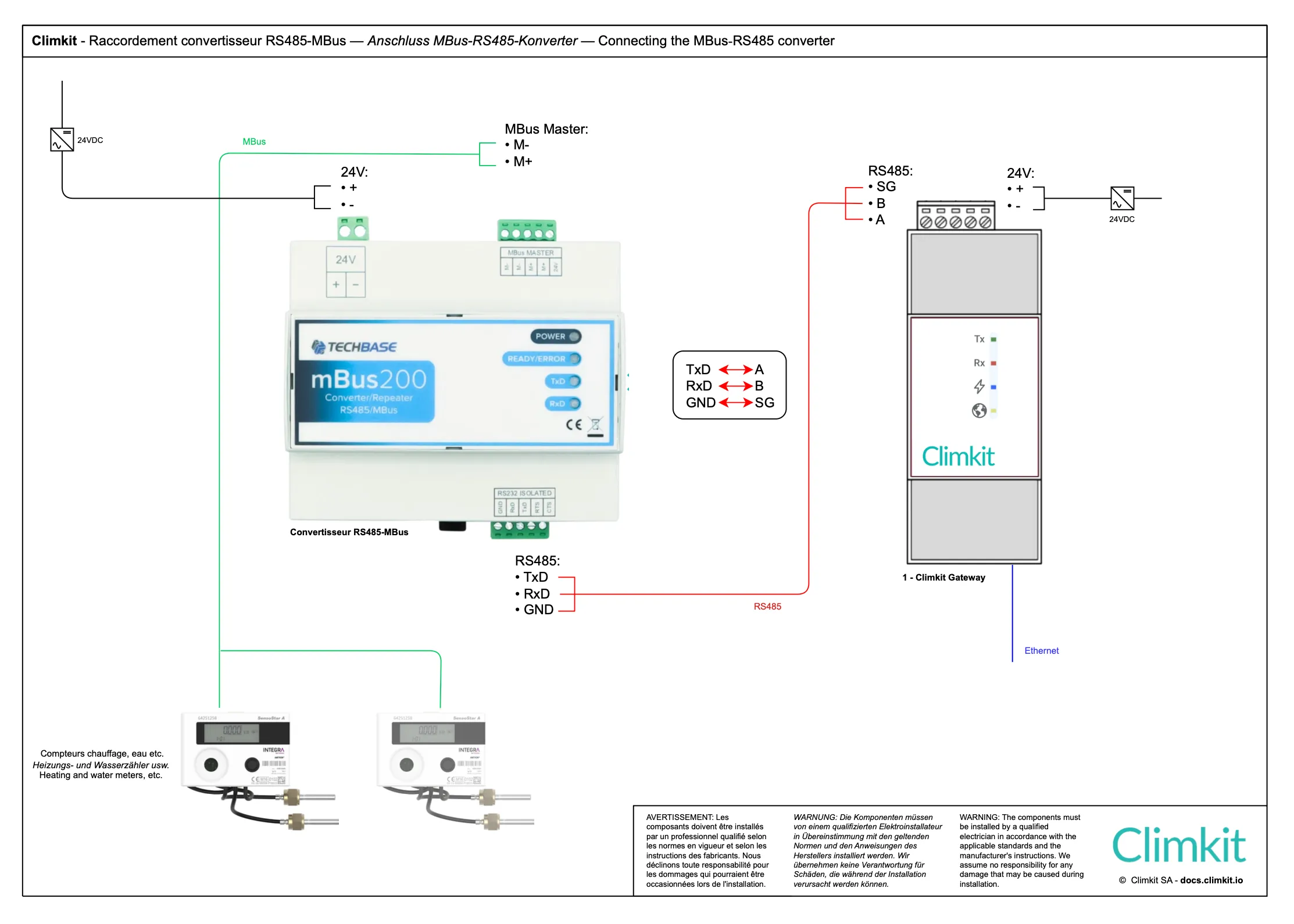
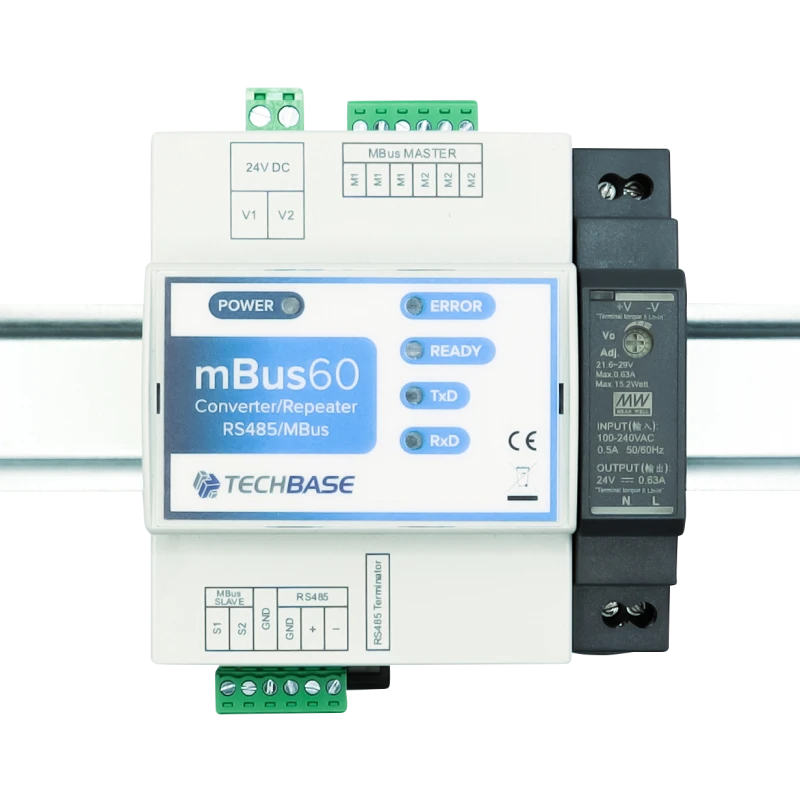
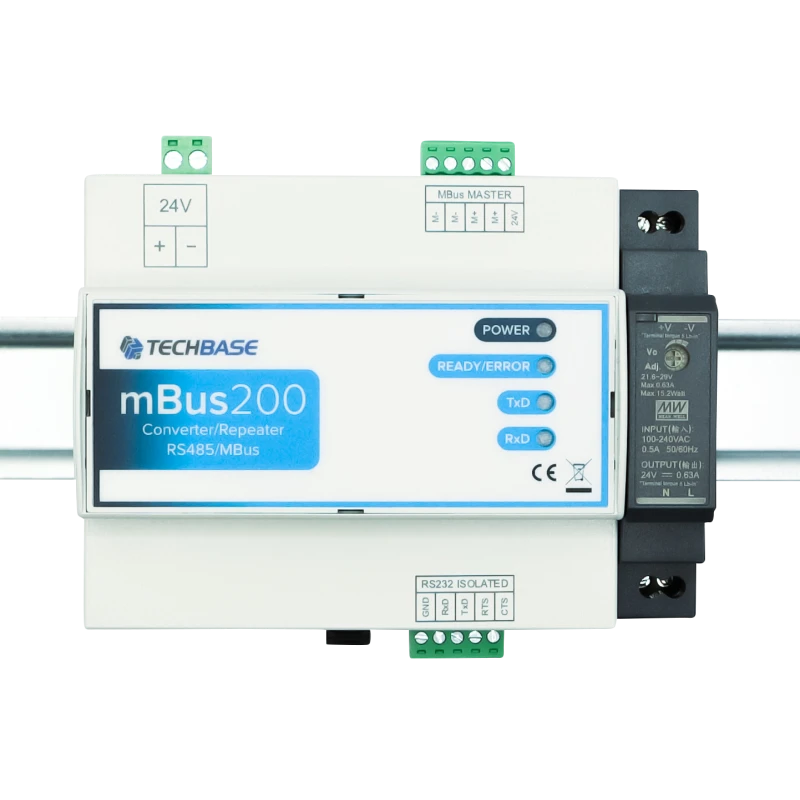
The M-Bus/RS485 converter allows connection of M-Bus meters (typically heat and water) to the Climkit Gateway.
Two models are available depending on the number of meters to be connected:
- M-Bus60: up to 60 meters - 4 DIN module width
- M-Bus200: up to 200 meters - 8 DIN module width
It is possible to connect several converters to the same Gateway to extend system capacity.
Each converter is supplied with its 24V DC DIN rail power supply.
RS485-Ethernet Converter (Modbus RTU to Modbus TCP)
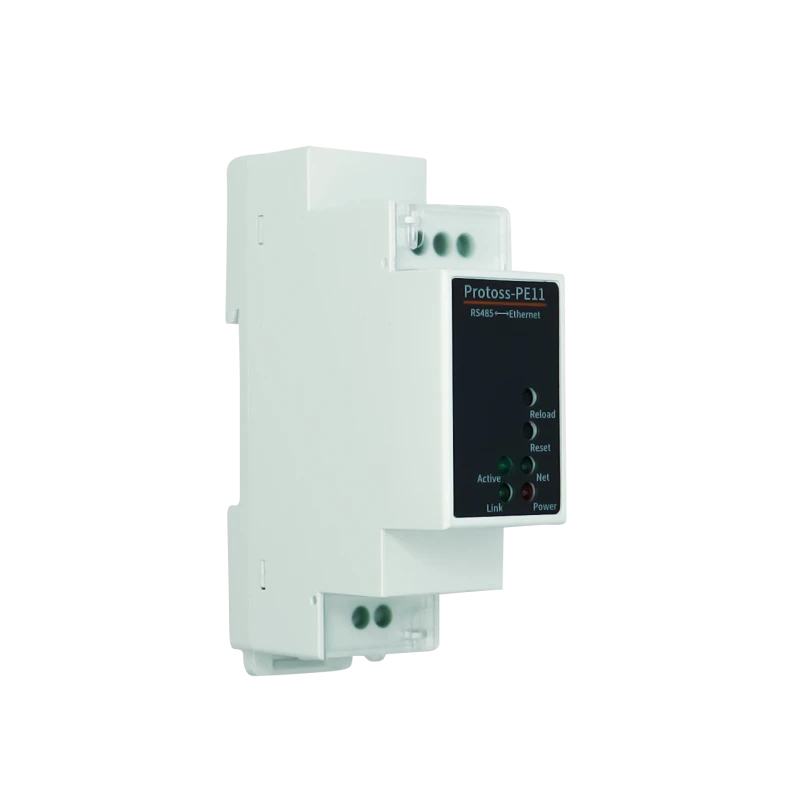
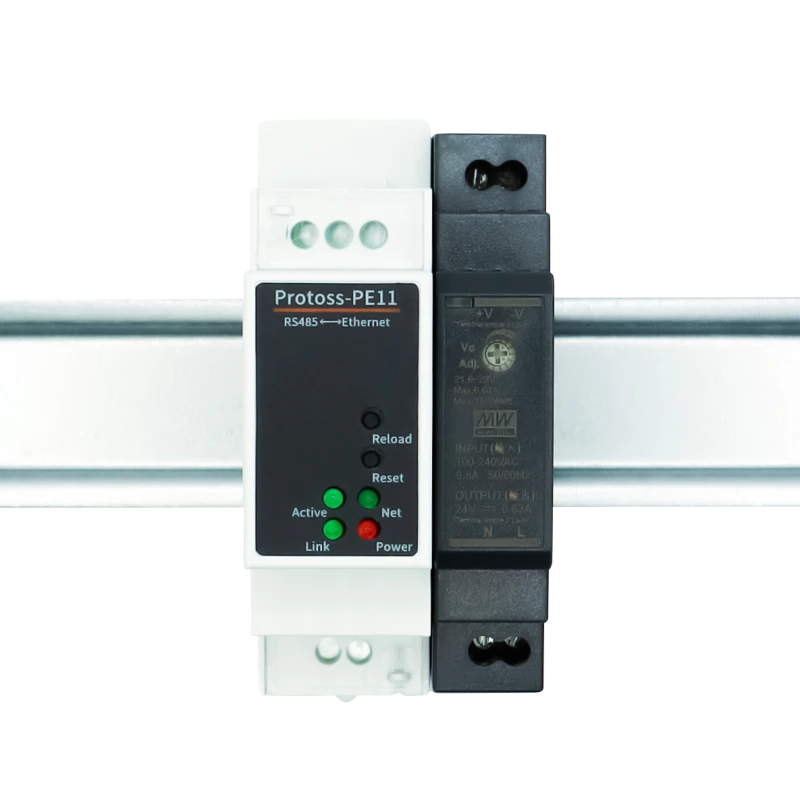
The RS485-Ethernet converter allows switching from an RS485 bus network to a TCP/IP network, thus enabling the reading of Modbus RTU devices via Modbus TCP.
The supplied model is a Protoss-PE11, delivered pre-configured and with its 24V DC DIN rail power supply.
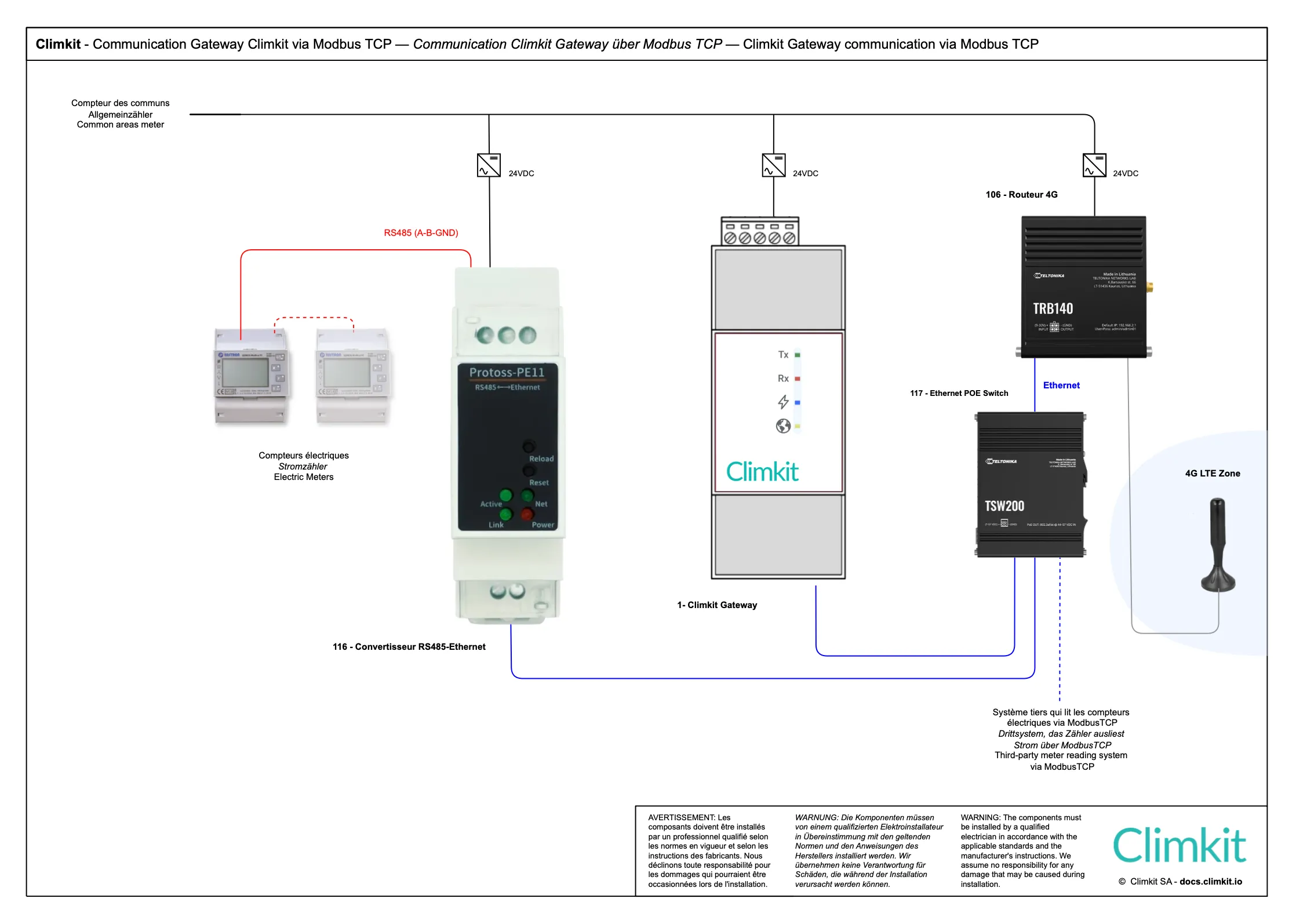
It can be used to read electricity meters directly via the 4G router (see Cloud Gateway diagram) or to connect electricity meters distributed across different electrical panels on the same site, all interconnected by a local IP network (see Microgrid diagram). In this case, a single Climkit Gateway is sufficient to read all meters on the site via Modbus TCP.
3. Other connection options
Connecting multiple buildings belonging to the same site
The RS485/Ethernet converter can be used in two main configurations:
- Cloud Gateway Configuration: To read electricity meters directly via the 4G router (see the Cloud Gateway diagram).
- Microgrid Configuration: To connect electricity meters distributed across different electrical panels on the same site, all interconnected by a local IP network (see the Microgrid diagram). A single Climkit Gateway is then sufficient to read all meters on the site via Modbus TCP.
- If other service providers need to read the same Modbus meters, installing an RS485-Ethernet converter allows for simultaneous read requests, which is not the case with a simple RS485 bus network.
PoE Switch
When multiple devices need to be connected via Ethernet, a switch is necessary.
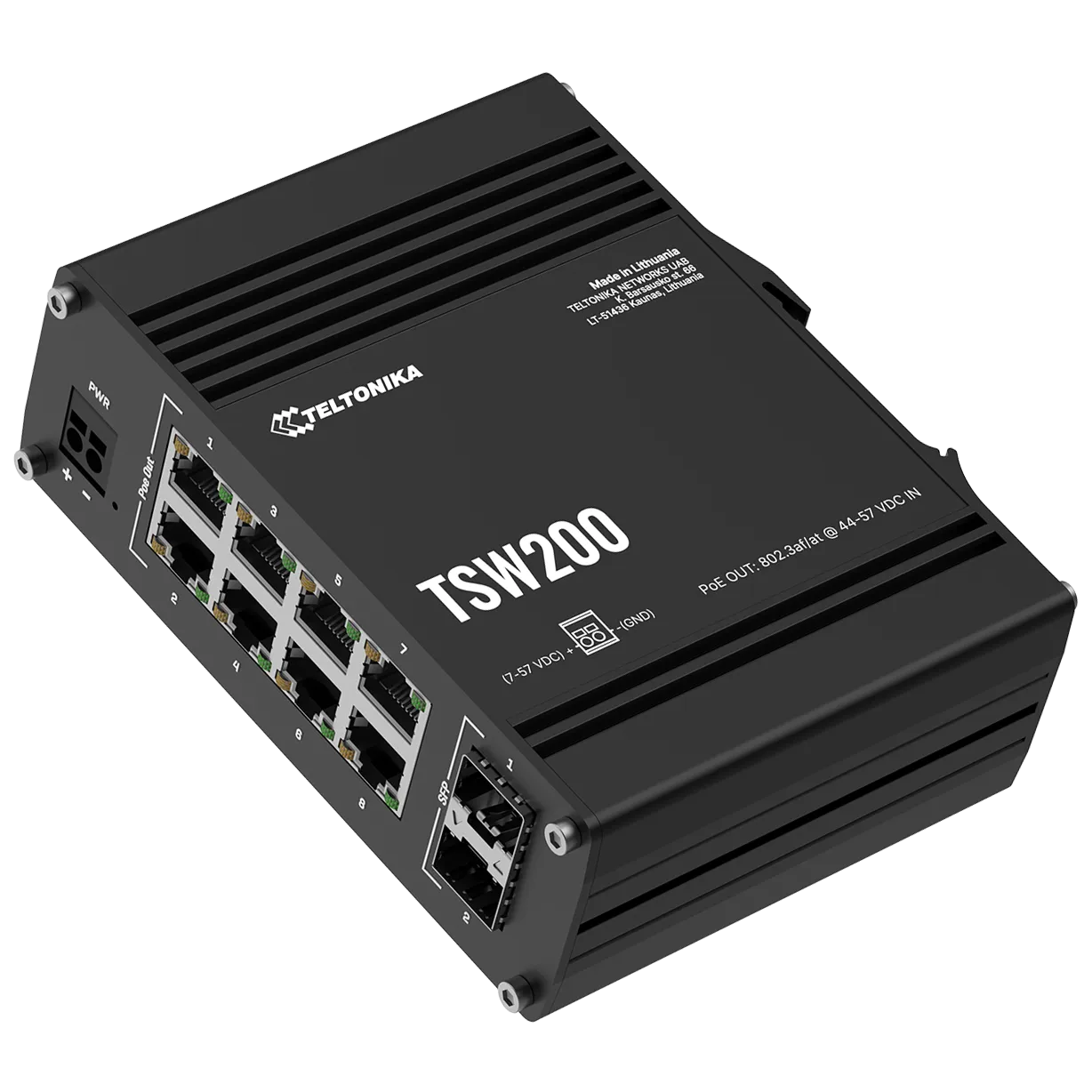
Model supplied: Teltonika TSW200 (or equivalent) - 8 PoE Ethernet ports + 2 SFP fiber optic ports.
PoE ports directly power Wi-Fi access points and RFID readers (see Collective laundry and eBike charging management).
SFP ports allow interconnection between multiple buildings on a site (see Microgrid diagram) via fiber optics using a single internet router.
The switch is supplied with a DIN rail mount and its 48V DC 150W DIN power supply.