Virtual assistant
Installer
Planning
Installer Quick Start Guide (read first)
Overall Climkit Site Planning
Process for setting up a Climkit site
Planning the Climkit Gateway connection and network connectivity
Planning electricity management
Planning electric vehicle charging station management
Planning heating, water, and ancillary cost management
Planning collective laundry management
Planning recharge management for eBikes
General Terms and Conditions of Sale
Platform Configuration
Request for an installer account
Creating a new site
Add the router (4G or LAN)
Adding the Climkit Gateway
Adding electricity meters
Registering the photovoltaic installation information
Save battery info
Adding charging stations
Add OCPP Remote charging station
Add the 4 relay I/O module
Adding RFID readers
Adding heat and water meters
Installation and connection
Install the 4G Router
Install the LAN router
Installing the Climkit Gateway
Install the RS485-Ethernet converter
Install the M-Bus converter
Install the standard Ethernet switch
Install the PoE Ethernet switch
Install Wi-Fi access points
Installing electricity meters
Install charging stations
Install the heat and water meters
Install the RFID badge reader
Install the three-phase relay meter
Install the Shelly relay meter
Install the 4-relay I/O module
Verification and testing
Owner
Administrative setup
Getting Started Guide - administrative setup
Form - 1. Contact Information
Form - 2. Solutions
Form - 3. Rates
Contract and documents to complete
Owner online account
Consumer information flyers
Online access, RFID badge and charging stations
FAQ and other information
Resident
Account and app
Electricity Invoice
Electric vehicle charging station
Collective laundry room
Electric vehicle (eBike) charging
Platform Components
Platform Access
Terminology
Site
Settings
Creating/editing a note or a to-do item
Closing an issue to be processed
Site Status
Add/Modify building(s)
Steps for setting up a site
Delete/deactivate a site
Add/Modify equipment(s)
Modify basic site information
Equipment
Add/modify a gateway
Add/modify a router
Add/modify an electricity meter
Bulk insertion of meters
Bulk assigning meters to a gateway
Add/edit a distribution zone
Add/modify a charging station
Add/modify a thermal or water meter
Add/edit a GRD meter (FTP transfer)
Remote connection to a Climkit gateway
Administration
Stakeholders
Financial conditions
Visualize site management conditions
Activating/deactivating a solution
Operating method configuration
Viewing financial conditions
Creation/editing/addition of a financial condition
Deleting a financial condition
Accounts
Create a consumer account
Create a contact
View and download invoices for an account
Send platform access to a contact
Add/modify billing address
Link an existing account to a site
Changing the correspondence method
Billing and prices
Creation/editing of a billing point
Registering a move (transfer)
Assigning an account to a billing point
Add/modify the default charge advance payment for a billing point
View site consumption rates
Consumption rate creation
Creating/editing a consumption rate
Creation/editing of a tariff component
View fixed rates and subscriptions
Customizing invoice/statement position labels
See Financial Conditions billed at billing points
RFID badge
Accounting
Tools
Meter control
Visualization
Expense breakdowns
Introduction to the Expense statements tool
Create/edit an accounting period
Modifying expense statement settings
Add/edit a general expense invoice in an expense statement
Edit collected advance payments from an expense statement
Specifics of heating and hot water fees
Check and download meter readings for the cost accounting period
Distribute costs and generate expense statements
Exporting individual consumption data for the fee statement period
API
- Categories
-
- Configuring Teltonika RUT241
Configuring Teltonika RUT241
 Updated
by Nicolas Vodoz
Updated
by Nicolas Vodoz
Teltonika RUT241
The configuration interface and features of the RUT241 are similar to those of the TRB140.
It can be used with a SIM card and in a "Climkit Cloud Gateway" configuration.
The RUT241 offers additional capabilities compared to the TRB140:
- broadcasting its own Wi-Fi network
- connecting to an existing Wi-Fi network (see below)
- connecting via Ethernet to an existing network using its WAN port
- using both ports as LAN ports to connect two devices without an additional switch
Change the router's IP
When the RUT240 is used to create a subnet, change its IP address to 192.168.2.1 to avoid confusion with the main network where the router is usually 192.168.1.1.
Create a Wi-Fi WAN Interface
A Wi-Fi WAN interface allows the RUT241 router to connect to the internet (WAN) via an existing Wi-Fi network broadcast by a main router connected to the internet.
Devices can then be connected to the RUT241's LAN port via an Ethernet cable.
This configuration is ideal when Wi-Fi is available in a technical room or parking lot, thus avoiding the use of 4G.
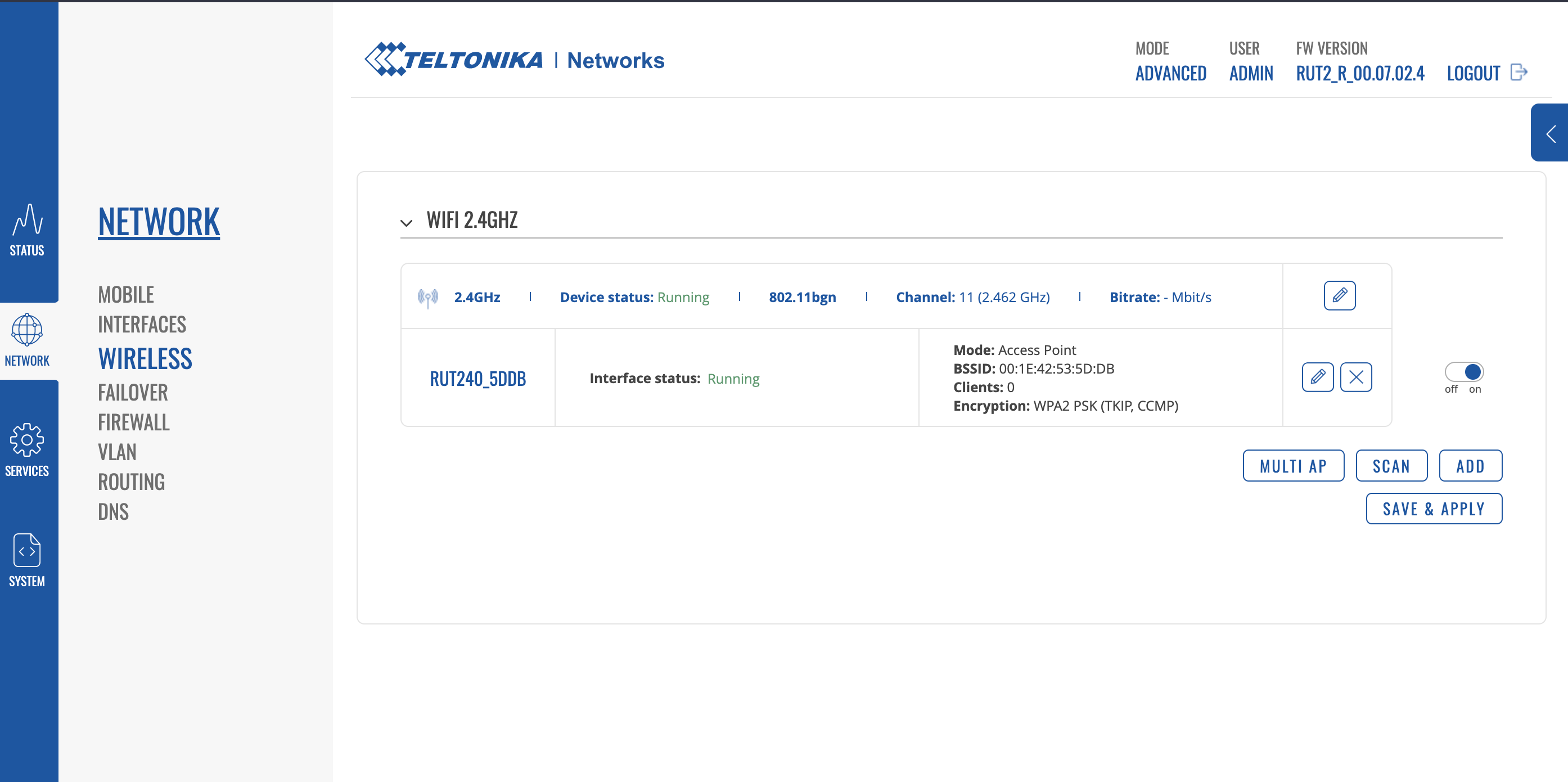
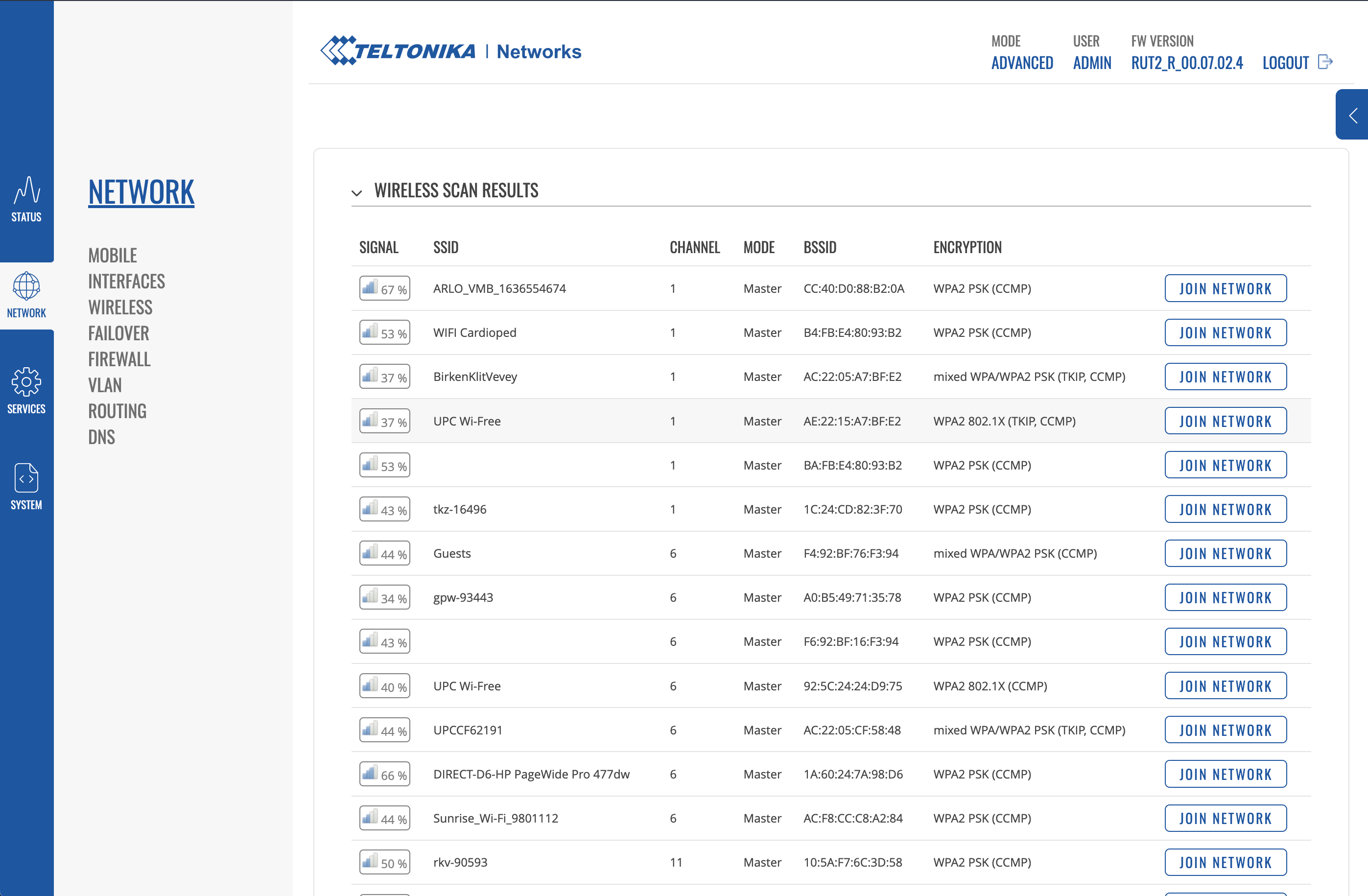
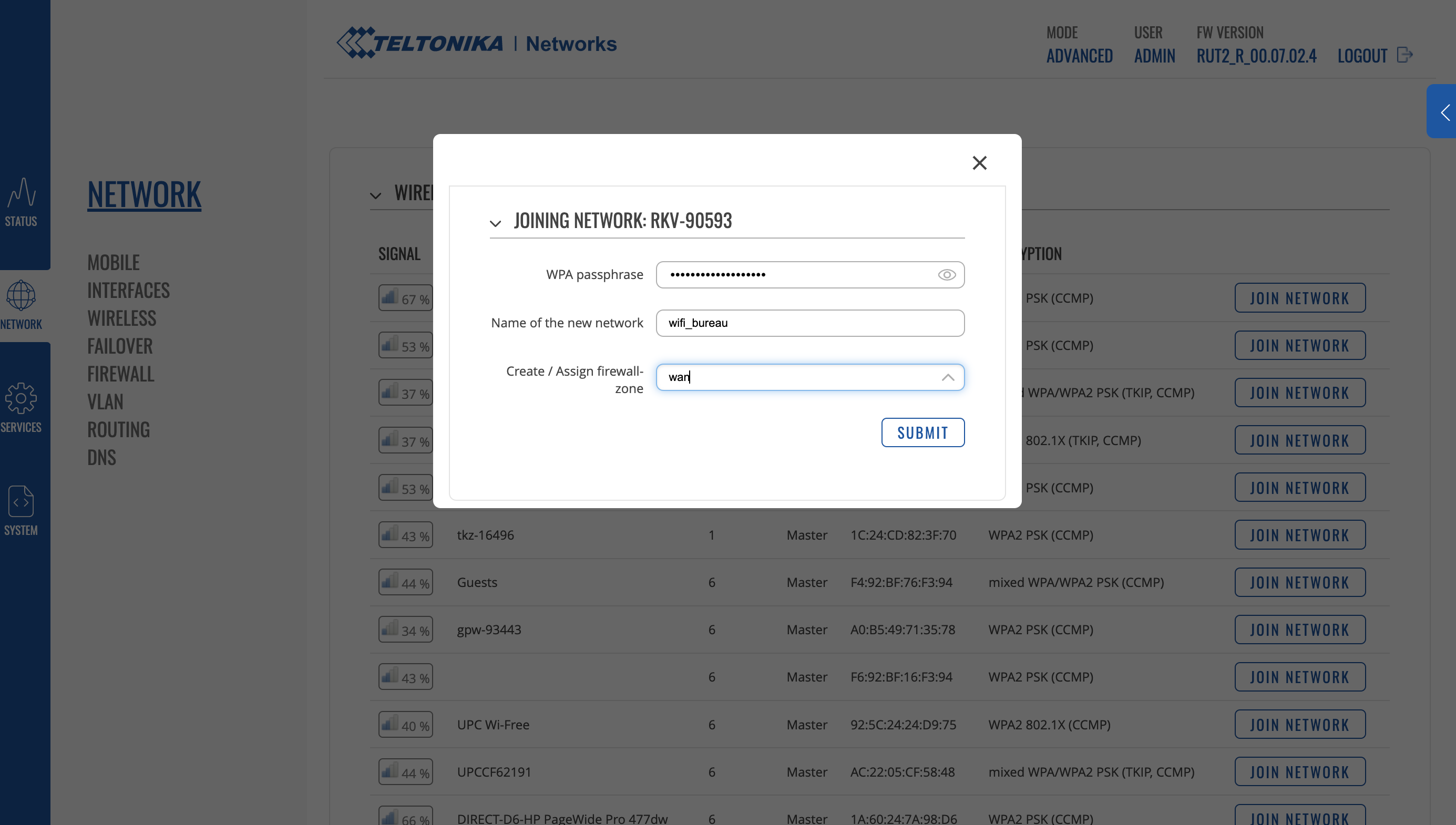
NETWORK>WIRELESS>SCAN. Select the Wifi network and clickJOIN NETWORK- Enter the Wi-Fi network password under WPA Passphrase. Choose a name and create
wan
Use the main router's DHCP server
Use the main router's DHCP server so that devices connected to the RUT241 obtain an IP address from the main router in the 192.168.1.x range, instead of 192.168.2.x.
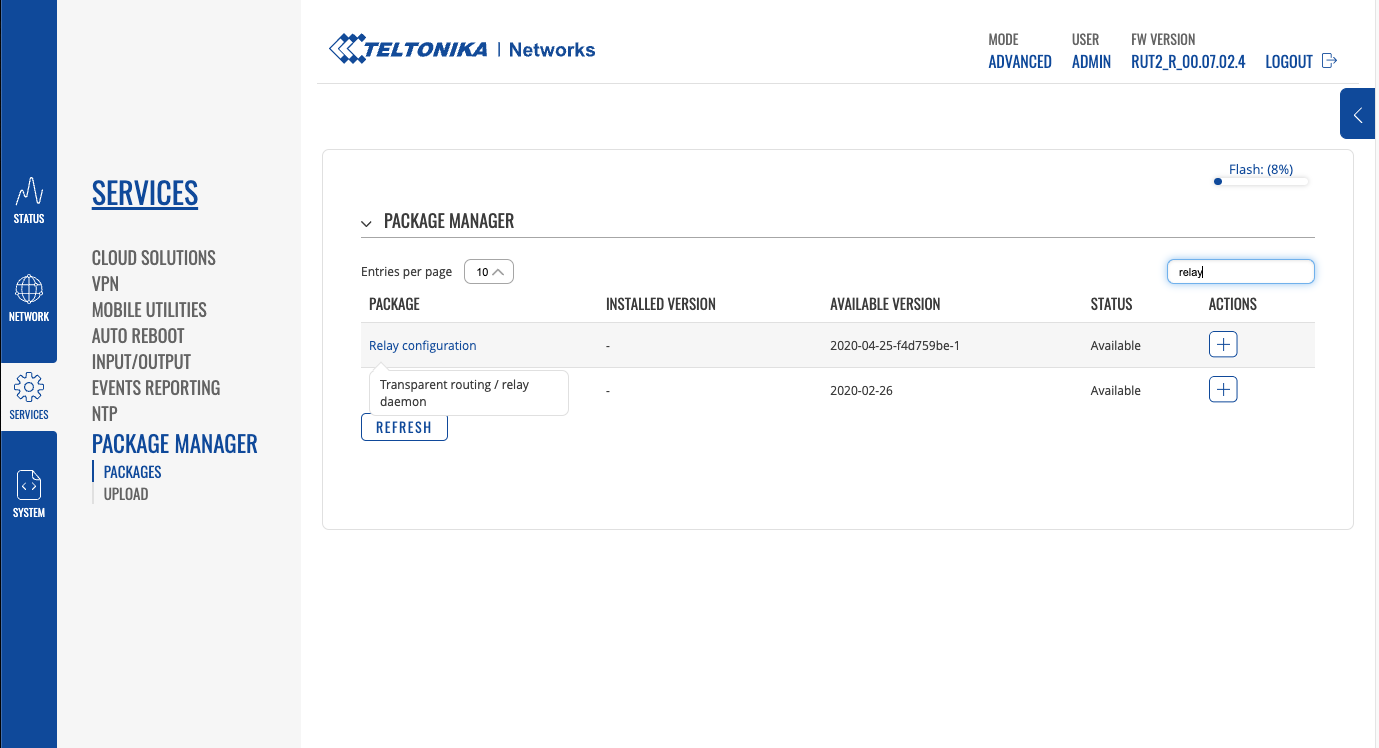
- Install the "Relay configuration" package.
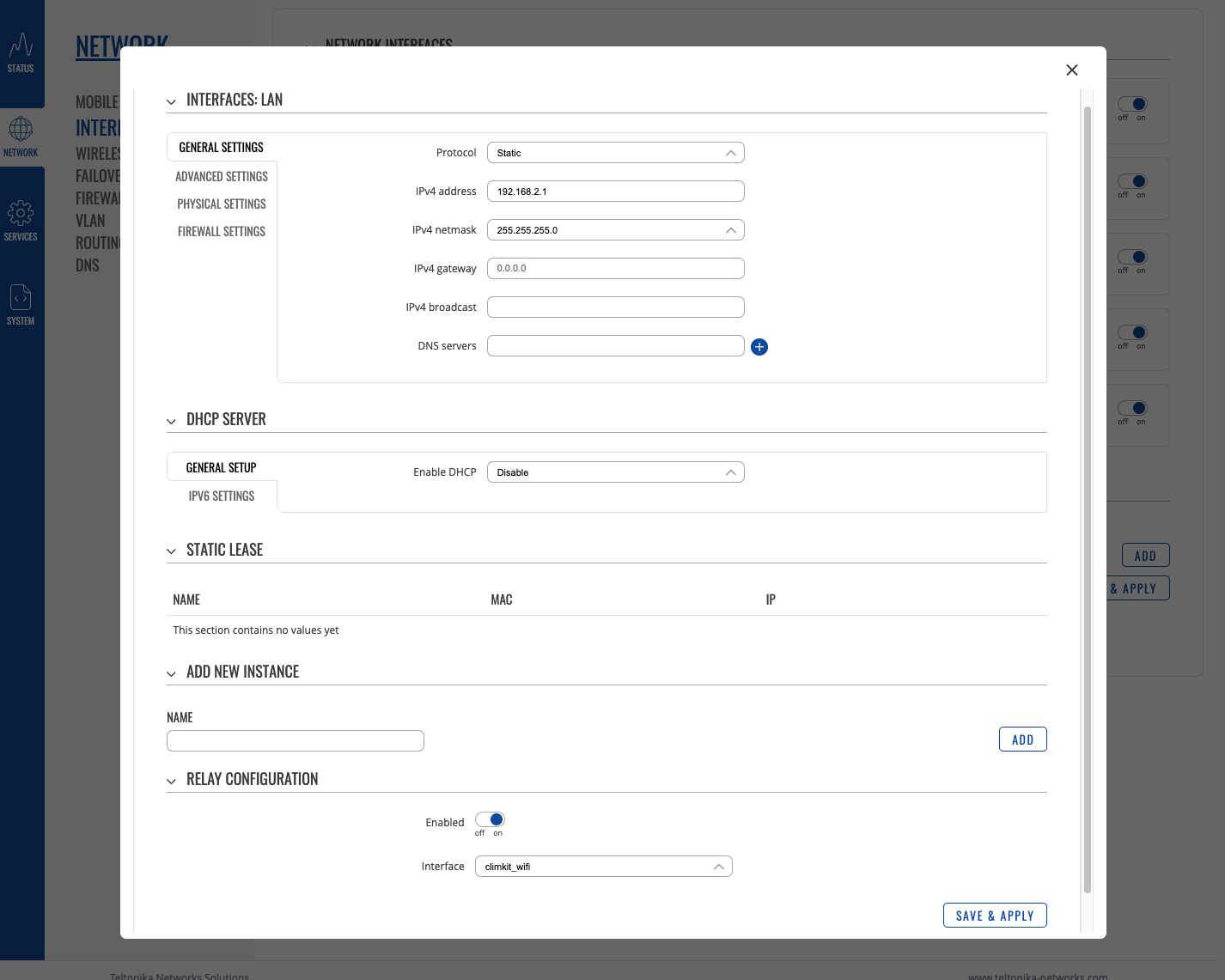
- Under Network > Interfaces > LAN: Disable the DHCP server for the LAN interface (set to disabled), enable "Relay configuration", and select the Wi-Fi WAN interface created above.
- To reconnect to the RUT241 configuration interface, change the Ethernet interface network settings on your computer to a static IP. Assign it an IP address such as 192.168.2.10 and a router/gateway of 192.168.2.1. Connect to the address 192.168.2.1 in your web browser.
Configure MQTT Gateway
Update the firmware with version RUT2_R_00.07.02.7_WEBUI.bin.
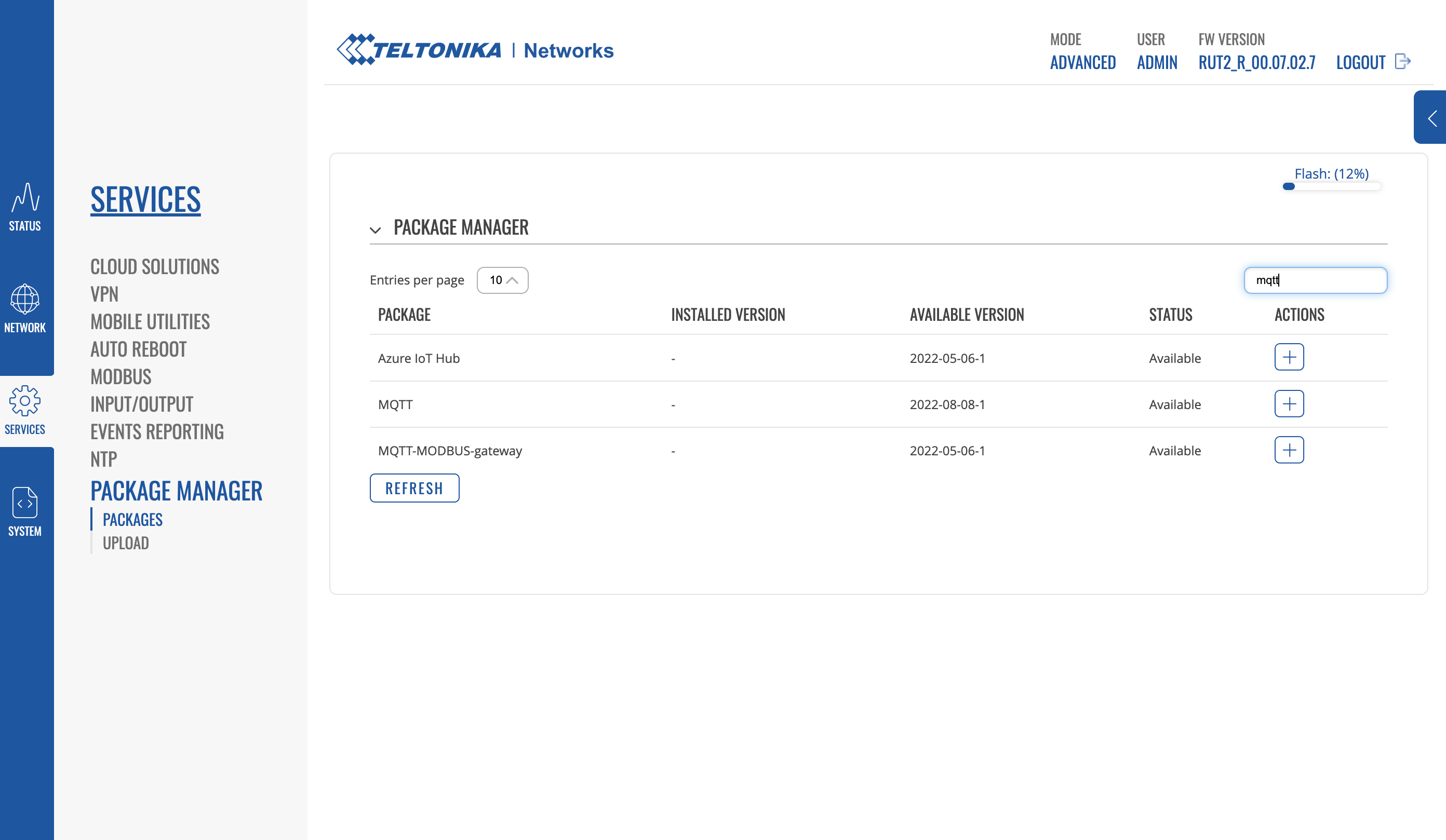
Under SERVICES > PACKAGE MANAGER > PACKAGES, search for and install the packages by clicking +:
MQTT-MODBUS-gatewayMODBUS TCP Master
Then configure as described in the section Cloud Gateway Configuration (MQTT)